Крым провозглашает независимость; просит присоединения к России.
Парламент Крыма официально заявил о независимости от Украины и запросил присоединения в состав Российской Федерации.

Это произошло сразу после спорного референдума, состоявшегося в воскресенье, на котором, по словам чиновников, подавляющим большинством голосов был поддержан выход из состава Украины.

Правительство в Киеве заявило, что не будет признавать результаты. США и ЕС говорят, что голосование было незаконным и поклялись ввести санкции в отношении Москвы.

Со стороны самопровозглашенных республик Кавказа, что не удивительно, была положительная реакция на эту декларацию. Александр Анкваб, президент самопровозглашенной Республики Абхазия заявил, что Сухуми "уважает волю крымчан, поддерживает и признает их судьбоносный выбор." Референдум, как он заявил российским информационным агентствам 16 марта, "отражает волеизъявление многонационального народа полуострова".

В заявлении Министерства иностранных дел самопровозглашенной Республики Южная Осетия говорится, что "Южная Осетия уважает право населения Крыма самостоятельно определять свою судьбу и его выбор". "Нельзя не отметить позицию киевских властей, которые воздержались от попыток силой воспрепятствовать населению Крыма выразить свою волю," - говорится в заявлении.

По данным новостного портала "Армения Сегодня", Давид Бабаян, пресс-секретарь президента самопровозглашенной Нагорно-Карабахской Республики, заявил, что Карабах уже проходил по этому пути и знает, что такое процесс реализации права на самоопределение народов. Говоря о позиции Степанакерта по текущей ситуации, он сказал: "Судьба народа в его собственных руках. Если Крым принял такое решение, значит это исходит из его интересов."

В то время как реакция непризнанных субъектов была предсказуемой, вокруг того, как кризис в Крыму будет воздействовать на мирный процесс вокруг нагорно-карабахского конфликта при содействии Минской группы ОБСЕ есть разные размышления. В прошлом этот процесс зависел от сотрудничества между двумя его сопредседателями, Россией и Соединенными Штатами.

Американский сопредседатель, посол Джеймс Уорлик, в своем микроблоге заявил, что Россия и США совместно продолжают работать во имя мира в Карабахе.

Наблюдатели считают, что Россия и Соединенные Штаты попытаются изолировать Минский процесс от более глобальных региональных событий, как это было в 2008 году после войны между Грузией и Россией, не в последнюю очередь потому, что текущий формат устраивает и США и Россию. Но рост напряженности в Украине, несомненно, повлияет на процесс отрицательно, если ситуация затянется на долгое время.

источник: commonspace.eu по материалам агентств.

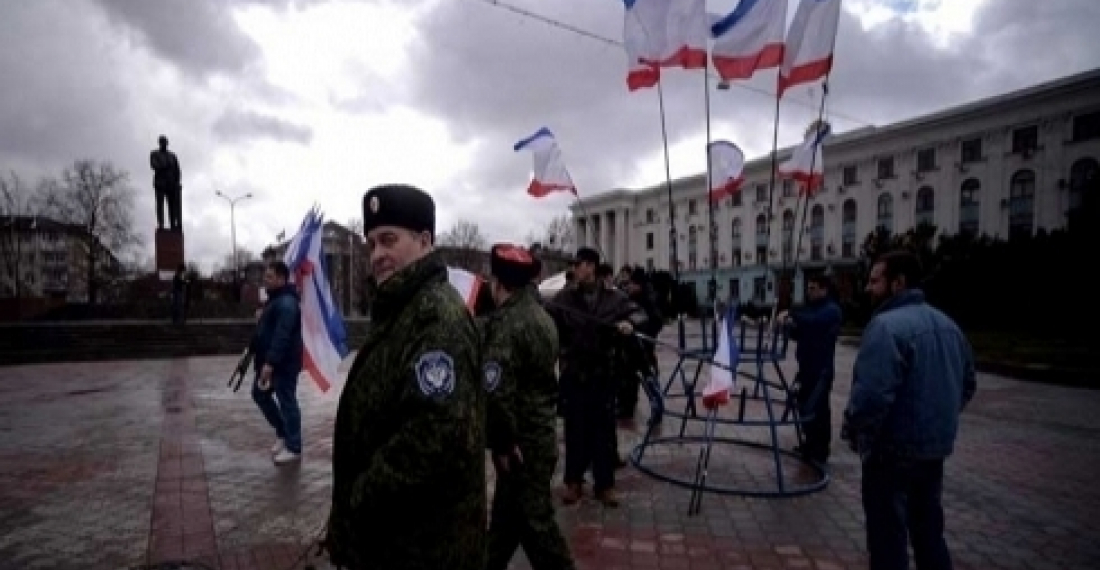
фото: Пророссийские вооруженные люди на улицах Севастополя в Крыму.

Related articles

Editor's choice
News
Indian Foreign Minister meets Aliyev in Baku

Indian Foreign Minister meets Aliyev in Baku

On October 23, the president of Azerbaijan Ilham Aliyev met in Baku with Subrahmanyam Jaishankar, Minister of External Affairs of India. This was the highest level visit by an Indian official to Azerbaijan in a long time. According to the website of the Azerbaijani president, Aliyev fondly recalled his meeting with Indian Prime Minister Narendra Modi in Bishkek and the exchange of views during that meeting. President Ilham Aliyev highly appreciated the visit of India’s Minister of External Affairs to Azerbaijan on the instructions of Prime Minister Narendra Modi, stressing its importance for discussing the current state and prospects of bilateral relations. During the meeting, the sides held an extensive exchange of views on the current state of relations between Azerbaijan and India, highlighting ample opportunities to develop cooperation in areas of mutual interest. The sides noted that Azerbaijan and India, as members of the Global South, share similar positions on a number of issues on the international agenda, including matters of concern to countries of the Global South. In this regard, they discussed prospects for bilateral cooperation in political, trade and economic, high-tech, cultural, humanitarian and other fields. The conversation also touched upon the importance of cooperation within international organizations. The sides emphasized the need to intensify political contacts and organize reciprocal visits at various levels, including exchanges involving economic and business delegations, to further advance bilateral relations.

Popular

Editor's choice
Interview
Thursday Interview: Murad Muradov

Thursday Interview: Murad Muradov

Today, commonspace.eu starts a new regular weekly series. THURSDAY INTERVIEW, conducted by Lauri Nikulainen, will host  persons who are thinkers, opinion shapers, and implementors in their countries and spheres. We start the series with an interview with Murad Muradov, a leading person in Azerbaijan's think tank community. He is also the first co-chair of the Action Committee for a new Armenian-Azerbaijani Dialogue. Last September he made history by being the first Azerbaijani civil society activist to visit Armenia after the 44 day war, and the start of the peace process. Speaking about this visit Murad Muradov said: "My experience was largely positive. My negative expectations luckily didn’t play out. The discussions were respectful, the panel format bringing together experts from Armenia, Azerbaijan, and Turkey was particularly valuable during the NATO Rose-Roth Seminar in Yerevan, and media coverage, while varied in tone, remained largely constructive. Some media outlets though attempted to represent me as more of a government mouthpiece than an independent expert, which was totally misleading.  Overall, I see these initiatives as important steps in rebuilding trust and normalising professional engagement. The fact that soon a larger Azerbaijani civil society visits to Armenia followed, reinforces the sense that this process is moving in the right direction." (click the image to read the interview in full)