


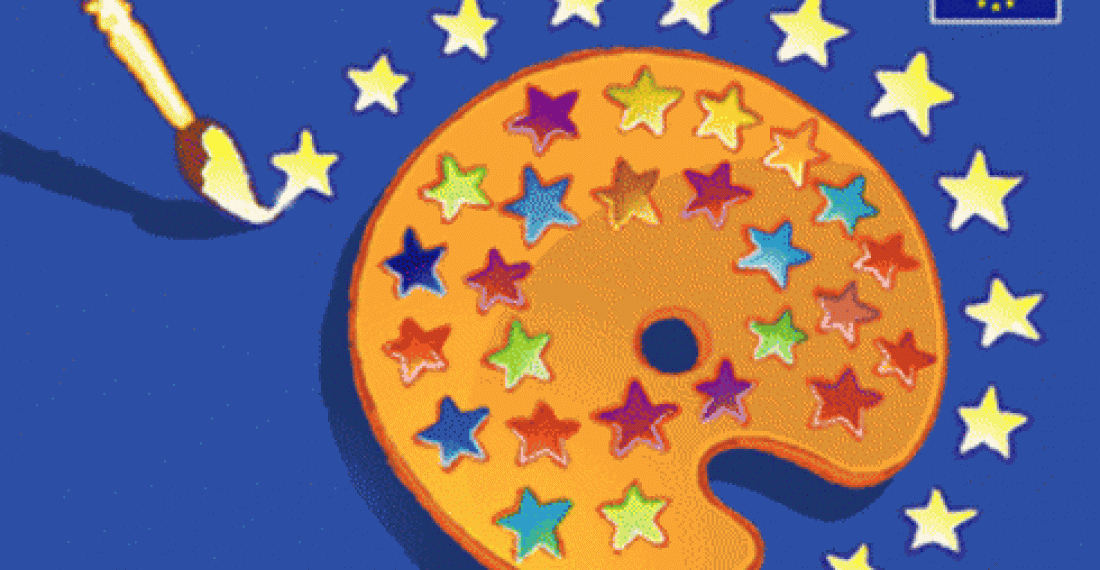
Европейский Союз отмечает День Европы. Девизом Союза является Единство в многообразии.

Европейский Союз отмечает 9 мая как День Европы. Это возможность вспомнить историю создания Европейского Союза, и особенно Декларацию Роберта Шумана 1950 года, которая описала видение новой Европы после разрушений Второй мировой войны. Декларация Шумана была представлена министром иностранных дел Франции Робертом Шуманом 9 мая 1950 года. Он предложил создать европейское объединение угля и стали, члены которого бы объединили угольную и сталелитейную продукцию.

ЕУСО (учредители: Франция, ФРГ, Италия, Нидерланды, Бельгия и Люксембург) был первым из серии наднациональных европейских институтов, которые в конечном счете стали сегодняшним "Европейским Союзом".

В 1950 году народы Европы еще пытались преодолеть деструктивную мощь Второй мировой войны, которая закончилась 5 годами ранее.

Полные решимости предотвратить еще одну такую ​​страшную войну, европейские правительства пришли к выводу, что объединение производителей угля и стали - по словам Декларации - сделает войну между историческими соперниками Францией и Германией "не просто немыслимой, но материально невозможной".

Считалось, - правильно - что слияние экономических интересов поможет повысить уровень жизни и станет первым шагом на пути к более единной Европе. Членство в ЕОУС было открыто и для других стран. 

В Декларации Шумана говорится:

"Европа не объединится сразу, или же в соответствии с единым планом. Она будет построена через конкретные достижения, которые сначала создают де-факто солидарность".

Европейский Союз сегодня охватывает более 4 миллионов квадратных километров и ее населяют 503 млн жителя - третяя по величине населения в мире после Китая и Индии. В нее входят двадцать восемь государств-членов. По площади поверхности, Франция является самой большой страной ЕС, а Мальта самой маленькой. 

Девизом Союза является Единство в многообразии.

Источник: commonspace.eu по материалам Печать и информационная служба Европейского Союза. 

Related articles

Editor's choice
News
The British prime minister says Europe must "stand on its own two feet" when it comes to defence

The British prime minister says Europe must "stand on its own two feet" when it comes to defence

The UK will deploy a carrier strike group, led by the aircraft carrier HMS Prince of Wales to the Arctic and the High North as part of efforts to bolster security against Russian threats. British prime minister, Sir Keir Starmer announced the deployment in a speech on Saturday (14 February) at the Munich Security Conference. Europe must be ready to fight to protect its people, values, and way of life,  Sir Keir told the Conference. Starmer also called for deeper links and cooperation, including economic ties, between the UK and EU. The PM stressed the continent must "stand on its own two feet" when it comes to defence commitments. "We must build our hard power, because that is the currency of the age," he told the conference. (Click image to read the full story).

Popular

Editor's choice
Interview
Thursday Interview: Murad Muradov

Thursday Interview: Murad Muradov

Today, commonspace.eu starts a new regular weekly series. THURSDAY INTERVIEW, conducted by Lauri Nikulainen, will host  persons who are thinkers, opinion shapers, and implementors in their countries and spheres. We start the series with an interview with Murad Muradov, a leading person in Azerbaijan's think tank community. He is also the first co-chair of the Action Committee for a new Armenian-Azerbaijani Dialogue. Last September he made history by being the first Azerbaijani civil society activist to visit Armenia after the 44 day war, and the start of the peace process. Speaking about this visit Murad Muradov said: "My experience was largely positive. My negative expectations luckily didn’t play out. The discussions were respectful, the panel format bringing together experts from Armenia, Azerbaijan, and Turkey was particularly valuable during the NATO Rose-Roth Seminar in Yerevan, and media coverage, while varied in tone, remained largely constructive. Some media outlets though attempted to represent me as more of a government mouthpiece than an independent expert, which was totally misleading.  Overall, I see these initiatives as important steps in rebuilding trust and normalising professional engagement. The fact that soon a larger Azerbaijani civil society visits to Armenia followed, reinforces the sense that this process is moving in the right direction." (click the image to read the interview in full)


