


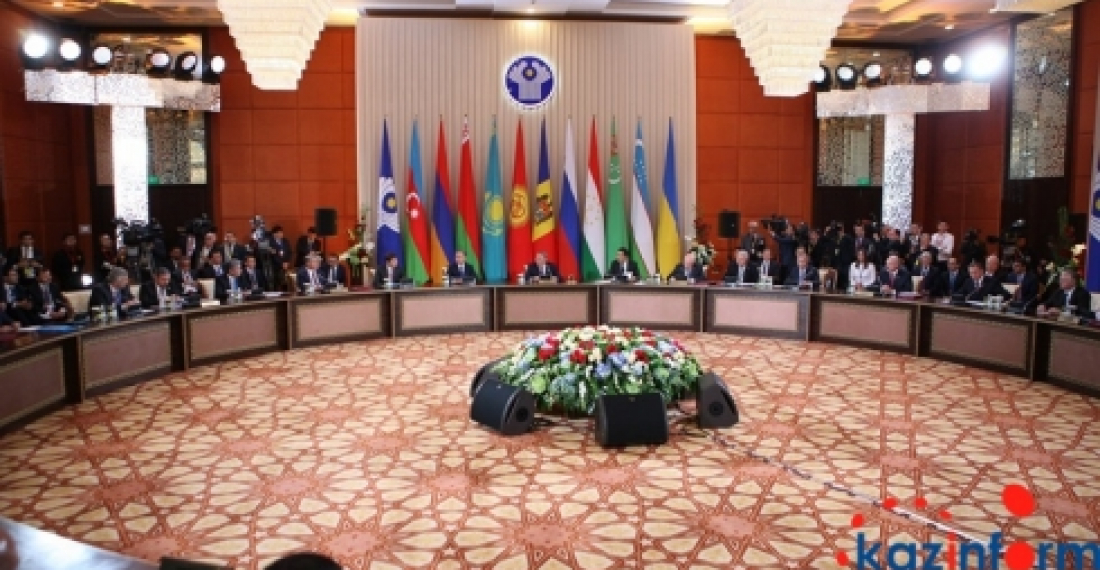
Экономические вопросы возглавили повестку дня на саммите СНГ в Казахстане

В пятницу, 16 октября, в Казахстане был проведен саммит Содружества Независимых Государств (СНГ) с участием президента России Владимира Путина и других глав и правительств государств-членов. Повестку дня возглавили экономические вопросы.

Исходящий председатель СНГ, президент Казахстана Нурсултан Назарбаев, на заседании глав государств СНГ сказал, что "Честно признаюсь, что нам выпало трудное время с экономической точки зрения, но мы старались выполнить свою миссию."

Он отметил, что в Астане пройдет десятый юбилейный форум творческой научной интеллигенции государств СНГ, также в Душанбе состоится заседание Совета глав правительств СНГ.

"Этими мероприятиями мы завершаем свое председательство. Пользуясь случаем, хочу поблагодарить всех наших партнеров за понимание, поддержку нашего председательствования в СНГ", - сказал Назарбаев.

Председательствующей страной в СНГ в 2016 году станет Кыргызстан и следующее заседание глав государств СНГ пройдет в Кыргызстане 16 сентября 2016 года.

В своем выступлении Президент России Владимир Путин также сосредоточился на экономических вопросах. Путин предложил лидерам "более активно переходить на использование наднациональных валют во взаиморасчетах".

Президент России напомнил о соглашении о зоне свободной торговли СНГ, подписанном в 2011 году: "Нужно в полной мере раскрыть его потенциал и максимально упростить условия для движения товарных и инвестиционных потоков," сказал Путин. Он отметил, что "совокупный ВВП стран Содружества в первом полугодии 2015 года снизился, так же как инвестиции в основной капитал." "Товарооборот между нашими странами также просел. В этой ситуации необходимо продумать комплекс мер по снижению зависимости национальных экономик от внешних рынков и подумать об оживлении деловых связей внутри самого Содружества," добавил он.

Путин отметил, что Россия завершает ратификацию Соглашения об интегрированном валютном рынке Содружества. "Соглашение было подписано в Ашхабаде в декабре 2012 года Арменией, Белоруссией, Казахстаном, Киргизией, Россией и Таджикистаном. Вступление в силу этого документа позволит вести согласованную валютную политику, а в перспективе, может быть, и сформировать общий финансовый рынок СНГ", сказал президент России.

источник: commonspace.eu по материалам агентства Казинформ (Казахстан) и ИТАР-ТАСС (Россия).

фото: Открытие заседния Совета глав правительств СНГ в Боровом, в Казахстане, в пятницу, 16 октября 2015 года (фото любезно предоставлено агентством Казинформ).


 

Related articles

Editor's choice
News
Borrell tells the European Parliament that the situation in Afghanistan was critical, but the EU will remain engaged

Borrell tells the European Parliament that the situation in Afghanistan was critical, but the EU will remain engaged

Borrell underlined that the European Union will make every effort to support the peace process and to remain a committed partner to the Afghan people. "Of course, we will have to take into account the evolving situation, but disengagement is not an option.  We are clear on that: there is no alternative to a negotiated political settlement, through inclusive peace talks.
Editor's choice
News
NATO Chief says war is on Europe's doorstep, and warns against complacency

NATO Chief says war is on Europe's doorstep, and warns against complacency

Russia could attack a Nato country within the next five years, the Secretary General of NATO, Mark Rutte, said in a stark new warning. "Nato's own defences can hold for now," Rutte warned in Berlin, but conflict was "next door" to Europe and he feared "too many are quietly complacent, and too many don't feel the urgency, too many believe that time is on our side. "Russia is already escalating its covert campaign against our societies," Rutte said in a speech in Germany. "We must be prepared for the scale of war our grandparents or great-grandparents endured." Earlier this month, Russia's President Vladimir Putin said his country was not planning to go to war with Europe, but it was ready "right now" if Europe wanted to - or started a war. But similar reassurances were given by Moscow in 2022, just before 200,000 Russian troops crossed the border and invaded Ukraine. Putin has accused European countries of hindering US efforts to bring peace in Ukraine - a reference to the role Ukraine's European allies have recently played in trying to change a US peace plan to end the war, whose initial draft was seen as favouring Russia. But Putin was not sincere, Nato's secretary-general said in the German capital, Berlin. Supporting Ukraine, he added, was a guarantee for European security. "Just imagine if Putin got his way; Ukraine under the boot of Russian occupation, his forces pressing against a longer border with Nato, and the significantly increased risk of an armed attack against us." Russia's economy has been on a war footing for more than three years now - its factories churn out ever more supplies of drones, missiles and artillery shells. According to a recent report by the Kiel Institute for the World Economy, Russia has been producing each month around 150 tanks, 550 infantry fighting vehicles, 120 Lancet drones and more than 50 artillery pieces. The UK, and most of its Western allies, are simply not anywhere near this point. Analysts say it would take years for Western Europe's factories to come close to matching Russia's mass-production of weapons. "Allied defence spending and production must rise rapidly, our armed forces must have what they need to keep us safe," the Nato chief said.

Popular

Editor's choice
News
NATO Chief says war is on Europe's doorstep, and warns against complacency

NATO Chief says war is on Europe's doorstep, and warns against complacency

Russia could attack a Nato country within the next five years, the Secretary General of NATO, Mark Rutte, said in a stark new warning. "Nato's own defences can hold for now," Rutte warned in Berlin, but conflict was "next door" to Europe and he feared "too many are quietly complacent, and too many don't feel the urgency, too many believe that time is on our side. "Russia is already escalating its covert campaign against our societies," Rutte said in a speech in Germany. "We must be prepared for the scale of war our grandparents or great-grandparents endured." Earlier this month, Russia's President Vladimir Putin said his country was not planning to go to war with Europe, but it was ready "right now" if Europe wanted to - or started a war. But similar reassurances were given by Moscow in 2022, just before 200,000 Russian troops crossed the border and invaded Ukraine. Putin has accused European countries of hindering US efforts to bring peace in Ukraine - a reference to the role Ukraine's European allies have recently played in trying to change a US peace plan to end the war, whose initial draft was seen as favouring Russia. But Putin was not sincere, Nato's secretary-general said in the German capital, Berlin. Supporting Ukraine, he added, was a guarantee for European security. "Just imagine if Putin got his way; Ukraine under the boot of Russian occupation, his forces pressing against a longer border with Nato, and the significantly increased risk of an armed attack against us." Russia's economy has been on a war footing for more than three years now - its factories churn out ever more supplies of drones, missiles and artillery shells. According to a recent report by the Kiel Institute for the World Economy, Russia has been producing each month around 150 tanks, 550 infantry fighting vehicles, 120 Lancet drones and more than 50 artillery pieces. The UK, and most of its Western allies, are simply not anywhere near this point. Analysts say it would take years for Western Europe's factories to come close to matching Russia's mass-production of weapons. "Allied defence spending and production must rise rapidly, our armed forces must have what they need to keep us safe," the Nato chief said.

