


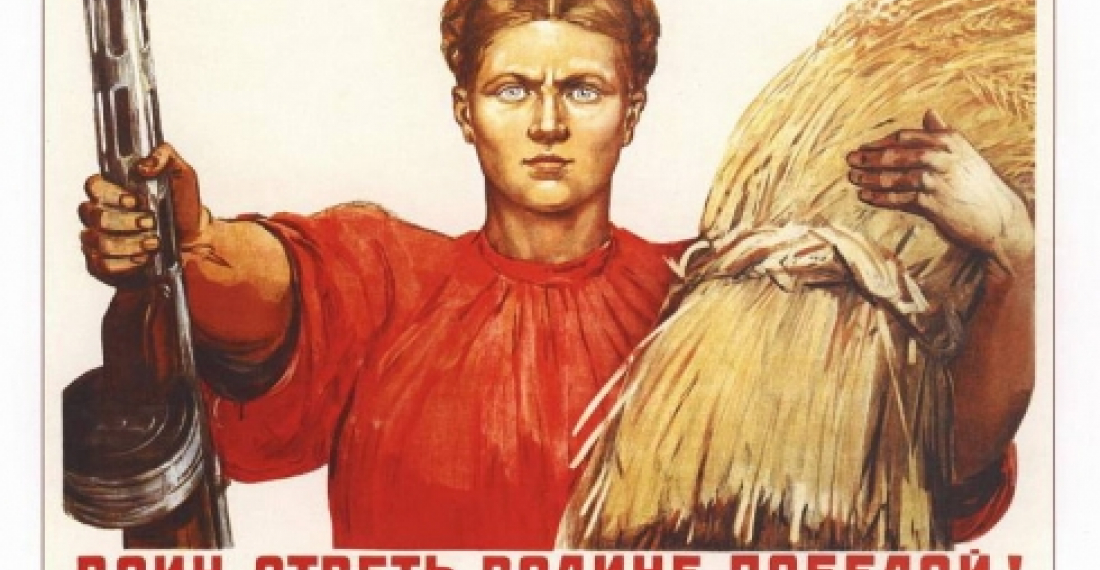
Две трети армян предпочитают СССР. Согласно опросу Gallup из всех народов бывшего Советского Союза армяне больше всех скучают по старым временам.

В докладе, опубликованном на прошлой неделе исследовательским центром Gallup, две трети армян заявили о том, что распад СССР принес больше вреда, чем пользы. С 66% высказавшихся таким образом армян этот показатель значительно выше, чем в среднем среди одиннадцати опрошенных республик, в который вошли все бывшие советские республики, кроме стран Балтии и Украины. Цифры Gallup также показывают показывают, что азербайджанцы, казахи, и туркмены видят больше преимущества, чем вред от распада, мнение грузин разделилось, в то время как представители других национальностей также думают в большинстве, что распад СССР принес больше вреда, чем пользы, хотя и в в меньшей степени, чем армяне.

Читайте более подробно о результатах исследования здесь. 

По словам политического редактора Commonspace.eu:

Опросы общественного мнения в бывших советских республиках должны приниматься со здоровой долей скептицизма. Однако, даже с учетом этого, данные опроса дают некоторую тревожную пищу для размышлений для армянского руководства. Тот факт, что многие армяне считают, что им жилось лучше под коммунистической диктатурой, которая прекратило свое существование двадцать два года назад, многое говорит о том, что произошло за период между тогда и сейчас, и является доказательством разрыва между текущей политической системой Армении и ее населением. На первый взгляд это ставит правительство президента Сержа Саргсяна за одно с народом, учитывая ее выбор за более тесные отношения с Россией во всех сферах. Однако, на ум приходит еще один вывод, который вырисовывается, а именно, что государственность не дало армянскому народу того, чего они ожидали. Конечно армянские политики, а также некоторую ответственность должны разделить оппозиционные силы, должны спросить себя в какой степени их политика и тактика стало причиной такого провала. Существует большая потребность в свежих идеях и новых лицах, чтобы дать народу надежду на будущее. Трудно себе представить, что путинская Россия способна обеспечить чем-либо из этого армян.

Источник: commonspace.eu.

Related articles

Editor's choice
News
(Updated) European leaders arrive in Armenia for Monday's summit of the European Political Community

(Updated) European leaders arrive in Armenia for Monday's summit of the European Political Community

Updated at 1700 CEST. European leaders are arriving in Armenia on Sunday, for the 8th summit of the European Political Community (EPC), which is expected to take place in Yerevan on Monday 4 April. This is the biggest gathering of European leaders in the South Caucasus ever. This afternoon, British Prime Minister, Sir Keir Starmer, and Polish prime minister Donald Tusk where amongst those arriving. Sir Keir was welcomed at Zvarnots International Airport by Vahagn Khachaturyan, the president of Armenia Also among those arriving will be French President, Emanuel Macron, European Commission president, Ursula von der Leyen and European Council president, Antonio Costa. Ukrainian president Volodmyr Zelenski is also expected to attend and he is already in the Armenian capital. Turkish Vice president, Turkish Vice President Cevdet Yilmaz will represent his country in the summit. Also present will be Canadian prime minister, Mark Carney. The European Political Community (EPC) is an intergovernmental forum for political and strategic discussions about the future of Europe established in 2022 after the Russian invasion of Ukraine The group first met in October 2022 in Prague. The 47 EPC participating states are home to 689.5 million people, constitute 8.7 percent of the world's population and represent about 23.5 percent of the global GDP.

Popular

Editor's choice
Interview
Thursday Interview: Murad Muradov

Thursday Interview: Murad Muradov

Today, commonspace.eu starts a new regular weekly series. THURSDAY INTERVIEW, conducted by Lauri Nikulainen, will host  persons who are thinkers, opinion shapers, and implementors in their countries and spheres. We start the series with an interview with Murad Muradov, a leading person in Azerbaijan's think tank community. He is also the first co-chair of the Action Committee for a new Armenian-Azerbaijani Dialogue. Last September he made history by being the first Azerbaijani civil society activist to visit Armenia after the 44 day war, and the start of the peace process. Speaking about this visit Murad Muradov said: "My experience was largely positive. My negative expectations luckily didn’t play out. The discussions were respectful, the panel format bringing together experts from Armenia, Azerbaijan, and Turkey was particularly valuable during the NATO Rose-Roth Seminar in Yerevan, and media coverage, while varied in tone, remained largely constructive. Some media outlets though attempted to represent me as more of a government mouthpiece than an independent expert, which was totally misleading.  Overall, I see these initiatives as important steps in rebuilding trust and normalising professional engagement. The fact that soon a larger Azerbaijani civil society visits to Armenia followed, reinforces the sense that this process is moving in the right direction." (click the image to read the interview in full)


