


Азербайджан празднует 20-летие контракта века.

Азербайджан празднует 20-ю годовщину подписания "Контракта века" - соглашение, которое открыло путь к повышению благосостояния страны в качестве производителя и поставщика энергоресурсов. В 1994 году в Баку тогдашним президентом Гейдаром Алиевым и представителями семи других стран и тринадцати международных компаний был подписан Контракт века. В 1997 году была добыта первая нефть по Договору, что в конечном итоге привело к строительству нефтепровода Баку-Тбилиси-Джейхан (БТД) и ряда других вспомогательных проектов.

По этому случаю вчера в Баку состоялась церемония празднования. Нынешний президент Азербайджана Ильхам Алиев приветствовал ряд президентов, премьер-министров и других высокопоставленных должностных лиц из стран-партнеров. В своем выступлении президент Алиев рассказал о прошлых достижениях Азербайджана и его планах на будущее. Он сказал, что "Контракт века" был успешно реализован в течение этих двадцати лет и принес огромные прибыли.

"Трубопровод БТД соединил Каспийское море и Средиземное море, это историческое достижение. В 2012 году в результате деятельности политического руководства Турции и Азербайджана была достигнута договоренность о строительстве Транс-Анатолийского трубопровода. Проект TANAP и его реализация – историческое событие. Именно после того, как был обговорен проект TANAP, стали просматриваться контуры Южного газового коридора. Проект ТАР – выбор Транс-Адриатического трубопровода в качестве основного экспортного маршрута также явился историческим событием в 2012 году. Одновременно в минувшем году уже были подписаны контракты, связанные с продажей газа. То есть сегодня перед нами открыты все горизонты, ясны все пути. Нам просто необходимо совместными усилиями обеспечить завершение Южного газового коридора, и мы сделаем это."

По словам президента, этот проект принесет дополнительные дивиденды экономике Азербайджана, добавив, что в последние годы бюджетные расходы Азербайджана увеличились в 20 раз, а уровень безработицы упал ниже 5 процентов. Азербайджан занимает 38-е место по экономической конкурентоспособности.

"Азербайджан является крупнейшим акционером в TANAP и возьмет на себя финансовую отвественность за это. Азербайджан сам финансирует свою долю в проектах Шах-Дениз, TANAP и TAP. От реализации этого проекта ни одна сторона не проиграет. Этот проект будет играть Ключевую роль в энергоснабжении Европы. Азербайджан играет важную роль в обеспечении энергетической безопасности Европы и эта роль будет только расти в будущем ", отметил Президент.

Президент Ильхам Алиев отметил, что доказанные запасы газа в Азербайджане в 2,5 триллиона кубических метров, не доказанных - 4 триллиона кубических метров.

До этого в наших газовых и нефтяных проектах участвовали лишь три страны – Азербайджан, Грузия и Турция. После этого к данному проекту смогут подключиться Грузия, Турция, Греция, Болгария, Албания, Италия, а на следующем этапе – Монтенегро, Хорватия и другие страны. Поэтому здесь координационная работа должна проводиться на очень высоком уровне.

Президент в сопровождении иностранных гостей позже принял участие в церемонии закладки первого камня нового Южного газового коридора - проект, который будет способствовать энергетической безопасности Европы и который, как ожидается, придаст дальнейший экономический толчок региону. 

Источник: commonspace.eu по материалам АПА. 

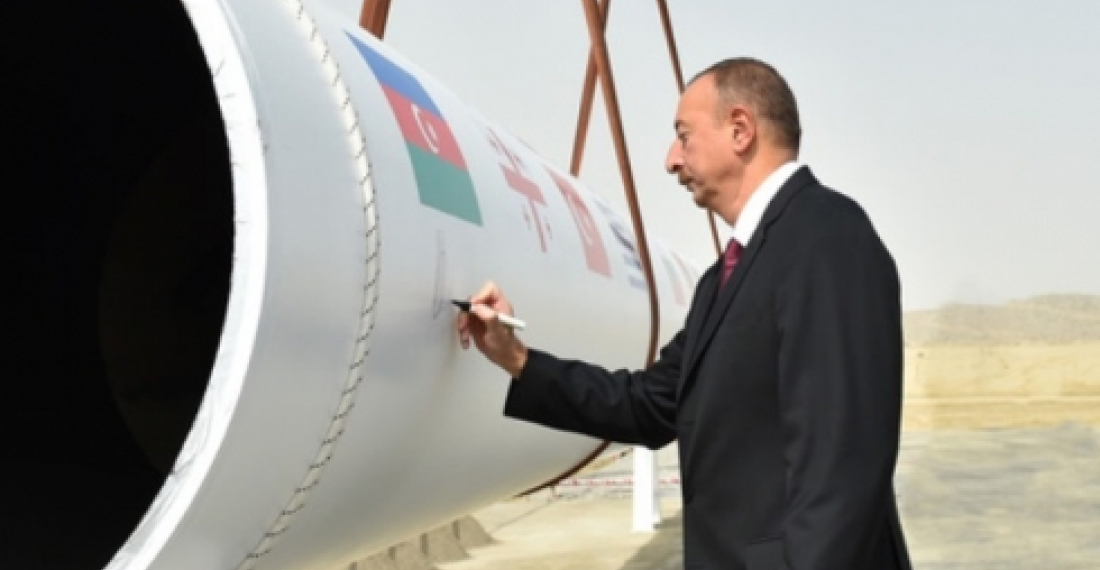
фото: Президент Ильхам Алиев ставит свою подпись на части нового трубопровода Южного газового коридора в Баку, 20 сентября 2014 (фото любезно предоставлено пресс-службой президента Азербайджана.


Related articles

Editor's choice
News
Germany accuses Russia of cyberattacks and disinformation campaign

Germany accuses Russia of cyberattacks and disinformation campaign

The German government holds Russia responsible for a cyberattack on German air traffic control, and for targeted disinformation campaigns before the last federal election. According to the German Foreign Office in Berlin, the incidents could be clearly attributed to the Russian military intelligence service, the GRU. In response, the Russian ambassador to Berlin was summoned to the Foreign Ministry. "We have been observing a massive increase in threatening hybrid activities by Russia for some time now," a spokesperson for the Foreign Ministry stated. These range from disinformation campaigns and espionage to cyberattacks and sabotage attempts. The aim is to divide society, sow distrust, and undermine confidence in democratic institutions. The spokesperson added that with these actions, Russia is "very concretely threatening our security, not only through its war of aggression against Ukraine, but also here in Germany."  The Foreign Ministry spokesperson explained that the cyberattack on air traffic control in August 2024 was clearly attributed to the hacker collective "APT28," known as "Fancy Bear," and to the responsibility of the Russian military intelligence service, the GRU. Furthermore, it could now be "conclusively stated" that Russia had attempted "to influence and destabilize both the last Federal election and the ongoing internal affairs of the Federal Republic of Germany." There was "absolutely irrefutable evidence" for this". The so-called "Storm 1516" campaign, which has been running since 2024, is allegedly backed by "reliable information" that the Moscow-based think tank "Center for Geopolitical Expertise" is behind it. The Center is also said to be supported by Russian military intelligence. Its primary aim is to influence democratic elections in the West. (Click the image to read more).
Editor's choice
News
NATO Chief says war is on Europe's doorstep, and warns against complacency

NATO Chief says war is on Europe's doorstep, and warns against complacency

Russia could attack a NATO country within the next five years, the Secretary General of NATO, Mark Rutte, said in a stark new warning. "NATO's own defences can hold for now," Rutte warned in Berlin, but conflict was "next door" to Europe, and he feared "too many are quietly complacent, and too many don't feel the urgency, too many believe that time is on our side. "Russia is already escalating its covert campaign against our societies," Rutte said in a speech in Germany. "We must be prepared for the scale of war our grandparents or great-grandparents endured." Earlier this month, Russia's President Vladimir Putin said his country was not planning to go to war with Europe, but it was ready "right now" if Europe wanted to - or started a war. But similar reassurances were given by Moscow in 2022, just before 200,000 Russian troops crossed the border and invaded Ukraine. Putin has accused European countries of hindering US efforts to bring peace in Ukraine - a reference to the role Ukraine's European allies have recently played in trying to change a US peace plan to end the war, whose initial draft was seen as favouring Russia. But Putin was not sincere, Nato's secretary-general said in the German capital, Berlin. Supporting Ukraine, he added, was a guarantee for European security. "Just imagine if Putin got his way; Ukraine under the boot of Russian occupation, his forces pressing against a longer border with Nato, and the significantly increased risk of an armed attack against us." Russia's economy has been on a war footing for more than three years now - its factories churn out ever more supplies of drones, missiles and artillery shells. According to a recent report by the Kiel Institute for the World Economy, Russia has been producing each month around 150 tanks, 550 infantry fighting vehicles, 120 Lancet drones and more than 50 artillery pieces. The UK, and most of its Western allies, are simply not anywhere near this point. Analysts say it would take years for Western Europe's factories to come close to matching Russia's mass-production of weapons. "Allied defence spending and production must rise rapidly, our armed forces must have what they need to keep us safe," the Nato chief said.

Popular

Editor's choice
News
Germany accuses Russia of cyberattacks and disinformation campaign

Germany accuses Russia of cyberattacks and disinformation campaign

The German government holds Russia responsible for a cyberattack on German air traffic control, and for targeted disinformation campaigns before the last federal election. According to the German Foreign Office in Berlin, the incidents could be clearly attributed to the Russian military intelligence service, the GRU. In response, the Russian ambassador to Berlin was summoned to the Foreign Ministry. "We have been observing a massive increase in threatening hybrid activities by Russia for some time now," a spokesperson for the Foreign Ministry stated. These range from disinformation campaigns and espionage to cyberattacks and sabotage attempts. The aim is to divide society, sow distrust, and undermine confidence in democratic institutions. The spokesperson added that with these actions, Russia is "very concretely threatening our security, not only through its war of aggression against Ukraine, but also here in Germany."  The Foreign Ministry spokesperson explained that the cyberattack on air traffic control in August 2024 was clearly attributed to the hacker collective "APT28," known as "Fancy Bear," and to the responsibility of the Russian military intelligence service, the GRU. Furthermore, it could now be "conclusively stated" that Russia had attempted "to influence and destabilize both the last Federal election and the ongoing internal affairs of the Federal Republic of Germany." There was "absolutely irrefutable evidence" for this". The so-called "Storm 1516" campaign, which has been running since 2024, is allegedly backed by "reliable information" that the Moscow-based think tank "Center for Geopolitical Expertise" is behind it. The Center is also said to be supported by Russian military intelligence. Its primary aim is to influence democratic elections in the West. (Click the image to read more).

