


Азербайджан и ЕС нашли общий язык.

После трудного периода в отношениях между Азербайджаном и Европейским Союзом обе стороны, кажется, определили точки соприкосновения во время ключевого визита президента Совета ЕС Дональда Туска в Баку, в среду.

После посещения Армении в понедельник, и Грузии во вторник, сегодняшний заключительный визит Туска по странам Южного Кавказа определенно был самым сложным. Отношения между Азербайджаном и Европейским Союзом на протяжении последних месяцев были напряженными, из-за резкой реакции Баку на критику в свой адрес касательно ситуации с правами человека со стороны европейских организации гражданского общества и ряда государств-членов. Президент Азербайджана проигнорировал последний саммит Восточного партнерства в Риге в мае, а в какой-то момент, даже погрозил наложить вето на окончательное коммюнике.

Однако, визит Туска, кажется, предоставил обоим сторонам возможность перевернуть страницу. Выступая после встречи для прессы с президентом Азербайджана Ильхамом Алиевым президент Совета Европейского Союза заявил, что обе стороны "согласились задать быстрый темп в наших переговорах по соглашению о стратегическом партнерстве". Азербайджан искал такого формата отношений с момента, как стало ясно, что у него нет никакого интереса подписывать Соглашение об ассоциации с ЕС.

Дональд Туск также выразил мнение Европейского Союза касательно нагорно-карабахского конфликта в четких и недвусмысленных формулировках, которые порадовали принимающую сторону:

"Позвольте мне также подтвердить, что ЕС поддерживает территориальную целостность, независимость и суверенитет Азербайджана. ЕС и его государства-члены не признают Нагорный Карабах.

Статус-кво является неприемлемым и мирное разрешение нагорно-карабахского конфликта остается приоритетом для ЕС. Мы по-прежнему поддерживаем посреднические усилия сопредседателей Минской группы ОБСЕ".

Однако, Туск также дал понять, что вопросы прав человека остаются важным фактором в отношениях, и еще раз высказался об этом ясным и однозначным языком:

"Я подчеркиваю высокую значимость, которую мы придаем правам человека и основным свободам. ЕС считает, что открытое общество это лучшая гарантия долгосрочной стабильности и процветания. Я обсудил с президентом наши опасения с задержанием правозащитников здесь и мы надеемся, что по отдельным случаям будут приняты оперативные действия. Мы продолжим обсуждать эти вопросы, а также обдумывать пути хорошего и взаимовыгодного сотрудничества в области прав человека, а также в контексте будущих наших договорных отношений. После этой встречи, Я встречусь с представителями гражданского общества".

Со своей стороны президент Азербайджана Ильхам Алиев заявил, что визит Туска очень важен для ЕС-азербайджанских отношений. Алиев отметил, что эти отношения очень важны для Азербайджана. "Мы видим хорошее позитивное развитие в партнерстве ЕС-Азербайджан", заявил Ильхам Алиев, также отметив, что на ЕС приходится половина всего объема товарооборота Азербайджана, а также иностранных инвестиций. "У нас тесные политические связи, и мы будем развивать их в будущем", сказал президент.

По словам политического редактора Commonspace.eu этот визит, похоже, помог обеим сторонам перевернуть страницу в их отношениях. Обе стороны понимают, что эти отношения не притворные, и стоят на основе общих интересов. Азербайджан заверили слова президента Дональда Туска по карабахскому конфликту, даже несмотря на то, что он [Азербайджан] хотел бы видеть больше давления на Армению в этом отношении со стороны ЕС. Однако, вопрос о правах человека остается реальным и нерешенным. Здесь ответственность лежит на правительстве Азербайджана, которое должно поспешить с освобождением активистов гражданского общества, которые в настоящее время находятся в заключении, и создать более благоприятные условия для деятельности гражданского общества в стране".

источник: commonspace.eu

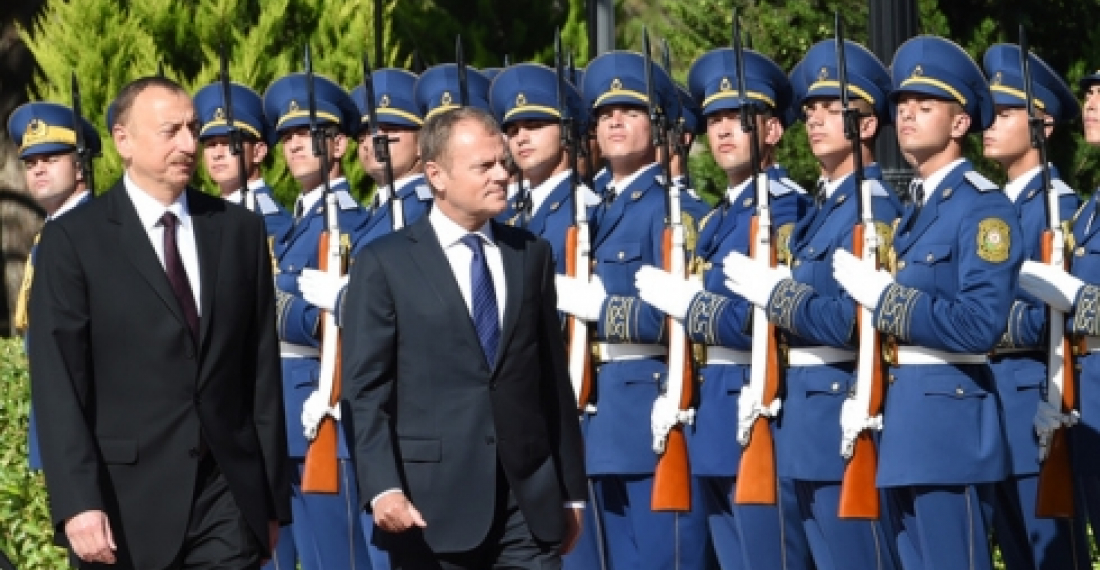
Фото: Президент Азербайджана Ильхам Алиев и президент Совета ЕС Дональд Туск принимают почетный караул незадолго до переговоров в Баку, в среду, 22 июля 2015 (фото любезно предоставлено пресс-службой президента Азербайджана).


 

Related articles

Editor's choice
News
Germany accuses Russia of cyberattacks and disinformation campaign

Germany accuses Russia of cyberattacks and disinformation campaign

The German government holds Russia responsible for a cyberattack on German air traffic control, and for targeted disinformation campaigns before the last federal election. According to the German Foreign Office in Berlin, the incidents could be clearly attributed to the Russian military intelligence service, the GRU. In response, the Russian ambassador to Berlin was summoned to the Foreign Ministry. "We have been observing a massive increase in threatening hybrid activities by Russia for some time now," a spokesperson for the Foreign Ministry stated. These range from disinformation campaigns and espionage to cyberattacks and sabotage attempts. The aim is to divide society, sow distrust, and undermine confidence in democratic institutions. The spokesperson added that with these actions, Russia is "very concretely threatening our security, not only through its war of aggression against Ukraine, but also here in Germany."  The Foreign Ministry spokesperson explained that the cyberattack on air traffic control in August 2024 was clearly attributed to the hacker collective "APT28," known as "Fancy Bear," and to the responsibility of the Russian military intelligence service, the GRU. Furthermore, it could now be "conclusively stated" that Russia had attempted "to influence and destabilize both the last Federal election and the ongoing internal affairs of the Federal Republic of Germany." There was "absolutely irrefutable evidence" for this". The so-called "Storm 1516" campaign, which has been running since 2024, is allegedly backed by "reliable information" that the Moscow-based think tank "Center for Geopolitical Expertise" is behind it. The Center is also said to be supported by Russian military intelligence. Its primary aim is to influence democratic elections in the West. (Click the image to read more).
Editor's choice
News
NATO Chief says war is on Europe's doorstep, and warns against complacency

NATO Chief says war is on Europe's doorstep, and warns against complacency

Russia could attack a NATO country within the next five years, the Secretary General of NATO, Mark Rutte, said in a stark new warning. "NATO's own defences can hold for now," Rutte warned in Berlin, but conflict was "next door" to Europe, and he feared "too many are quietly complacent, and too many don't feel the urgency, too many believe that time is on our side. "Russia is already escalating its covert campaign against our societies," Rutte said in a speech in Germany. "We must be prepared for the scale of war our grandparents or great-grandparents endured." Earlier this month, Russia's President Vladimir Putin said his country was not planning to go to war with Europe, but it was ready "right now" if Europe wanted to - or started a war. But similar reassurances were given by Moscow in 2022, just before 200,000 Russian troops crossed the border and invaded Ukraine. Putin has accused European countries of hindering US efforts to bring peace in Ukraine - a reference to the role Ukraine's European allies have recently played in trying to change a US peace plan to end the war, whose initial draft was seen as favouring Russia. But Putin was not sincere, Nato's secretary-general said in the German capital, Berlin. Supporting Ukraine, he added, was a guarantee for European security. "Just imagine if Putin got his way; Ukraine under the boot of Russian occupation, his forces pressing against a longer border with Nato, and the significantly increased risk of an armed attack against us." Russia's economy has been on a war footing for more than three years now - its factories churn out ever more supplies of drones, missiles and artillery shells. According to a recent report by the Kiel Institute for the World Economy, Russia has been producing each month around 150 tanks, 550 infantry fighting vehicles, 120 Lancet drones and more than 50 artillery pieces. The UK, and most of its Western allies, are simply not anywhere near this point. Analysts say it would take years for Western Europe's factories to come close to matching Russia's mass-production of weapons. "Allied defence spending and production must rise rapidly, our armed forces must have what they need to keep us safe," the Nato chief said.

Popular

Editor's choice
News
Germany accuses Russia of cyberattacks and disinformation campaign

Germany accuses Russia of cyberattacks and disinformation campaign

The German government holds Russia responsible for a cyberattack on German air traffic control, and for targeted disinformation campaigns before the last federal election. According to the German Foreign Office in Berlin, the incidents could be clearly attributed to the Russian military intelligence service, the GRU. In response, the Russian ambassador to Berlin was summoned to the Foreign Ministry. "We have been observing a massive increase in threatening hybrid activities by Russia for some time now," a spokesperson for the Foreign Ministry stated. These range from disinformation campaigns and espionage to cyberattacks and sabotage attempts. The aim is to divide society, sow distrust, and undermine confidence in democratic institutions. The spokesperson added that with these actions, Russia is "very concretely threatening our security, not only through its war of aggression against Ukraine, but also here in Germany."  The Foreign Ministry spokesperson explained that the cyberattack on air traffic control in August 2024 was clearly attributed to the hacker collective "APT28," known as "Fancy Bear," and to the responsibility of the Russian military intelligence service, the GRU. Furthermore, it could now be "conclusively stated" that Russia had attempted "to influence and destabilize both the last Federal election and the ongoing internal affairs of the Federal Republic of Germany." There was "absolutely irrefutable evidence" for this". The so-called "Storm 1516" campaign, which has been running since 2024, is allegedly backed by "reliable information" that the Moscow-based think tank "Center for Geopolitical Expertise" is behind it. The Center is also said to be supported by Russian military intelligence. Its primary aim is to influence democratic elections in the West. (Click the image to read more).

