


АРМЕНИЯ - МГ ОБСЕ

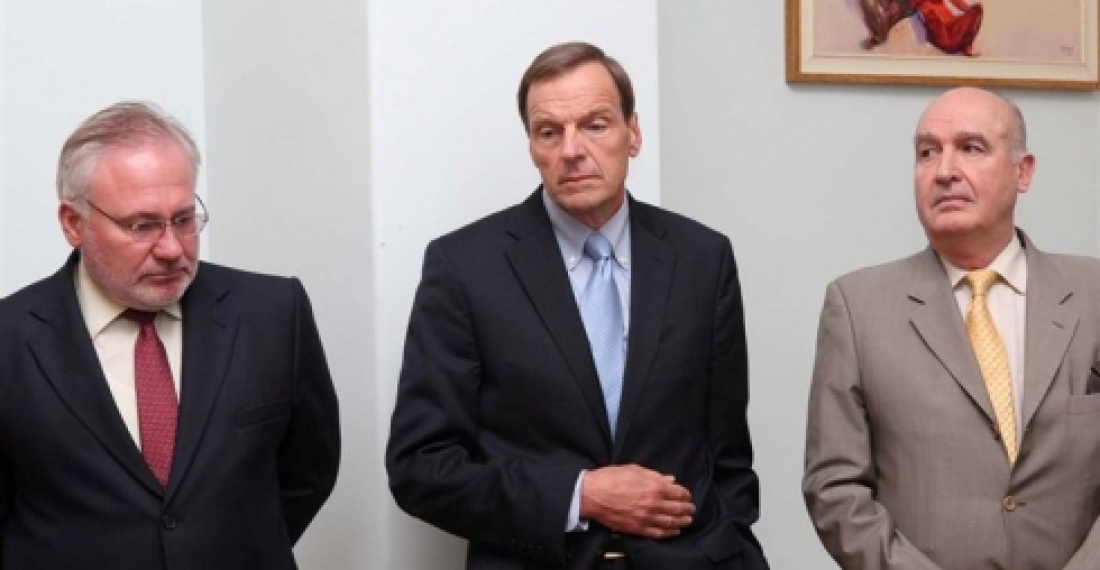
"Мы приехали в регион несколько дней назад, в понедельник были в Баку, где встретились с президентом Азербайджана и министром иностранных дел. Вчера мы пересекли линию соприкосновения - в третий раз в течение почти полугода, и для нас это очень положительный знак. Это говорит о том, что военные командиры способны контактировать, содействовать, взаимодействовать, чтобы обеспечить нас гарантиями безопасности, и одновременно показывает, что это сотрудничество позволяет лучше соблюдать режим прекращения огня. И мы очень надеемся, что эти переходы, поскольку они становятся регулярными, будут поддерживать прекращение огня". Как сообщает собкор АрмИнфо в Степанакерте, об этом заявил по итогам встречи с президентом  Нагорного Карабаха Бако Саакяном сопредседатель Минской группы ОБСЕ по урегулированию карабахского конфликта от Франции Бернар Фасье,  находящийся в рамках регионального визита в столице НКР   вместе со своими коллегами Робертом Брадтке (США) и Игорем Поповым (Россия).

"Сегодня вечером будем в Ереване, где завтра встретимся с президентом Саркисяном и министром иностранных дел. Вы знаете, что несколько дней назад на саммите Восьмерки в Довиле наши три президента объявили очень важную совместную декларацию, где они подчеркнули, что иного выхода, кроме мирного урегулирования нет. Это очень важный момент.  Они подчеркнули также, что было бы очень хорошо, если бы  базовые принципы регулирования как можно скорее были одобрены, для того чтобы затем приступить к подготовке проекта мирного урегулирования", - отметил Бернар Фасье.  По его словам, первый вариант базовых принципов был объявлен в конце 2007 года, а последний вариант был обсужден в Сочи, три месяца назад. "С тех пор были внесены корректировки, некоторые пункты будут доработаны. Мы надеемся, что будет достигнуто одобрение окончательного варианта", - сказал французский посредник.

Отвечая на вопрос журналистов относительно оптимизма посредников, Бернар Фасье отметил: "Шесть с половиной лет я пытаюсь помочь сторонам. Это было  бы невозможно без оптимизма". 

 

Related articles

Editor's choice
News
Armenia-Azerbaijan Strategic Expert Platform: Members emphasise the importance of the present moment for the South Caucasus and call for the momentum to be used for the long-term peace and prosperity of the region

Armenia-Azerbaijan Strategic Expert Platform: Members emphasise the importance of the present moment for the South Caucasus and call for the momentum to be used for the long-term peace and prosperity of the region

On 27 February 2026, the members of the Armenia-Azerbaijan Strategic Expert Platform met in Antwerp, Belgium, to assess developments in the South Caucasus following the initialling of a peace agreement between Armenia and Azerbaijan on 8 August 2025 at the White House. The members described the present moment as one of major importance for the region and its neighbours, urging leaders and societies alike to use the current momentum to secure long-term peace and prosperity. Established in 2024 with the support of LINKS Europe, the Platform provides a space for direct dialogue and joint analysis between Armenian and Azerbaijani experts. The members also reaffirmed the importance of continued international engagement and expressed strong support for LINKS Europe’s ongoing peacebuilding work in the region. (Click on the image above for the full statement.)

Popular

Editor's choice
Interview
Thursday Interview: Murad Muradov

Thursday Interview: Murad Muradov

Today, commonspace.eu starts a new regular weekly series. THURSDAY INTERVIEW, conducted by Lauri Nikulainen, will host  persons who are thinkers, opinion shapers, and implementors in their countries and spheres. We start the series with an interview with Murad Muradov, a leading person in Azerbaijan's think tank community. He is also the first co-chair of the Action Committee for a new Armenian-Azerbaijani Dialogue. Last September he made history by being the first Azerbaijani civil society activist to visit Armenia after the 44 day war, and the start of the peace process. Speaking about this visit Murad Muradov said: "My experience was largely positive. My negative expectations luckily didn’t play out. The discussions were respectful, the panel format bringing together experts from Armenia, Azerbaijan, and Turkey was particularly valuable during the NATO Rose-Roth Seminar in Yerevan, and media coverage, while varied in tone, remained largely constructive. Some media outlets though attempted to represent me as more of a government mouthpiece than an independent expert, which was totally misleading.  Overall, I see these initiatives as important steps in rebuilding trust and normalising professional engagement. The fact that soon a larger Azerbaijani civil society visits to Armenia followed, reinforces the sense that this process is moving in the right direction." (click the image to read the interview in full)


