


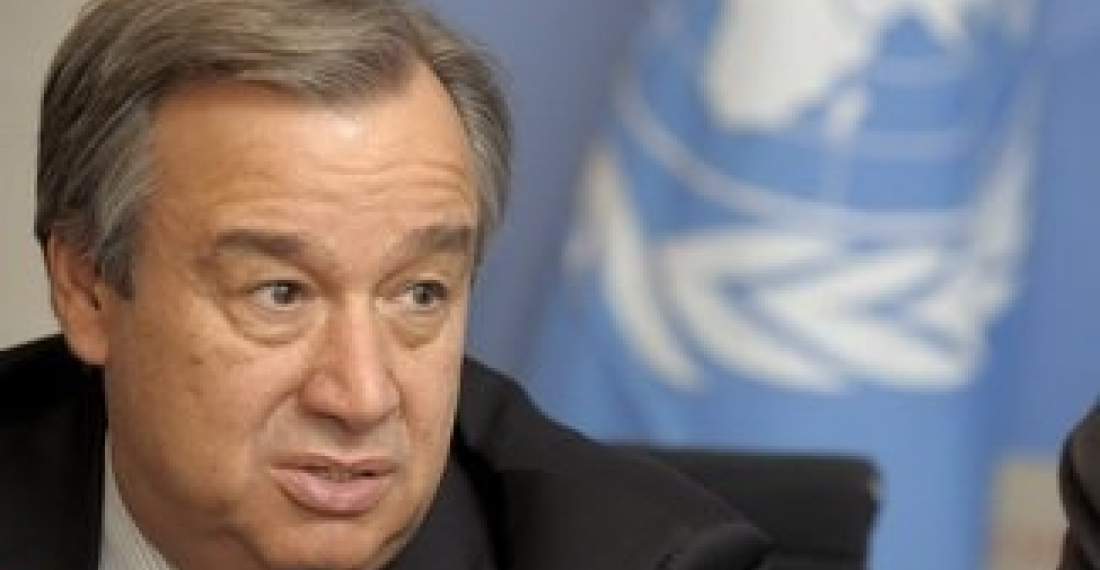
Антонио Гутерреш:

БАКУ, 19 мая – 1NEWS.AZ

Верховный комиссариат ООН по делам беженцев не ведет никакой деятельности в Нагорном Карабахе и других соседних с ним оккупированных районах Азербайджана.

Как передает 1news.az, об этом на пресс-конференции по итогам своего визита в Азербайджан заявил Верховный комиссар ООН по делам беженцев Антонио Гутерреш.

По его словам, «пока не будет достигнуто политическое решение по Нагорно-Карабахскому конфликту и согласия сторон, мы не намерены вести какую-либо деятельность на оккупированных территориях Азербайджана».

«Это может быть реализовано только на основе консенсуса», - сказал А. Гутерреш.

Верховный комиссар отметил, что именно с согласия руководства Азербайджана и Армении была осуществлена наблюдательная миссия ОБСЕ на оккупированной территории, в которой была представлена и ООН.

«Отчет по миссии был подготовлен со стороны ОБСЕ. Верховный комиссариат ООН был всего лишь членом делегации. ООН не будет писать отчет и выступать с заявлением по миссии. Цель Верховного комиссариата ООН – не вмешиваться в этот политический процесс, а оказывать помощь беженцам и вынужденным переселенцам», - сказал он.

Также А. Гутерреш подчеркнул, что его визит в Азербайджан «преследует цель доведения до сведения мирового сообщества информации о том, что нагорно-Карабахский конфликт не решен, и эта проблема все еще существует».

Он высоко оценил предпринятые за последние 5 лет руководством Азербайджана меры в рамках решения проблем беженцев и вынужденных переселенцев.

«Азербайджанское государство потратило на каждого беженца и вынужденного переселенца больше средств, чем это было сделано в любой другой стране мира. Азербайджанский народ и государство могут гордиться тем, что не оставили без заботы своих беженцев, встретили их и оказали всю необходимую помощь», - резюмировал А. Гутерреш.

Расим Бабаев, Алена Салаева

Related articles

Editor's choice
News
Armenia-Azerbaijan Strategic Expert Platform: Members emphasise the importance of the present moment for the South Caucasus and call for the momentum to be used for the long-term peace and prosperity of the region

Armenia-Azerbaijan Strategic Expert Platform: Members emphasise the importance of the present moment for the South Caucasus and call for the momentum to be used for the long-term peace and prosperity of the region

On 27 February 2026, the members of the Armenia-Azerbaijan Strategic Expert Platform met in Antwerp, Belgium, to assess developments in the South Caucasus following the initialling of a peace agreement between Armenia and Azerbaijan on 8 August 2025 at the White House. The members described the present moment as one of major importance for the region and its neighbours, urging leaders and societies alike to use the current momentum to secure long-term peace and prosperity. Established in 2024 with the support of LINKS Europe, the Platform provides a space for direct dialogue and joint analysis between Armenian and Azerbaijani experts. The members also reaffirmed the importance of continued international engagement and expressed strong support for LINKS Europe’s ongoing peacebuilding work in the region. (Click on the image above for the full statement.)

Popular

Editor's choice
Interview
Thursday Interview: Murad Muradov

Thursday Interview: Murad Muradov

Today, commonspace.eu starts a new regular weekly series. THURSDAY INTERVIEW, conducted by Lauri Nikulainen, will host  persons who are thinkers, opinion shapers, and implementors in their countries and spheres. We start the series with an interview with Murad Muradov, a leading person in Azerbaijan's think tank community. He is also the first co-chair of the Action Committee for a new Armenian-Azerbaijani Dialogue. Last September he made history by being the first Azerbaijani civil society activist to visit Armenia after the 44 day war, and the start of the peace process. Speaking about this visit Murad Muradov said: "My experience was largely positive. My negative expectations luckily didn’t play out. The discussions were respectful, the panel format bringing together experts from Armenia, Azerbaijan, and Turkey was particularly valuable during the NATO Rose-Roth Seminar in Yerevan, and media coverage, while varied in tone, remained largely constructive. Some media outlets though attempted to represent me as more of a government mouthpiece than an independent expert, which was totally misleading.  Overall, I see these initiatives as important steps in rebuilding trust and normalising professional engagement. The fact that soon a larger Azerbaijani civil society visits to Armenia followed, reinforces the sense that this process is moving in the right direction." (click the image to read the interview in full)


