China's president, Xi Jinping, has spoken about the role of the Communist Party of China on both domestic and international levels, in a speech on Wednesday ( 1 July) to mark the 105th anniversary of the founding of the party.
In a comprehensive and wide-ranging address, Xi reviewed the history of the party, recounting its historical achievements and summarising the key factors behind its success, including maintaining the party’s "purity and discipline".
Xi highlighted the party’s success as a new path for developing countries.
“This has created a new form of human civilisation and opened up new paths for developing countries to modernise. China has also contributed its ideas and solutions to major global challenges.”
Xi was direct on the party’s standing, calling it the world’s largest ruling party with “significant global influence” that has the “genuine support of the people”.
Item not supported in this print-friendly version
He also took the opportunity to warn party members against risks to come, calling on them to be pragmatic and flexible in solving problems, to ensure the party can stay ahead of the curve.
The speech came at a time of emerging global conflicts, from the war in Ukraine to the Venezuela crisis that followed US military strikes and abduction of then-president Nicolo Maduro in January, to the US-Israeli war on Iran war that has widened across the Middle East since February.
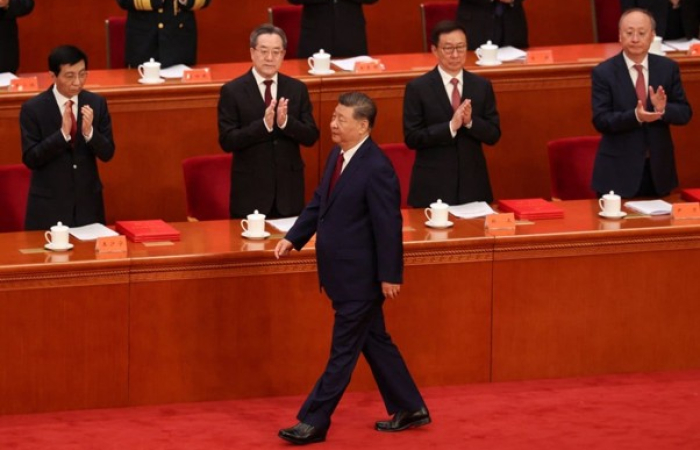
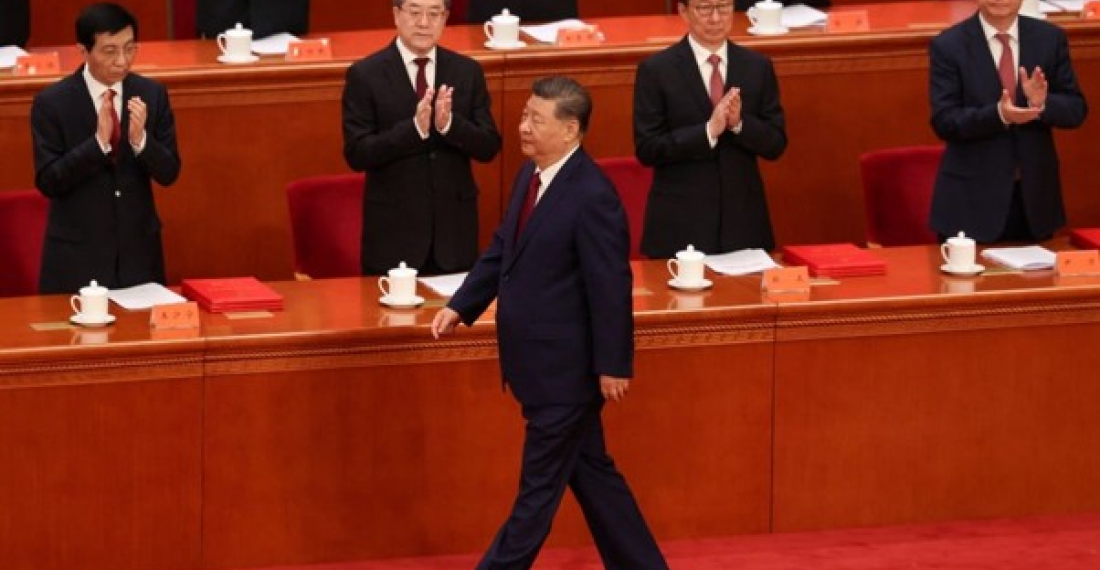
The remarks were made at a grand ceremony in Beijing’s Great Hall of the People, where Xi also gave out July 1 Medals to individuals recognised for their contribution to the party.
The event takes place at a key moment for the party, which is understood to have started preparing for next year’s national party congress, a five-yearly event that will see a new line-up of the party’s top leadership.
It is also likely to endorse another five-year term for Xi as party leader.
During his speech, Xi called for military modernisation, urging the PLA to achieve its goals for the centenary, which lands on August 1, 2027, while accelerating efforts to build a “world-class” military, a goal Beijing has set for 2050.
He also called for “comprehensively advancing the political building of the military” and “governing the armed forces according to law”, slogans closely associated with the efforts to fight corruption within the military.
The remarks came as Beijing has continued its anti-corruption drive within the PLA, bringing down a string of generals, including five of the seven members of the Central Military Commission (CMC), the country’s top military decision-making body.
Xi also repeated his stance on Taiwan, without showing a clear sense of urgency.
“Resolving the Taiwan question and realising the complete reunification of the motherland is the unswerving historical mission of our party and the shared aspiration of all Chinese people,” Xi said.
source: commonspace.eu with South China Morning Post (Hong Kong) and agencies