


Kazakhstan to implement constitutional reforms

Kazakhstan’s constitutional reform is entering its final and most systemic phase, where previously fragmented changes are being consolidated into a coherent model of political governance, according to a report on  Qazinfrom News Agency.

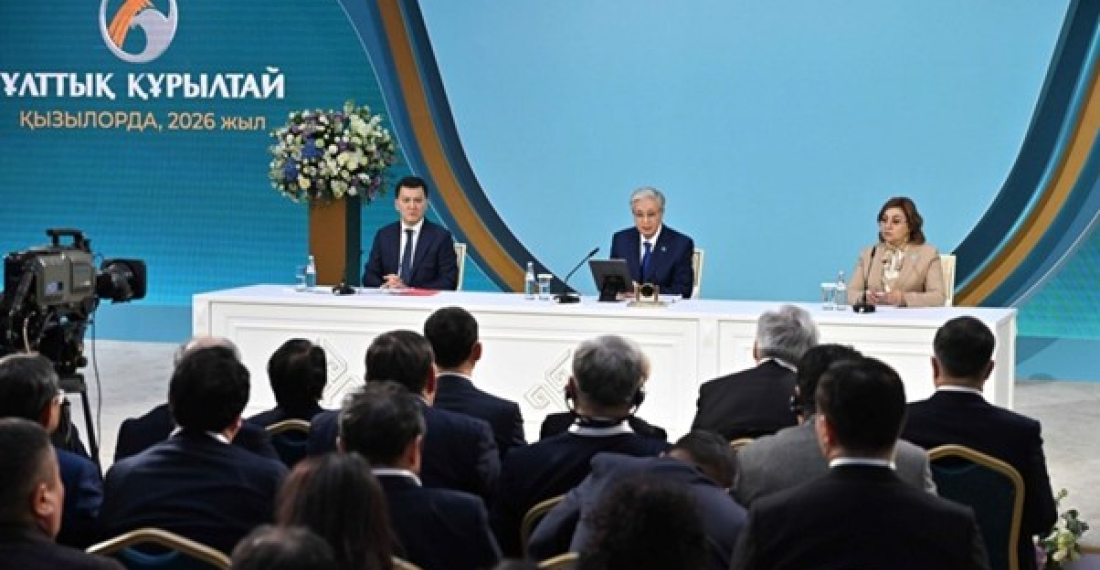
At the 5th session of the Ulttyq Qurultay (National Assembly), President Kassym-Jomart Tokayev announced that the upcoming constitutional reforms are comparable in scale to adopting an entirely new Constitution. The initial plan under parliamentary reform was to amend around 40 articles of the Constitution. However, during the process it became clear that significantly more changes would be required. President Tokayev told members of the Ulttyq Qurultay.

In 2022, 33 articles of the Constitution were updated. The forthcoming amendments will be even more extensive. In essence, we are on the threshold of a step equivalent to adopting a new Constitution 

 The emphasis is no longer on selective institutional adjustments, but on formally securing a new configuration of power aimed at stability, continuity, and a clearer distribution of responsibility between branches of government.

Speaking at the 5th session of the Ulttyq Qurultay (National Assembly) on January 20, 2026, the President proposed the establishment of the post of vice president with constitutional status. This initiative is presented as a logical completion of the political architecture that has been gradually constructed over recent years, designed to enhance manageability and institutional resilience.

A central element of the reform agenda concerns the transformation of the parliamentary system. The proposed shift to a unicameral parliament named “Qurultay”, elected through a proportional representation system, reflects an effort to simplify the structure of representative power while strengthening its political role.

The abolition of presidential and Assembly of the People quotas, combined with the retention of social representation quotas, as well as the expansion of parliamentary oversight powers in judicial and senior state appointments, signals a recalibration of institutional checks within the system.

This approach suggests an attempt to enhance the role of representative institutions while reducing structural complexity and bureaucratic inertia. The rejection of a bicameral model and the optimization of parliamentary procedures are framed as measures to increase legislative efficiency and political accountability.

Beyond institutional reform, the President’s address also placed strong emphasis on value-based issues, including responsible patriotism, protection of cultural traditions, the institution of marriage, civil rights, and the proper use of state symbols, underscoring their role in strengthening national identity amid ongoing political transformation. Overall, the proposed initiatives institutionalize the results of Kazakhstan’s political transformation and to establish a more stable governance framework.

Earlier, Qazinform News Agency reported that President of Kazakhstan Kassym-Jomart Tokayev proposed naming the new unicameral parliament “Qurultay” and outlined the key parameters of its institutional structure.

 source: commonspace.eu with Qazinform News Agency (Astana)

photo: President of Kazakhstan Kassym-Jomart Tokayev addressing the Kazakh National Assembly on 20 January 2026
 

Related articles

Editor's choice
News
Mark Carney: "The world is in the midst of a rupture, not a transition"

Mark Carney: "The world is in the midst of a rupture, not a transition"

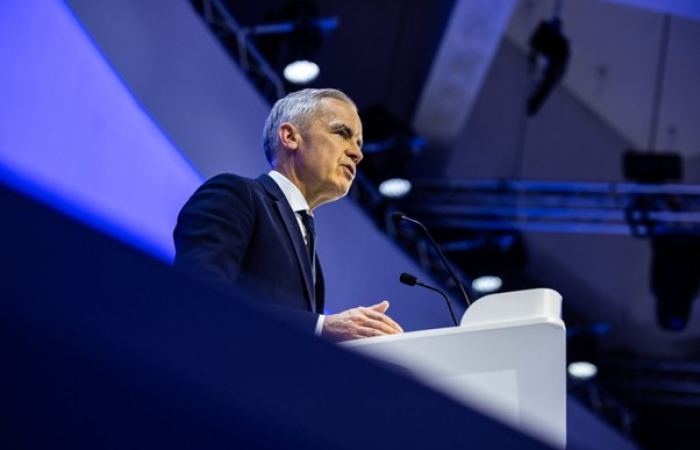
Canadian Prime Minister Mark Carney said the "old order is not coming back" and urged fellow middle powers to come together in a speech at the World Economic Forum in Davos, Switzerland. "Middle powers must act together because if we're not at the table, we're on the menu," Carney said on Tuesday, adding that he believed powerful nations were using economic coercion to get what they want. He also affirmed Canada's support for Greenland, Denmark and the Nato alliance, drawing applause. "Great powers" are often defined as countries with permanent seats on United Nations Security Council - China, France, Russia, the United Kingdom and the United States - which shows their economic and military dominance in the world. Middle powers, such as Canada, Australia, Argentina, South Korea and Brazil, are nations that still exert large influence in global politics, even though their economies are smaller. In his speech, Carney said the world is "in the midst of a rupture, not a transition". "Great powers have begun using economic integration as weapons, tariffs as leverage, financial infrastructure as coercion, supply chains as vulnerabilities to be exploited," he said. He also said "Canada was amongst the first to hear the wake-up call" that geography and historic alliances no longer guaranteed security or prosperity. As a member of the North Atlantic Treaty Organisation (Nato), Canada stands firmly with Greenland and Denmark and supports "their unique right to determine Greenland's future", Carney said in his speech. "Our commitment to Article Five is unwavering," the prime minister added, referring to a clause in the Nato agreement that states an attack against one member state is considered an attack on all. (read the full speech of the Canadian prime minister at Davos by clicking the picture).

Popular

Editor's choice
Interview
Thursday Interview: Murad Muradov

Thursday Interview: Murad Muradov

Today, commonspace.eu starts a new regular weekly series. THURSDAY INTERVIEW, conducted by Lauri Nikulainen, will host  persons who are thinkers, opinion shapers, and implementors in their countries and spheres. We start the series with an interview with Murad Muradov, a leading person in Azerbaijan's think tank community. He is also the first co-chair of the Action Committee for a new Armenian-Azerbaijani Dialogue. Last September he made history by being the first Azerbaijani civil society activist to visit Armenia after the 44 day war, and the start of the peace process. Speaking about this visit Murad Muradov said: "My experience was largely positive. My negative expectations luckily didn’t play out. The discussions were respectful, the panel format bringing together experts from Armenia, Azerbaijan, and Turkey was particularly valuable during the NATO Rose-Roth Seminar in Yerevan, and media coverage, while varied in tone, remained largely constructive. Some media outlets though attempted to represent me as more of a government mouthpiece than an independent expert, which was totally misleading.  Overall, I see these initiatives as important steps in rebuilding trust and normalising professional engagement. The fact that soon a larger Azerbaijani civil society visits to Armenia followed, reinforces the sense that this process is moving in the right direction." (click the image to read the interview in full)

