


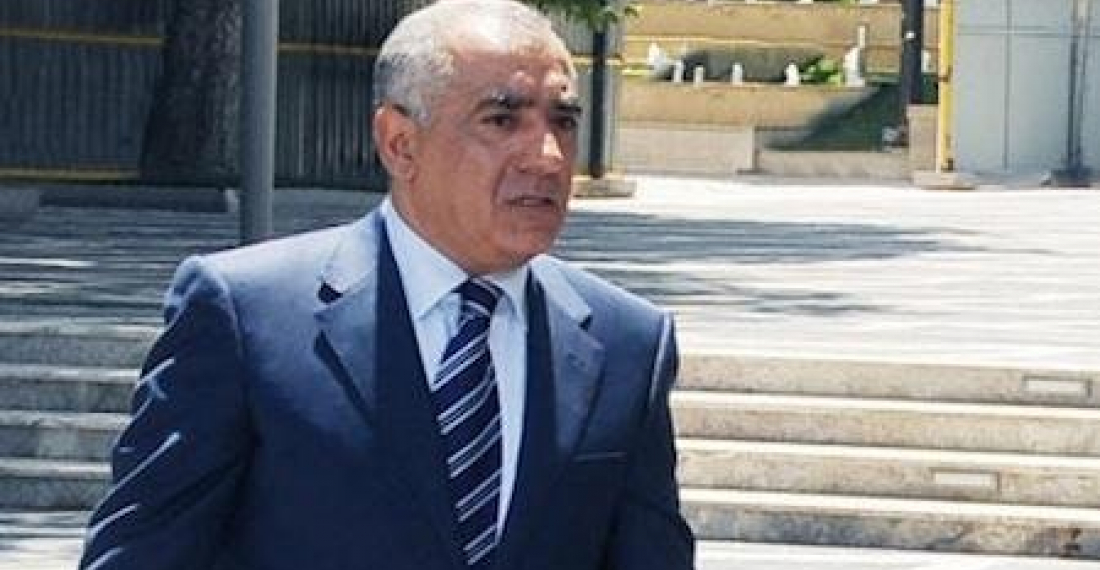
У Азербайджана новый премьер-министр

Обновлено в 10:30 GMT

Парламент Азербайджана Милли Меджлис во вторник утром (8 октября) одобрил назначение Али Асадова на пост премьер-министра страны. Назначение было направлено в парламент президентом Ильхамом Алиевым после отставки Новруза Мамедова, который занимал пост премьер-министра в течение последних восемнадцати месяцев.

Официальных объяснений отставки Новруза Мамедова не было, но сайт Haqqin.Az, тесно связанный с правящими кругами Азербайджана, опубликовал комментарий своего основателя-редактора Эйнуллы Фатулаева, в котором утверждалось, что Мамедов не справился с задачей перевернуть экономику Азербайджана. По его словам:

"В течение полутора лет премьер-министр не мог реорганизовать работу правительства и повысить его эффективность, превратить Кабинет министров в локомотив экономических реформ, инициированных президентом. Экономические и финансовые реформы застопорились и потребовали постоянное личное вмешательство президента. Без президента дела не шли. Более того, Н.Мамедов не смог добиться улучшения макроэкономических показателей, в частности, увеличения темпов роста валового внутреннего продукта, о чем неоднократно настаивал президент".

Как сообщает Haqqin.az, Новруз Мамедов «останется в рядах правящей команды».

Новый премьер-министр Али Асадов поблагодарил членов парламента за утверждение его кандидатуры и пообещал сделать все возможное, чтобы оправдать их доверие.

Биография нового премьера

Асадов Али Хидаят оглы родился 30 ноября 1956 года в Нахчыване. В 1974 году окончил среднюю школу № 134 в Баку, а в 1978 году окончил Московский институт народного хозяйства. Трудовую деятельность начал в 1978 году старшим лаборантом в Институте экономики Академии наук Азербайджанской ССР. Служил в армии в 1978-1980 гг.

В 1980-1989 гг. работал в Институте экономики Академии наук Азербайджанской ССР старшим лаборантом, аспирантом, младшим научным сотрудником, научным сотрудником, а в 1989-1995 гг. - доцентом, заведующим кафедрой Бакинский институт социального управления и политологии.

В 1995-2000 годах был депутатом Милли Меджлиса Азербайджанской Республики.

Указом Президента Азербайджанской Республики от 17 апреля 1998 года назначен помощником Президента Азербайджанской Республики по экономическим вопросам. Указом Президента от 29 ноября 2012 года назначен заместителем главы Администрации Президента Азербайджанской Республики.


---

Премьер-министр Азербайджана Новруз Мамедов подал в отставку. Азербайджанские СМИ сообщили об отставке во вторник утром без подробностей.

Вскоре после этого стало известно, что на эту должность был назначен помощник президента по экономическим вопросам Али Асадов. Его назначение было направлено в парламент Азербайджана для одобрения.

источник: commonspace.eu по материалам агентств

фото: Али Асадов (фото из архива)

 

Related articles

Editor's choice
News
Women emerge favourite to lead United Nations from next year, after straw-poll of UN Security Council members

Women emerge favourite to lead United Nations from next year, after straw-poll of UN Security Council members

​ Two women have emerged as favourite to lead the United Nations as Secretary-General from 1 January 2027, when the term of the present incumbent, Antonio Gutteres, expires. A straw poll of the members of the UN Security Council, held on Thursday, 30 July showed that of the seven candidates, Rebecca Grynspan of Costa Rica and Carolyn Rodriguez-Birkett of Guyana received ten and nine positive endorsements respectively, by the 15 members UN Security Council Although the poll and its result are supposed to be secret, the result leaked within minutes, and was carried on world media outlets, such as Reuters. The result was as follows   Michelle Bachelet 6 encourage 5  discourage   4 no opinion María Fernanda Espinosa 5 2 8 Rafael Grossi 7 2 6 Rebeca Grynspan 10 1 4 Olara Otunnu 2 5 8 Carolyn Rodrigues-Birkett 9 2 4 Macky Sall 6 7 2   Article 97 of the UN Charter states that the “Secretary-General shall be appointed by the General Assembly upon the recommendation of the Security Council”. Straw polls are informal ballots used to determine the viability of Secretary-General candidates.  The seven current candidates are: Michelle Bachelet Jeria (Chile), who was nominated by Brazil, Chile, and Mexico on 2 February, with Chile withdrawing its nomination on 24 March; María Fernanda Espinosa Garcés (Ecuador), who was nominated by Antigua and Barbuda on 11 May; Rafael Mariano Grossi (Argentina), who was nominated by Argentina on 26 November 2025; Rebeca Grynspan Mayufis (Costa Rica), who was nominated by Costa Rica on 3 March; Olara Otunnu (Uganda), who was nominated by Uganda on 24 July; Carolyn Rodrigues Birkett (Guyana), who was nominated by Guyana on 15 June; and Macky Sall (Senegal), who was nominated by Burundi on 2 March. At Thursday's straw poll, there was no difference between the ballots presented to the five permanent members (P5) and the ten elected members (E10). Council members received one ballot per candidate, containing the candidate’s name followed by three options: “encouraged”, “discouraged”, and “no opinion expressed”.   It is ofcourse early days, and the straw poll is just an informal indication of the mood of the UN Security Council, but the strong showwing by the two womencandidates may be an indication that for the first time, the head of the UN can be a women. (click image to read more) ​

Popular

Editor's choice
Interview
Thursday Interview: Murad Muradov

Thursday Interview: Murad Muradov

Today, commonspace.eu starts a new regular weekly series. THURSDAY INTERVIEW, conducted by Lauri Nikulainen, will host  persons who are thinkers, opinion shapers, and implementors in their countries and spheres. We start the series with an interview with Murad Muradov, a leading person in Azerbaijan's think tank community. He is also the first co-chair of the Action Committee for a new Armenian-Azerbaijani Dialogue. Last September he made history by being the first Azerbaijani civil society activist to visit Armenia after the 44 day war, and the start of the peace process. Speaking about this visit Murad Muradov said: "My experience was largely positive. My negative expectations luckily didn’t play out. The discussions were respectful, the panel format bringing together experts from Armenia, Azerbaijan, and Turkey was particularly valuable during the NATO Rose-Roth Seminar in Yerevan, and media coverage, while varied in tone, remained largely constructive. Some media outlets though attempted to represent me as more of a government mouthpiece than an independent expert, which was totally misleading.  Overall, I see these initiatives as important steps in rebuilding trust and normalising professional engagement. The fact that soon a larger Azerbaijani civil society visits to Armenia followed, reinforces the sense that this process is moving in the right direction." (click the image to read the interview in full)


