


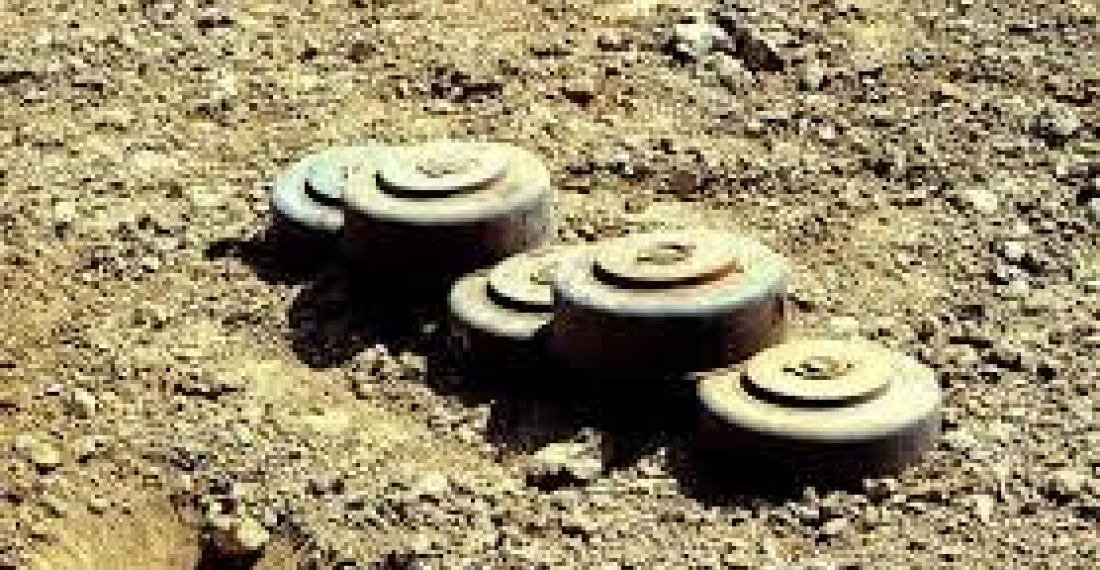
Молодая женщина получила тяжелые ранения из-за разрыва мины в Армении

Беда неразорвавшихся наземных мин на Южном Кавказе продолжает сказываться на гражданских лицах.

В воскресенье (5 апреля) в результате взрыва мины в Араратской области Армении была ранена молодая женщина.

"Инцидент произошел 5 апреля. Она пошла собирать травы со своим братом и тремя другими женщинами с ними. Женщина была доставлена ​​в Астхикскую больницу, где ей, скорее всего, ампутируют ногу", - сказал глава деревни, где произошло все это.

Он добавил, что было очень трудно эвакуировать женщину, поскольку это было минное поле, и гражданам не разрешалось туда входить.

У 33-летней женщины трое маленьких детей.

4 апреля отмечали Международный день осведомленности о наземных минах. Кампанию «Южный Кавказ свободный от противопехотных мин», направленную на повышение осведомленности о проблеме наземных мин в регионе, в этом году пришлось отложить из-за пандемии коронавируса.

Подробнее тут

источник: commonspace.eu по материалам агентств

Related articles

Popular

Editor's choice
Interview
Thursday Interview: Murad Muradov

Thursday Interview: Murad Muradov

Today, commonspace.eu starts a new regular weekly series. THURSDAY INTERVIEW, conducted by Lauri Nikulainen, will host  persons who are thinkers, opinion shapers, and implementors in their countries and spheres. We start the series with an interview with Murad Muradov, a leading person in Azerbaijan's think tank community. He is also the first co-chair of the Action Committee for a new Armenian-Azerbaijani Dialogue. Last September he made history by being the first Azerbaijani civil society activist to visit Armenia after the 44 day war, and the start of the peace process. Speaking about this visit Murad Muradov said: "My experience was largely positive. My negative expectations luckily didn’t play out. The discussions were respectful, the panel format bringing together experts from Armenia, Azerbaijan, and Turkey was particularly valuable during the NATO Rose-Roth Seminar in Yerevan, and media coverage, while varied in tone, remained largely constructive. Some media outlets though attempted to represent me as more of a government mouthpiece than an independent expert, which was totally misleading.  Overall, I see these initiatives as important steps in rebuilding trust and normalising professional engagement. The fact that soon a larger Azerbaijani civil society visits to Armenia followed, reinforces the sense that this process is moving in the right direction." (click the image to read the interview in full)


