Меню

Iran FM to meet IAEA chief

Iranian Foreign Minister Abbas Araqchi will meet International Atomic Energy Agency (IAEA) Director General Rafael Grossi in Geneva on Monday, a day before a second round of nuclear talks between Iran and the United States is due to take place.

Tehran and Washington resumed negotiations earlier this month in an effort to revive diplomacy over Iran’s nuclear programme and avert further military escalation, as the United States deploys additional naval forces to the region, including a second aircraft carrier.

Araqchi said he had arrived in Geneva with “real ideas” for a fair and equitable agreement, adding that Iran would not accept negotiations conducted under threat. Talks remain deadlocked over uranium enrichment, with the United States pressing for broader discussions that include Iran’s missile programme, while Tehran insists the negotiations focus solely on nuclear curbs in exchange for sanctions relief and has rejected a complete halt to enrichment.

The IAEA has repeatedly called on Iran to clarify the status of its stockpile of highly enriched uranium and to allow inspections to fully resume, including at sites damaged in Israeli-US strikes last June. Iran says the affected facilities are currently unsafe for inspections and has urged the agency to clarify its position on the strikes.

Source: commonspace.eu with Al-Monitor

Related articles

Editor's choice
News
Kazakhstan votes in referendum on important constitutional changes

Kazakhstan votes in referendum on important constitutional changes

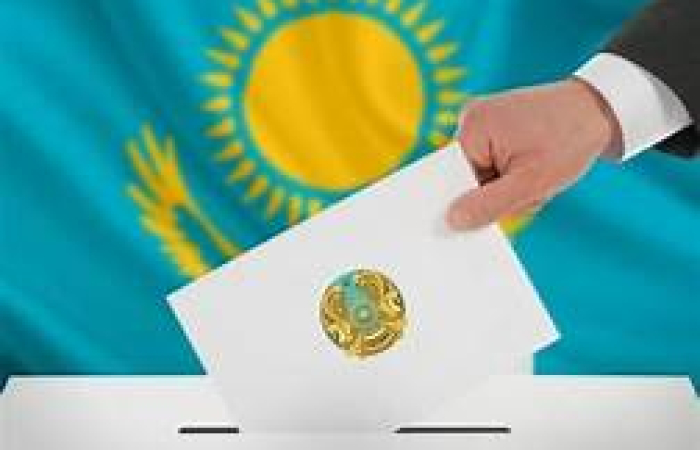
Voting is taking place on Sunday (15 March)  in Kazakhstan in a nationwide referendum on a new draft Constitution. According to the Central Referendum Commission of Kazakhstan, 12,046,617 citizens are eligible to participate in the referendum. 359 international observers and 206 foreign journalists were accredited to monitor the referendum in order to ensure the transparency of the voting process. International organizations monitoring the referendum include the Organization for Security and Cooperation in Europe, the CIS, the Shanghai Cooperation Organization, the Organization of Turkic States, and the Organization of Islamic Cooperation. The Central Referendum Commission must announce the final results of the vote within seven days after the referendum. A total of 10,401 polling stations are operating inside and outside the country to organize voting. 71 of them were opened at diplomatic missions in 54 countries. If citizens support the proposed changes, the new Constitution will enter into force on July 1, 2026. After that, elections for a new parliament are planned in the country, and these elections are expected to be organized by the end of August. The position of vice president will be implemented after the formation of the new parliament. The referendum is the fifth in the history of independent Kazakhstan and may lead to the adoption of a new fundamental law that will determine the direction of the country's political and legal development in the coming years. The Referendum is being held at the initiative of the President of Kazakhstan Kassym-Jomart Tokayev and envisages the implementation of large-scale constitutional reforms in the country. According to the submitted draft, approximately 84 percent of the text of the Constitution has been updated and new articles and sections have been developed. The question on the ballot paper asks, "Do you accept the new Constitution of the Republic of Kazakhstan?" Voters express their position by answering "for" or "against" this question. Currently, the Constitution adopted on August 30, 1995, is in force in Kazakhstan. Since its adoption, the document has been repeatedly amended and supplemented. The latest amendments entered into force in September 2022. However, the scale of the proposed reforms necessitated the preparation of a new Constitutional document. Thus, the amendments cover approximately 84 percent of the text of the existing basic law. The draft of the new Constitution was presented to the public in early February 2026. After the document was published, the country's citizens were given more than a month to familiarize themselves with it and discuss the proposed changes. (Click the picture to read more)

Popular

Editor's choice
Interview
Thursday Interview: Murad Muradov

Thursday Interview: Murad Muradov

Today, commonspace.eu starts a new regular weekly series. THURSDAY INTERVIEW, conducted by Lauri Nikulainen, will host  persons who are thinkers, opinion shapers, and implementors in their countries and spheres. We start the series with an interview with Murad Muradov, a leading person in Azerbaijan's think tank community. He is also the first co-chair of the Action Committee for a new Armenian-Azerbaijani Dialogue. Last September he made history by being the first Azerbaijani civil society activist to visit Armenia after the 44 day war, and the start of the peace process. Speaking about this visit Murad Muradov said: "My experience was largely positive. My negative expectations luckily didn’t play out. The discussions were respectful, the panel format bringing together experts from Armenia, Azerbaijan, and Turkey was particularly valuable during the NATO Rose-Roth Seminar in Yerevan, and media coverage, while varied in tone, remained largely constructive. Some media outlets though attempted to represent me as more of a government mouthpiece than an independent expert, which was totally misleading.  Overall, I see these initiatives as important steps in rebuilding trust and normalising professional engagement. The fact that soon a larger Azerbaijani civil society visits to Armenia followed, reinforces the sense that this process is moving in the right direction." (click the image to read the interview in full)