Меню

South Ossetia appoints new Prime Minister

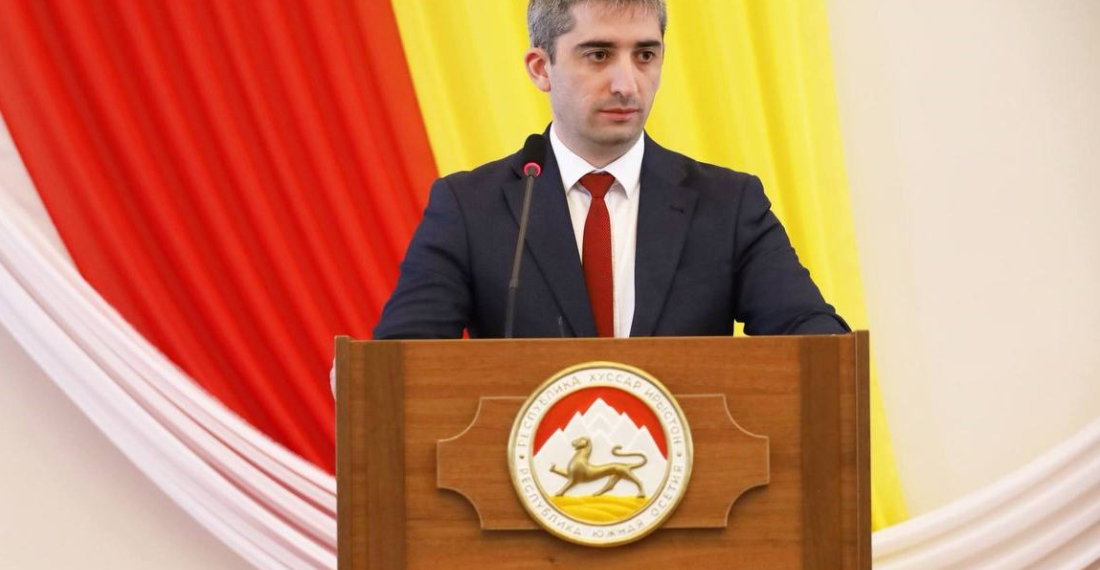
South Ossetia has appointed Dzambolat Tadtaev as Prime Minister despite a boycott by the opposition United Ossetia party, which accuses the authorities of responsibility for the territory’s ongoing socio-economic crisis.

United Ossetia refused to back the nomination put forward by President Alan Gagloev. The party’s parliamentary faction, led by its Chairman Atsamaz Bibilov, walked out of the session in protest. Bibilov said both President Gagloev and Tadtaev had failed to implement the 2022–2025 socio-economic development programme, questioning Tadtaev’s professional competence and moral authority to lead the government.

On 21 January, President Gagloev dissolved the previous government, describing the decision as a “routine situation”, amid allegations of financial mismanagement. Despite the failure of the previous programme, the authorities announced a new development plan for 2026–2030, which, as before, is to be financed by Russia.

Despite the opposition’s protest, lawmakers from the pro-presidential Nykhas party, the People’s Party, and the Communist Party of South Ossetia voted in favour of Tadtaev’s candidacy. The President signed the decree appointing Tadtaev later the same day.

Local analysts say the open challenge by United Ossetia signals growing political tensions in the territory, warning that further allegations of corruption could emerge as the next presidential election approaches.

“The opposition had long shown restraint and avoided dramatic moves to preserve stability, but the authorities interpreted this as weakness and the party’s inability to act. Last year, United Ossetia’s bank accounts were frozen on what it calls fabricated grounds, and pressure has been put on its members — all against the backdrop of Gagloev’s weak and ineffective governance.

Tadtaev’s appointment suggests an attempt by the current ruling team to hold on to power and cover up traces of possible corruption,” the analyst said.

Source: commonspace.eu with JAMNews
Related articles

Editor's choice
News
Kazakhstan votes in referendum on important constitutional changes

Kazakhstan votes in referendum on important constitutional changes

Voting is taking place on Sunday (15 March)  in Kazakhstan in a nationwide referendum on a new draft Constitution. According to the Central Referendum Commission of Kazakhstan, 12,046,617 citizens are eligible to participate in the referendum. 359 international observers and 206 foreign journalists were accredited to monitor the referendum in order to ensure the transparency of the voting process. International organizations monitoring the referendum include the Organization for Security and Cooperation in Europe, the CIS, the Shanghai Cooperation Organization, the Organization of Turkic States, and the Organization of Islamic Cooperation. The Central Referendum Commission must announce the final results of the vote within seven days after the referendum. A total of 10,401 polling stations are operating inside and outside the country to organize voting. 71 of them were opened at diplomatic missions in 54 countries. If citizens support the proposed changes, the new Constitution will enter into force on July 1, 2026. After that, elections for a new parliament are planned in the country, and these elections are expected to be organized by the end of August. The position of vice president will be implemented after the formation of the new parliament. The referendum is the fifth in the history of independent Kazakhstan and may lead to the adoption of a new fundamental law that will determine the direction of the country's political and legal development in the coming years. The Referendum is being held at the initiative of the President of Kazakhstan Kassym-Jomart Tokayev and envisages the implementation of large-scale constitutional reforms in the country. According to the submitted draft, approximately 84 percent of the text of the Constitution has been updated and new articles and sections have been developed. The question on the ballot paper asks, "Do you accept the new Constitution of the Republic of Kazakhstan?" Voters express their position by answering "for" or "against" this question. Currently, the Constitution adopted on August 30, 1995, is in force in Kazakhstan. Since its adoption, the document has been repeatedly amended and supplemented. The latest amendments entered into force in September 2022. However, the scale of the proposed reforms necessitated the preparation of a new Constitutional document. Thus, the amendments cover approximately 84 percent of the text of the existing basic law. The draft of the new Constitution was presented to the public in early February 2026. After the document was published, the country's citizens were given more than a month to familiarize themselves with it and discuss the proposed changes. (Click the picture to read more)

Popular

Editor's choice
Interview
Thursday Interview: Murad Muradov

Thursday Interview: Murad Muradov

Today, commonspace.eu starts a new regular weekly series. THURSDAY INTERVIEW, conducted by Lauri Nikulainen, will host  persons who are thinkers, opinion shapers, and implementors in their countries and spheres. We start the series with an interview with Murad Muradov, a leading person in Azerbaijan's think tank community. He is also the first co-chair of the Action Committee for a new Armenian-Azerbaijani Dialogue. Last September he made history by being the first Azerbaijani civil society activist to visit Armenia after the 44 day war, and the start of the peace process. Speaking about this visit Murad Muradov said: "My experience was largely positive. My negative expectations luckily didn’t play out. The discussions were respectful, the panel format bringing together experts from Armenia, Azerbaijan, and Turkey was particularly valuable during the NATO Rose-Roth Seminar in Yerevan, and media coverage, while varied in tone, remained largely constructive. Some media outlets though attempted to represent me as more of a government mouthpiece than an independent expert, which was totally misleading.  Overall, I see these initiatives as important steps in rebuilding trust and normalising professional engagement. The fact that soon a larger Azerbaijani civil society visits to Armenia followed, reinforces the sense that this process is moving in the right direction." (click the image to read the interview in full)