


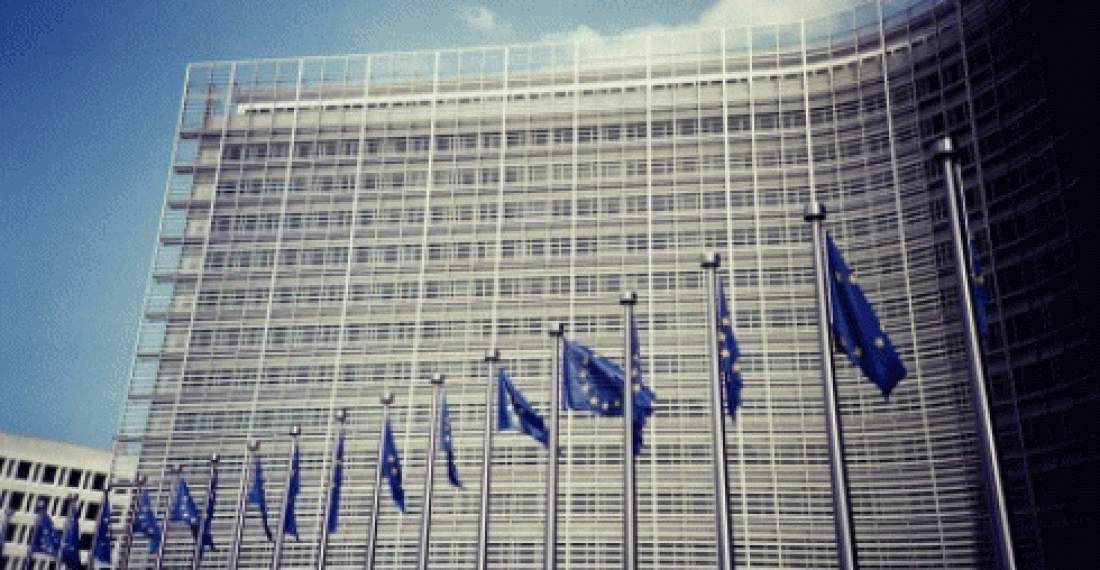
Европейская политика соседства с меньшим энтузиазмом оценила прогресс Армении в 2011 году

Европейская комиссия и Европейская служба внешних действий (EAS) оценивает прогресс в 12 странах-партнерах, включая Армению, с меньшим энтузиазмом. Об этом говорится в принятом 15 мая ежегодном пакете Европейской политики соседства, в котором оценивается прогресс, достигнутый в 2011 этими странами. В докладе рассматривается успехи реализации нового подхода Европейской политики соседства "больше взамен большего",  который был принят в прошлом году.

Как пишет издание Europolitics, в пакете содержатся рекомендации по дальнейшим действиям. В докладе, разработанном совместно Высоким представителем ЕС Кэтрин Эштон и комиссаром по расширению Штефаном Фюле, отмечается, что ЕС с "решимостью реагирует в быстро меняющейся ситуации в соседних странах". "Мы обсудим нашу работу с нашими непосредственными соседями, и я уверена, что мы продвинемся в правильном направлении", - заявила Эштон.

В докладе сообщается, что оценка Комиссии о прогрессе в 12 странах - Армении, Азербайджане, Беларуси, Египте, Грузии, Иордании, Ливане, Молдове, Марокко, Сирии, Тунисе, Украине, Алжире, Израиле, Ливии и на оккупированной палестинской территории - содержит мало энтузиазма.

Есть ряд вопросов, по которым страны-партнеры должны активизировать свои усилия с тем, чтобы провести реформы и разработать некоторые аспекты, где ЕС может оперативно посодействовать. В нем добавляется, что "невзирая на то, что прогресс не был универсальным. В прошлом году, многие партнеры предприняли решительные шаги, чтобы ускорить демократизацию и осуществление реформ. "В регионе были более или менее свободные и справедливые выборы и улучшены механизмы по защите основных свобод и прав человека", - отмечается в документе.

В двенадцати докладах были оценена ситуация по шести основным направлениям: политический диалог и реформы, экономические и социальные реформы, вопросы торговли, рыночные и регулирующие реформы, сотрудничество по вопросам правосудия, свободы и

безопасности, транспорта, энергетики, окружающей среды, информационного общества, научных исследований и развития, а также контакты между народами, образование и здравоохранение.

Отметим, что Европейская комиссия 25 мая 2011 года представила свой новый подход, который, как и прежний, ставит перед собой задачу укрепить двустороннее и региональное партнерство между ЕС и соседними государствами, но на этот раз исходя из принципа "больше финансовой помощи за проведение как можно больше реформ". Новый подход требует большего уровня дифференциации, который дает возможность каждому государству развивать свои отношения с ЕС настолько, насколько позволяют ему его чаяния, потребности и возможности.


 

Related articles

Editor's choice
News
Germany accuses Russia of cyberattacks and disinformation campaign

Germany accuses Russia of cyberattacks and disinformation campaign

The German government holds Russia responsible for a cyberattack on German air traffic control, and for targeted disinformation campaigns before the last federal election. According to the German Foreign Office in Berlin, the incidents could be clearly attributed to the Russian military intelligence service, the GRU. In response, the Russian ambassador to Berlin was summoned to the Foreign Ministry. "We have been observing a massive increase in threatening hybrid activities by Russia for some time now," a spokesperson for the Foreign Ministry stated. These range from disinformation campaigns and espionage to cyberattacks and sabotage attempts. The aim is to divide society, sow distrust, and undermine confidence in democratic institutions. The spokesperson added that with these actions, Russia is "very concretely threatening our security, not only through its war of aggression against Ukraine, but also here in Germany."  The Foreign Ministry spokesperson explained that the cyberattack on air traffic control in August 2024 was clearly attributed to the hacker collective "APT28," known as "Fancy Bear," and to the responsibility of the Russian military intelligence service, the GRU. Furthermore, it could now be "conclusively stated" that Russia had attempted "to influence and destabilize both the last Federal election and the ongoing internal affairs of the Federal Republic of Germany." There was "absolutely irrefutable evidence" for this". The so-called "Storm 1516" campaign, which has been running since 2024, is allegedly backed by "reliable information" that the Moscow-based think tank "Center for Geopolitical Expertise" is behind it. The Center is also said to be supported by Russian military intelligence. Its primary aim is to influence democratic elections in the West. (Click the image to read more).
Editor's choice
News
NATO Chief says war is on Europe's doorstep, and warns against complacency

NATO Chief says war is on Europe's doorstep, and warns against complacency

Russia could attack a NATO country within the next five years, the Secretary General of NATO, Mark Rutte, said in a stark new warning. "NATO's own defences can hold for now," Rutte warned in Berlin, but conflict was "next door" to Europe, and he feared "too many are quietly complacent, and too many don't feel the urgency, too many believe that time is on our side. "Russia is already escalating its covert campaign against our societies," Rutte said in a speech in Germany. "We must be prepared for the scale of war our grandparents or great-grandparents endured." Earlier this month, Russia's President Vladimir Putin said his country was not planning to go to war with Europe, but it was ready "right now" if Europe wanted to - or started a war. But similar reassurances were given by Moscow in 2022, just before 200,000 Russian troops crossed the border and invaded Ukraine. Putin has accused European countries of hindering US efforts to bring peace in Ukraine - a reference to the role Ukraine's European allies have recently played in trying to change a US peace plan to end the war, whose initial draft was seen as favouring Russia. But Putin was not sincere, Nato's secretary-general said in the German capital, Berlin. Supporting Ukraine, he added, was a guarantee for European security. "Just imagine if Putin got his way; Ukraine under the boot of Russian occupation, his forces pressing against a longer border with Nato, and the significantly increased risk of an armed attack against us." Russia's economy has been on a war footing for more than three years now - its factories churn out ever more supplies of drones, missiles and artillery shells. According to a recent report by the Kiel Institute for the World Economy, Russia has been producing each month around 150 tanks, 550 infantry fighting vehicles, 120 Lancet drones and more than 50 artillery pieces. The UK, and most of its Western allies, are simply not anywhere near this point. Analysts say it would take years for Western Europe's factories to come close to matching Russia's mass-production of weapons. "Allied defence spending and production must rise rapidly, our armed forces must have what they need to keep us safe," the Nato chief said.

Popular

Editor's choice
News
Germany accuses Russia of cyberattacks and disinformation campaign

Germany accuses Russia of cyberattacks and disinformation campaign

The German government holds Russia responsible for a cyberattack on German air traffic control, and for targeted disinformation campaigns before the last federal election. According to the German Foreign Office in Berlin, the incidents could be clearly attributed to the Russian military intelligence service, the GRU. In response, the Russian ambassador to Berlin was summoned to the Foreign Ministry. "We have been observing a massive increase in threatening hybrid activities by Russia for some time now," a spokesperson for the Foreign Ministry stated. These range from disinformation campaigns and espionage to cyberattacks and sabotage attempts. The aim is to divide society, sow distrust, and undermine confidence in democratic institutions. The spokesperson added that with these actions, Russia is "very concretely threatening our security, not only through its war of aggression against Ukraine, but also here in Germany."  The Foreign Ministry spokesperson explained that the cyberattack on air traffic control in August 2024 was clearly attributed to the hacker collective "APT28," known as "Fancy Bear," and to the responsibility of the Russian military intelligence service, the GRU. Furthermore, it could now be "conclusively stated" that Russia had attempted "to influence and destabilize both the last Federal election and the ongoing internal affairs of the Federal Republic of Germany." There was "absolutely irrefutable evidence" for this". The so-called "Storm 1516" campaign, which has been running since 2024, is allegedly backed by "reliable information" that the Moscow-based think tank "Center for Geopolitical Expertise" is behind it. The Center is also said to be supported by Russian military intelligence. Its primary aim is to influence democratic elections in the West. (Click the image to read more).

