


Трагедия, которую помнят. Трагедия, произошедная в Будапеште, ознаменовала низшую точку в непростых отношениях между Арменией и Азербайджаном, и остается очень чувствительным вопросом.

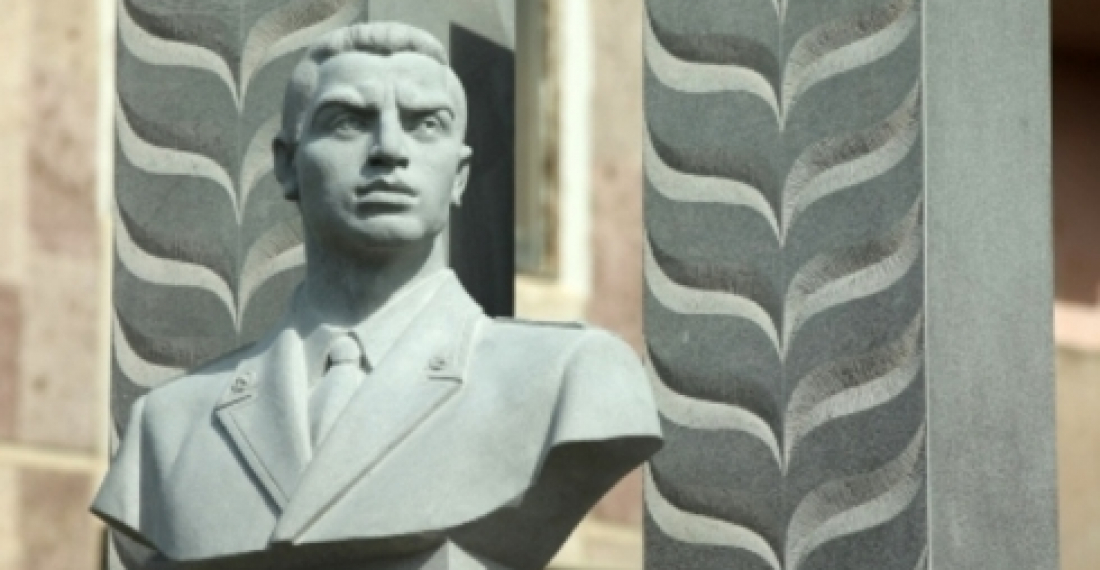
Памятник Гургену Маргаряну, армянскому офицеру, убитому азербайджанским офицером Рамилем Сафаровым во время прохождения курсов НАТО в Будапеште в 2004 году, был открыт в Ереване в минувшую субботу.

Торжественное открытие памятника совпало с днем ​​рождения армянского офицера, которому исполнилось бы 26 сентября 35 лет. Памятник открыли мать Маргаряна и британский парламентарий Баронесса Кокс.

News.am сообщает, что в церемонии приняли участие представители Министерства обороны, студенты школы, названной в честь Гургена Маргаряна, общественные деятели и представители дипломатических миссий.

В своем обращении, Леди Кокс сказала, что она, будучи матерью, разделяет чувства семьи Маргаряна. Она сказала о том, как она была потрясена сообщениями об убийстве спящего человека, и позже, когда в Азербайджане был помилован Рамиль Сафаров после его экстрадиции из Венгрии.

По словам политического редактора Comnmonspace.eu, "трагедия Будапеште ознаменовала самую низкую точку в непростых отношениях между Арменией и Азербайджаном, и по-своему остается очень чувствительным вопросом в обоих странах. Открытие памятника принесет некоторое успокоение семье умершего. Со временем обеим обществам необходимо будет изучить инцидент и обстоятельства, которые привели к нему и ряду других трагедий за последние двадцать пять лет. Когда осядет пыль после битвы обоим обществам предстоит пройти процесс излечения пржде чем они смогут вернуться к нормальной жизни. Открытие памятника Маргаряну это напомание всем о том, как много работы должно быть сделано."

Источник: commonspace.eu по материалам News.am

Фото: Памятник Гургену Маргаряну в Ереване, 28 сентября 2013 г. (фото любезно предоставлено news.am).


Related articles

Editor's choice
News
The British prime minister says Europe must "stand on its own two feet" when it comes to defence

The British prime minister says Europe must "stand on its own two feet" when it comes to defence

The UK will deploy a carrier strike group, led by the aircraft carrier HMS Prince of Wales to the Arctic and the High North as part of efforts to bolster security against Russian threats. British prime minister, Sir Keir Starmer announced the deployment in a speech on Saturday (14 February) at the Munich Security Conference. Europe must be ready to fight to protect its people, values, and way of life,  Sir Keir told the Conference. Starmer also called for deeper links and cooperation, including economic ties, between the UK and EU. The PM stressed the continent must "stand on its own two feet" when it comes to defence commitments. "We must build our hard power, because that is the currency of the age," he told the conference. (Click image to read the full story).

Popular

Editor's choice
Interview
Thursday Interview: Murad Muradov

Thursday Interview: Murad Muradov

Today, commonspace.eu starts a new regular weekly series. THURSDAY INTERVIEW, conducted by Lauri Nikulainen, will host  persons who are thinkers, opinion shapers, and implementors in their countries and spheres. We start the series with an interview with Murad Muradov, a leading person in Azerbaijan's think tank community. He is also the first co-chair of the Action Committee for a new Armenian-Azerbaijani Dialogue. Last September he made history by being the first Azerbaijani civil society activist to visit Armenia after the 44 day war, and the start of the peace process. Speaking about this visit Murad Muradov said: "My experience was largely positive. My negative expectations luckily didn’t play out. The discussions were respectful, the panel format bringing together experts from Armenia, Azerbaijan, and Turkey was particularly valuable during the NATO Rose-Roth Seminar in Yerevan, and media coverage, while varied in tone, remained largely constructive. Some media outlets though attempted to represent me as more of a government mouthpiece than an independent expert, which was totally misleading.  Overall, I see these initiatives as important steps in rebuilding trust and normalising professional engagement. The fact that soon a larger Azerbaijani civil society visits to Armenia followed, reinforces the sense that this process is moving in the right direction." (click the image to read the interview in full)

