


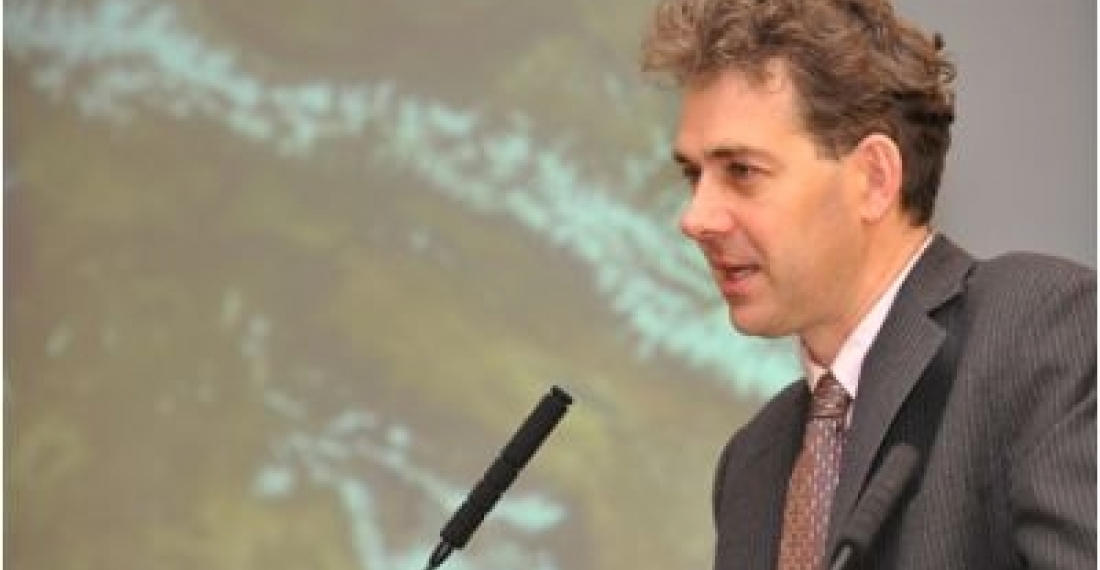
Томас де Ваал:

В условиях шквала международных новостей на данный момент, будет простительным пропустить заявление президентов Медведева, Обамы и Саркози на саммите «большой восьмерки» в Довиле по поводу конфликта в Нагорном Карабахе. Но оно, тем не менее - наиболее серьезное международное заявление по поводу конфликта за многие годы. Об этом в американском издании "The National Interest" пишет эксперт американского института Карнеги, автор ряда книг и публикаций по Карабаху Томас де Ваал.

В статье, озаглавленной «Еще один провалившийся мирный процесс”, эксперт отмечает:

“В течение полутора десятков лет мир едва замечал переговоры по разрешению самого долгоиграющего затяжного конфликта на постсоветском пространстве, армяно-азербайджанского спора по поводу Карабаха. Мирный процесс слишком закрыт, а вопрос слишком сложен и таинствен для всех, кроме бедной несчастной невежественной группы аналитиков (таких как я сам), которые следят за ним и обращают на него внимание».

Заявление, сделанное 26 мая тремя главами государств, предпринимающих посреднические усилия, ясно дает понять, что момент истины приближается. В Казани в конце июня президент Дмитрий Медведев при поддержке американских и французских переговорщиков окажет сильное давление на президентов Алиева и Саркисяна с тем, чтобы они, наконец, достигли договоренности по Документу об основных принципах, который они обсуждают уже более пяти лет на настоящий момент.

“Как я заявлял ранее в The National Interest, карабахский конфликт получает лишь малую толику того внимания, которое уделялось, например, Косово, но при этом развивается в гораздо более стратегически чувствительным и восприимчивом окружении», - пишет эксперт. Он добавил, что если одна из двух сторон - а по существу это означает проигравшую сторону в конфликте 1991-1994 годов, Азербайджан - решит вернуться к войне, это станет катастрофой. Довильская декларация гласит: «Использование силы создало нынешнюю ситуацию конфронтации и нестабильность. Использование ее снова принесет лишь больше страданий и опустошения, и будет осуждено международным сообществом».

Документ о базовых принципах имеет своей целью решить головоломку с суверенитетом, лежащую в центре конфликта. В советское время Нагорный Карабах был автономным регионом в составе советского Азербайджана, регионом с преимущественно армянским населением. После своей военной победы в 1994 году армяне контролировали не только сам Карабах, от которого, как они говорят, они никогда не откажутся, но также и «буферную зону» из азербайджанских территорий вокруг него, от которых, как они говорят, они готовы будут отказаться в случае, если контроль над Карабахом будет гарантирован. Со своей стороны, азербайджанцы настаивают на своих международных юридических правах на Карабах и направляют доходы от нефти и газа на создание новой сильной армии.

Документ о базовых принципах предлагает конструктивную двусмысленность. Он подразумевает постепенный вывод армянских сил с территорий вокруг Карабаха; «промежуточный статус» для самого Карабаха, предоставление ему расширенной международной легитимности, но не полной независимости; и обещание в будущем проведение народного голосования, которое станет «юридически обязывающим выражением воли» населения, для определения будущего статуса территории.

Но тут возникают сомнения. Несмотря на интенсивные переговоры на неофициальном уровне, в открытую лидеры по-прежнему озвучивают максималистские позиции и призывают своего противника сдаться. Риторика особенно жесткая с азербайджанской стороны. На следующий день после появления Довилльской декларации заместитель премьер-министра Азербайджана Али Гасанов назвал армянского президента «преступником», а его правительство «фашистским режимом», который должен быть «свергнут».

Так что все упирается в политическую волю. Возможно, армянский и азербайджанский лидеры просто используют бесконечно ускользающий карабахский мирный процесс как инструмент для того, чтобы подмазываться к международному сообществу, а также требовать лояльности со стороны собственного населения, и при этом ни капли не собираются подписывать мирное соглашение? Или же они на самом деле привержены идее мирного соглашения, которое начнет долгосрочную трансформацию их региона, но при этом находятся в ловушке своих собственных национальных речей и политической риторики и опасаются двигаться вперед? Или же и то, и другое понемногу?

Вот почему я приветствуют строчку в Довильском документе, которая гласит: «Дальнейшее откладывание лишь вызовет вопросы по поводу приверженности обеих сторон идее достижения соглашения». Или если сформулировать это по-другому, «У нас есть рабочий документ. Покажите нам, что вы настроены серьезно, и подпишите его».

Это также вопрос и международной воли. Иностранные державы должны быть не менее серьезными. В отсутствие сильной внутренней поддержки мира, именно представители международного сообщества должны жестко надавить на президентов и оформить новый компромисс. Им нужно будет взять на себя обязательства по восстановлению и по миротворческой работе. Россия, Соединенные Штаты и Европейский Союз вполне неплохо работали вместе в переговорном процессе, но, учитывая различные интересы всех троих на Кавказе, их двустороннюю повестку дня в отношениях с обеими странами и все конкурирующие между собой претензии на их ресурсы, будет трудно оформить совместное постконфликтное решение для Карабаха.

Это будет особенно важным, если рабочий план будет согласован, и образуется неизбежный разрыв между первоначальным соглашением и прогрессом на месте. Противники поспешат попытаться уничтожить его. Вспомним Осло и Ближний Восток.

Итак, по мере приближения встречи в Казани, ставки на Кавказе растут как на мир, так и на войну.

 

Related articles

Editor's choice
News
Russia adds pressure on Armenia ahead of key elections; recalls Ambassador in Yerevan for consultations

Russia adds pressure on Armenia ahead of key elections; recalls Ambassador in Yerevan for consultations

Ahead of key parliamentary elections,scheduled to be held in Armenia on Sunday, 7 June, Russia continues to attempt to put pressure on the Armenian Government led by prime minister Nikol Pashinyan. On 30 May, Russia recalled its Ambassador to Yerevan for consultations. A terse statement, published on the website of the Russian Foreign Ministry, said, "The Ambassador of the Russian Federation to the Republic of Armenia , S.P. Kopyrkin, has been summoned to Moscow for consultations in connection with the steps taken by the Armenian leadership to move closer to the European Union, which are detrimental to cooperation within the EAEU." This followed a statement issued the day before, by the leaders of the Eurasian Economic Union (EAEU) that challenges the Armenian trajectory towards approximating to the European Union. Vladimir Putin is undertood to have personally pushed the other four EAEU leaders to issue the statement, which said: "Taking into account the significant risks to the economic security of the member states of the Eurasian Economic Union (hereinafter referred to as the Union) arising in connection with the preparation of the Republic of Armenia for accession to the European Union, as well as the need to prevent the associated damage to the member states of the Union: decided that the members of the Eurasian Intergovernmental Council from the Republic of Belarus, the Republic of Kazakhstan, the Kyrgyz Republic and the Russian Federation will report at the next meeting of the Supreme Eurasian Economic Council in December 2026 on the possible consequences of the suspension of the Treaty on the Eurasian Economic Union with respect to the Republic of Armenia. We share the position on the need to hold a national referendum in the Republic of Armenia as soon as possible on joining the European Union or continuing to be part of the Eurasian Economic Union."
Editor's choice
News
The leaders of the states of the Eurasian Economic Union issued a tough statement warning fellow-member state Armenia of the consequences of its desire to join the European Union.

The leaders of the states of the Eurasian Economic Union issued a tough statement warning fellow-member state Armenia of the consequences of its desire to join the European Union.

The leaders of the states of the Eurasian Economic Union (EEAS) issued a tough statement warning fellow-member state Armenia of the consequences of its desire to join the European Union. The stark, sharply worded,  warning, comes days before crucial parliamentary elections in Armenia, scheduled for 7 June. The full statement said, “We, the Presidents of the Republic of Belarus, the Republic of Kazakhstan, the Kyrgyz Republic and the Russian Federation, Taking into account the actions of the Republic of Armenia aimed at joining the European Union, including the approval in 2025 by the National Assembly of the Republic of Armenia and the signing by the President of the Republic of Armenia of the Law of the Republic of Armenia "On the Start of the Process of Accession of the Republic of Armenia to the European Union", as well as the confirmation by the European Union of the European aspirations of the Government of the Republic of Armenia, expressed in the joint declaration following the first Armenia-European Union summit, adopted on 5 May 2026, Taking into account the significant risks to the economic security of the member states of the Eurasian Economic Union (hereinafter referred to as the Union) arising in connection with the preparation of the Republic of Armenia for accession to the European Union, as well as the need to prevent the associated damage to the member states of the Union: decided that the members of the Eurasian Intergovernmental Council from the Republic of Belarus, the Republic of Kazakhstan, the Kyrgyz Republic and the Russian Federation will report at the next meeting of the Supreme Eurasian Economic Council in December 2026 on the possible consequences of the suspension of the Treaty on the Eurasian Economic Union with respect to the Republic of Armenia. We share the position on the need to hold a national referendum in the Republic of Armenia as soon as possible on joining the European Union or continuing to be part of the Eurasian Economic Union. Astana, May 29, 2026” A meeting of the Supreme Eurasian Economic Council was held in Astana, Kazakhstan, on May 29, 2026. The meeting of the Supreme Eurasian Economic Council in a restricted format was attended by Russian President Vladimir Putin, Belarusian President Alexander Lukashenko , Kazakh President Kassym-Jomart Tokayev , Kyrgyz President Sadyr Japarov , Armenian Deputy Prime Minister Mher Grigoryan, and Chairman of the Board of the Eurasian Economic Commission Bakytzhan Sagintayev. From the Russian side, the meeting was also attended by Deputy Prime Minister and member of the Council of the Eurasian Economic Commission Alexey Overchuk and Presidential Aide Yury Ushakov . The heads of delegations from EAEU observer states, including President of Uzbekistan Shavkat Mirziyoyev , Vice President of Cuba Salvador Valdés Mesa, Minister of Industry, Mines, and Trade of Iran Mohammad Atabak, and CIS Secretary General Sergei Lebedev, joined the expanded meeting . Following the meeting of the Supreme Eurasian Economic Council, a number of documents were signed .

Popular

Editor's choice
Interview
Thursday Interview: Murad Muradov

Thursday Interview: Murad Muradov

Today, commonspace.eu starts a new regular weekly series. THURSDAY INTERVIEW, conducted by Lauri Nikulainen, will host  persons who are thinkers, opinion shapers, and implementors in their countries and spheres. We start the series with an interview with Murad Muradov, a leading person in Azerbaijan's think tank community. He is also the first co-chair of the Action Committee for a new Armenian-Azerbaijani Dialogue. Last September he made history by being the first Azerbaijani civil society activist to visit Armenia after the 44 day war, and the start of the peace process. Speaking about this visit Murad Muradov said: "My experience was largely positive. My negative expectations luckily didn’t play out. The discussions were respectful, the panel format bringing together experts from Armenia, Azerbaijan, and Turkey was particularly valuable during the NATO Rose-Roth Seminar in Yerevan, and media coverage, while varied in tone, remained largely constructive. Some media outlets though attempted to represent me as more of a government mouthpiece than an independent expert, which was totally misleading.  Overall, I see these initiatives as important steps in rebuilding trust and normalising professional engagement. The fact that soon a larger Azerbaijani civil society visits to Armenia followed, reinforces the sense that this process is moving in the right direction." (click the image to read the interview in full)


