


Правозащитник: Заявление Баку, о том, что он действовал в рамках международных норм - прямое оскорбление международного права

Заявление официального Баку, о том, что в вопросе помилования убийцы Рамиля Сафарова он действовали рамках азербайджанского законодательства и международных норм, является прямым оскорблением международного права. Об этом корреспонденту АрмИнфо заявила первый омбудсмен Армении, правозащитник Лариса Алавердян.
 
"В тех конвенциях, на которые так усердно ссылаются азербайджанские власти, четко прописано, что вследствие перевода заключенного из одной страны, в другую, заключенный должен подчиняться законодательству страну, в которую переведен. Но в азербайджанском законодательстве, четко отмечено, что амнистия полагается заключенным с конкретным сроком заключения, вследствие чего, Рамиль Сафаров не подпадает под закон об амнистии, поскольку пожизненное заключение не является определенным сроком заключения ",- заявила правозащитник.

Алавердян, подчеркнула, даже если опереться на законодательство Азербайджана, Сафаров лишь через 25 лет заключения, мог бы быть выпушен на свободу. "В данном случаи нарушены все нормы, как международного права, так и законодательства Азербайджана",- подчеркнула Алавердян.

Отметим, что Азербайджан направил Венгрии ноту, в которой было указано, что Рамиль Сафаров был освобожден в соответствии с законодательством Азербайджана и международными нормами. "Процедура передачи и помилования Сафарова прошла в соответствии с азербайджанским и международным законодательством. Кроме того Конституция страны предоставляет Президенту Азербайджана исключительное право на помилование ", - сказал официальный представитель МИД Азербайджана Эльман Абдуллаев.  Напомним, что в феврале 2004 года лейтенант армянской армии Маргарян, командированный в Будапешт на курсы английского языка в рамках программы НАТО "Партнерство во имя мира", был во сне зарублен топором азербайджанским офицером Рамилем Сафаровым - участником тех же курсов. В апреле 2006 года суд первой инстанции Будапешта приговорил Сафарова к пожизненному заключению без права на помилование в течение 30 лет. В феврале 2007 года Апелляционный суд оставил приговор неизменным. Однако 31 августа Сафаров был выдан Азербайджану и в тот же день помилован президентом этой страны Ильхамом Алиевым. В связи с экстрадицией Сафарова Армения приостановила дипломатические отношения и все официальные связи с Венгрией.
 

Related articles

Editor's choice
News
Uzbekistan strengthens its relations with China and US

Uzbekistan strengthens its relations with China and US

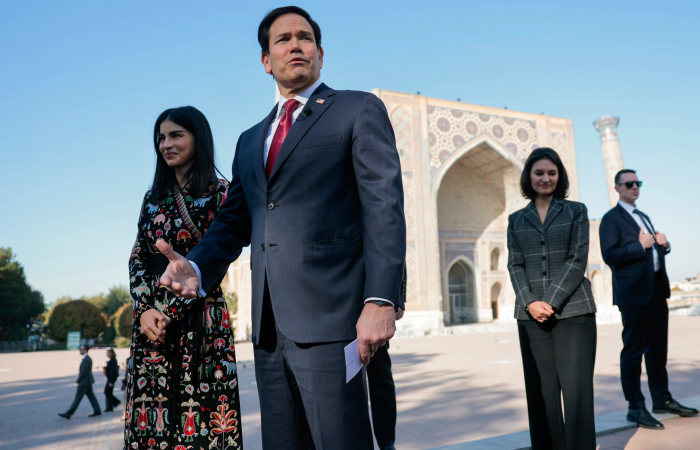
In recent days, Uzbekistan welcomed the Chinese and American governments in quick succession. During Chinese Premier Li Qiang’s visit on 17-18 October, the Uzbek presidential administration said that joint projects backed by firm agreements had reached nearly $60 billion. US Secretary of State Marco Rubio then arrived in Samarkand for C5+1 talks, accompanied at the time by American business leaders seeking contracts, particularly in critical minerals. During the visit, Uzbekistan announced 54 agreements covering trade, investment, and technology. The agreements are said to be worth a total of $12 billion, according to Uzbekistan’s Ministry of Investment, Industry and Trade. However, China still accounts for 23% of Uzbekistan’s foreign trade in January-August 2026, while US goods trade with Uzbekistan totalled at $1.05 billion in 2025, which is less than a fifteenth of the value of its trade with China. Rubio said Washington was not asking Central Asian countries to stop cooperating with other partners, but would instead compete for investment. Tashkent is likely to welcome investment from both sides, but the trade gap shows how challenging it will be if it were to decrease its dependence on Beijing. “Chinese Premier Li Qiang visited Uzbekistan on October 17–18, just ahead of United States Secretary of State Marco Rubio, who arrived in Samarkand on October 18 with a delegation of American business leaders seeking new contracts. While China already has a substantial presence in Uzbek manufacturing and energy, Washington is seeking to expand American involvement in critical minerals and technology. The visits highlight the growing competition between the world’s two largest economies for influence in Central Asia. On October 17, President Shavkat Mirziyoyev received Li Qiang. According to the Uzbek presidential administration, the portfolio of joint projects backed by firm agreements has reached nearly $60 billion. More than 6,000 joint ventures with Chinese participation have been established in Uzbekistan. (...) Construction of the China–Kyrgyzstan–Uzbekistan railway was another topic of discussion. Work officially began in December 2024. The route will cross mountainous areas of Kyrgyzstan and connect the railway networks of China and Uzbekistan. The 304-kilometer section through Kyrgyzstan alone is estimated to cost $4.7 billion and will require 50 bridges and 29 tunnels. (...) On October 19, Rubio attended talks in Samarkand under the C5+1 format, bringing together the U.S. and Kazakhstan, Kyrgyzstan, Tajikistan, Turkmenistan, and Uzbekistan. Rubio said nearly 300 American businesses were represented in Samarkand. Companies were discussing agreements potentially worth billions of dollars, with concrete announcements expected following the meetings. Among Washington’s priorities are critical minerals used in advanced technologies, including electronics and batteries.”

Popular

Editor's choice
Interview
Thursday Interview: Murad Muradov

Thursday Interview: Murad Muradov

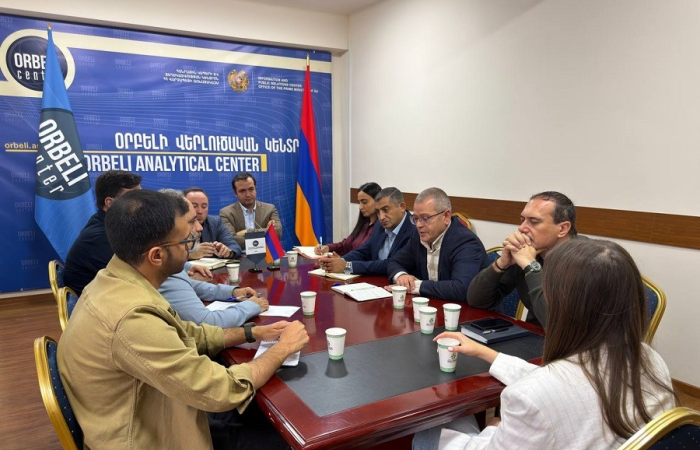
Today, commonspace.eu starts a new regular weekly series. THURSDAY INTERVIEW, conducted by Lauri Nikulainen, will host  persons who are thinkers, opinion shapers, and implementors in their countries and spheres. We start the series with an interview with Murad Muradov, a leading person in Azerbaijan's think tank community. He is also the first co-chair of the Action Committee for a new Armenian-Azerbaijani Dialogue. Last September he made history by being the first Azerbaijani civil society activist to visit Armenia after the 44 day war, and the start of the peace process. Speaking about this visit Murad Muradov said: "My experience was largely positive. My negative expectations luckily didn’t play out. The discussions were respectful, the panel format bringing together experts from Armenia, Azerbaijan, and Turkey was particularly valuable during the NATO Rose-Roth Seminar in Yerevan, and media coverage, while varied in tone, remained largely constructive. Some media outlets though attempted to represent me as more of a government mouthpiece than an independent expert, which was totally misleading.  Overall, I see these initiatives as important steps in rebuilding trust and normalising professional engagement. The fact that soon a larger Azerbaijani civil society visits to Armenia followed, reinforces the sense that this process is moving in the right direction." (click the image to read the interview in full)

