


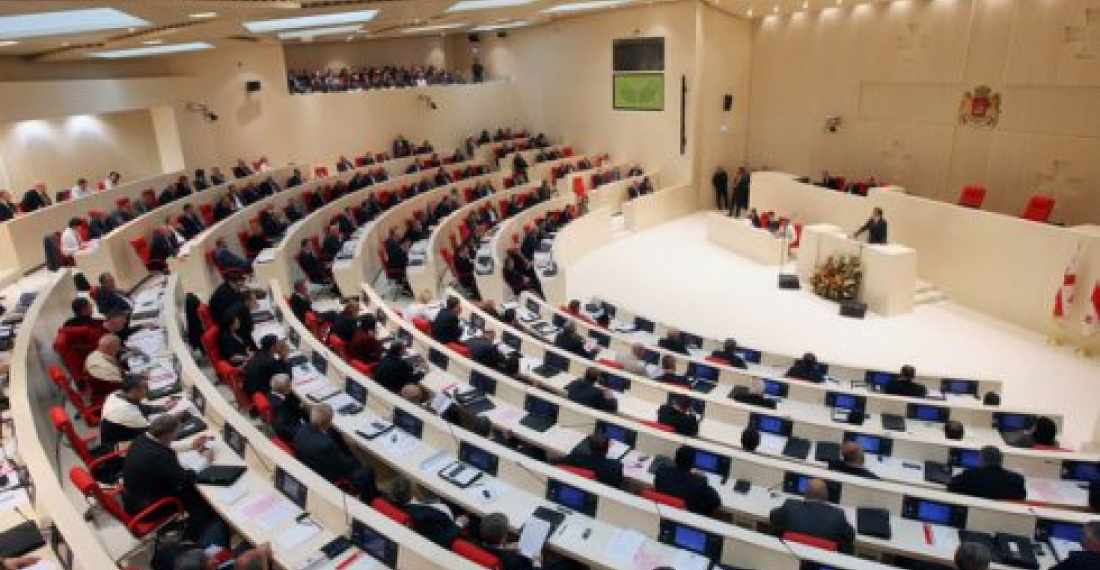
Новая политическая реальность Грузии

Эти результаты привели к новой политической реальности в Грузии.

Центральная избирательная комиссия Грузии объявила окончательные результаты парламентских выборов, состоявшихся в минувшую субботу. По их итогам партия Грузинская мечта демократическая Грузия получила - 48,65%; Единое национальное движение - 27,13%; Альянс патриотов - 5%. Ни одна другая партия не смогла преодолеть минимальный порог.

Впервые Грузинская мечта будет управлять страной самостоятельно, а не в рядах коалиции. Это ей дает большие возможности в плане политического маневра, но лишает сдерживающих аспектов, которые неизбежно присутствуют в коалиции. Отсутствие Республиканской партии, и в частности, ее лидера, Давида Усупашвили, уходящий председатель парламента, будет ощущаться как в политике, так и на престиже парламента, во что он внес большой вклад за последние четыре года.

Только трем партиям удалось набрать достаточное количество голосов, чтобы обеспечить себе места в парламенте по пропорциональному списку. Сейчас дела обстоят следующим образом, Грузинская мечта получит 44 из 77 мест в рамках пропорциональной системы, Единое национальное движение - 27 и Альянс патриотов - 6. К ним добавятся 73 депутата, выбранные по мажоритарной системе. Многим из них предстоит еще побороться во втором туре после того, как им не удалось преодолеть необходимый минимальный порог в 50% голосов в первом туре. Как ожидается, Грузинская мечта заполучит большинство из этих мест.

Одна из партий, которой больше нет в парламенте это прозападные "Свободные демократы", чей лидер Ираклий Аласания заявил в понедельник, что он уходит из политики после того, как партия не смогла преодолеть минимальный порог в 5%, набрав лишь 4,6% голосов.

Новой партией в парламенте является Альянс патриотов, чья риторика во время избирательной кампании вызвало некоторую обеспокоенность в связи с ее ксенофобским характером. Предполагается, что их роль будет больше, чем их размер, так как они сыграют определенную роль между правительством Грузинской мечты и главной оппозиционной силой ЕНД. Их присутствие в парламенте это возможность продемонстрировать свою политическую ответственность.

ЕНД пока еще не решило, каким будет их следующий политический ход. Их лидер в изгнании, Михаил Саакашвили, призвал к бойкоту парламента. В партии такая идея понравилась не всем. Ключевые лидеры партии подчеркивают, что они продолжат находиться в жесткой оппозиции к правительству, но в рамках конституционного порядка. Это должно стать их недвусмысленным обязательством. В Грузии нет места для партии, находящейся в сумеречной зоне демократии.

Это были хорошие выборы, несмотря на отдельные случаи насилия, из-за которых их теперь уже не назовешь образцовыми. Об этом четко сформулировано в заявлениях Парламентских ассамблей (ОБСЕ, НАТО, Совета Европы и Европейского парламента), а также авторитетных местных НПО. Любая попытка поставить их легитимность под сомнение вряд ли будет иметь большой успех. Грузия нуждается в стабильном правительстве и в сильной оппозиции, которая способна привлечь его к ответственности. Перед страной стоят большие и важные задачи на будущее. Политики должны перегруппироваться и вновь приспособиться к новым реалиям, но они должны помнить, что их долг перед их страной и ее народом, а не перед своим эго.

Этот комментарий подготовлен политическим редактором commonspace.eu

Related articles

Editor's choice
News
Germany accuses Russia of cyberattacks and disinformation campaign

Germany accuses Russia of cyberattacks and disinformation campaign

The German government holds Russia responsible for a cyberattack on German air traffic control, and for targeted disinformation campaigns before the last federal election. According to the German Foreign Office in Berlin, the incidents could be clearly attributed to the Russian military intelligence service, the GRU. In response, the Russian ambassador to Berlin was summoned to the Foreign Ministry. "We have been observing a massive increase in threatening hybrid activities by Russia for some time now," a spokesperson for the Foreign Ministry stated. These range from disinformation campaigns and espionage to cyberattacks and sabotage attempts. The aim is to divide society, sow distrust, and undermine confidence in democratic institutions. The spokesperson added that with these actions, Russia is "very concretely threatening our security, not only through its war of aggression against Ukraine, but also here in Germany."  The Foreign Ministry spokesperson explained that the cyberattack on air traffic control in August 2024 was clearly attributed to the hacker collective "APT28," known as "Fancy Bear," and to the responsibility of the Russian military intelligence service, the GRU. Furthermore, it could now be "conclusively stated" that Russia had attempted "to influence and destabilize both the last Federal election and the ongoing internal affairs of the Federal Republic of Germany." There was "absolutely irrefutable evidence" for this". The so-called "Storm 1516" campaign, which has been running since 2024, is allegedly backed by "reliable information" that the Moscow-based think tank "Center for Geopolitical Expertise" is behind it. The Center is also said to be supported by Russian military intelligence. Its primary aim is to influence democratic elections in the West. (Click the image to read more).
Editor's choice
News
NATO Chief says war is on Europe's doorstep, and warns against complacency

NATO Chief says war is on Europe's doorstep, and warns against complacency

Russia could attack a NATO country within the next five years, the Secretary General of NATO, Mark Rutte, said in a stark new warning. "NATO's own defences can hold for now," Rutte warned in Berlin, but conflict was "next door" to Europe, and he feared "too many are quietly complacent, and too many don't feel the urgency, too many believe that time is on our side. "Russia is already escalating its covert campaign against our societies," Rutte said in a speech in Germany. "We must be prepared for the scale of war our grandparents or great-grandparents endured." Earlier this month, Russia's President Vladimir Putin said his country was not planning to go to war with Europe, but it was ready "right now" if Europe wanted to - or started a war. But similar reassurances were given by Moscow in 2022, just before 200,000 Russian troops crossed the border and invaded Ukraine. Putin has accused European countries of hindering US efforts to bring peace in Ukraine - a reference to the role Ukraine's European allies have recently played in trying to change a US peace plan to end the war, whose initial draft was seen as favouring Russia. But Putin was not sincere, Nato's secretary-general said in the German capital, Berlin. Supporting Ukraine, he added, was a guarantee for European security. "Just imagine if Putin got his way; Ukraine under the boot of Russian occupation, his forces pressing against a longer border with Nato, and the significantly increased risk of an armed attack against us." Russia's economy has been on a war footing for more than three years now - its factories churn out ever more supplies of drones, missiles and artillery shells. According to a recent report by the Kiel Institute for the World Economy, Russia has been producing each month around 150 tanks, 550 infantry fighting vehicles, 120 Lancet drones and more than 50 artillery pieces. The UK, and most of its Western allies, are simply not anywhere near this point. Analysts say it would take years for Western Europe's factories to come close to matching Russia's mass-production of weapons. "Allied defence spending and production must rise rapidly, our armed forces must have what they need to keep us safe," the Nato chief said.

Popular

Editor's choice
News
Germany accuses Russia of cyberattacks and disinformation campaign

Germany accuses Russia of cyberattacks and disinformation campaign

The German government holds Russia responsible for a cyberattack on German air traffic control, and for targeted disinformation campaigns before the last federal election. According to the German Foreign Office in Berlin, the incidents could be clearly attributed to the Russian military intelligence service, the GRU. In response, the Russian ambassador to Berlin was summoned to the Foreign Ministry. "We have been observing a massive increase in threatening hybrid activities by Russia for some time now," a spokesperson for the Foreign Ministry stated. These range from disinformation campaigns and espionage to cyberattacks and sabotage attempts. The aim is to divide society, sow distrust, and undermine confidence in democratic institutions. The spokesperson added that with these actions, Russia is "very concretely threatening our security, not only through its war of aggression against Ukraine, but also here in Germany."  The Foreign Ministry spokesperson explained that the cyberattack on air traffic control in August 2024 was clearly attributed to the hacker collective "APT28," known as "Fancy Bear," and to the responsibility of the Russian military intelligence service, the GRU. Furthermore, it could now be "conclusively stated" that Russia had attempted "to influence and destabilize both the last Federal election and the ongoing internal affairs of the Federal Republic of Germany." There was "absolutely irrefutable evidence" for this". The so-called "Storm 1516" campaign, which has been running since 2024, is allegedly backed by "reliable information" that the Moscow-based think tank "Center for Geopolitical Expertise" is behind it. The Center is also said to be supported by Russian military intelligence. Its primary aim is to influence democratic elections in the West. (Click the image to read more).


