Zelensky Warns Russian Airspace Is Becoming Unsafe for Civilian Aviation

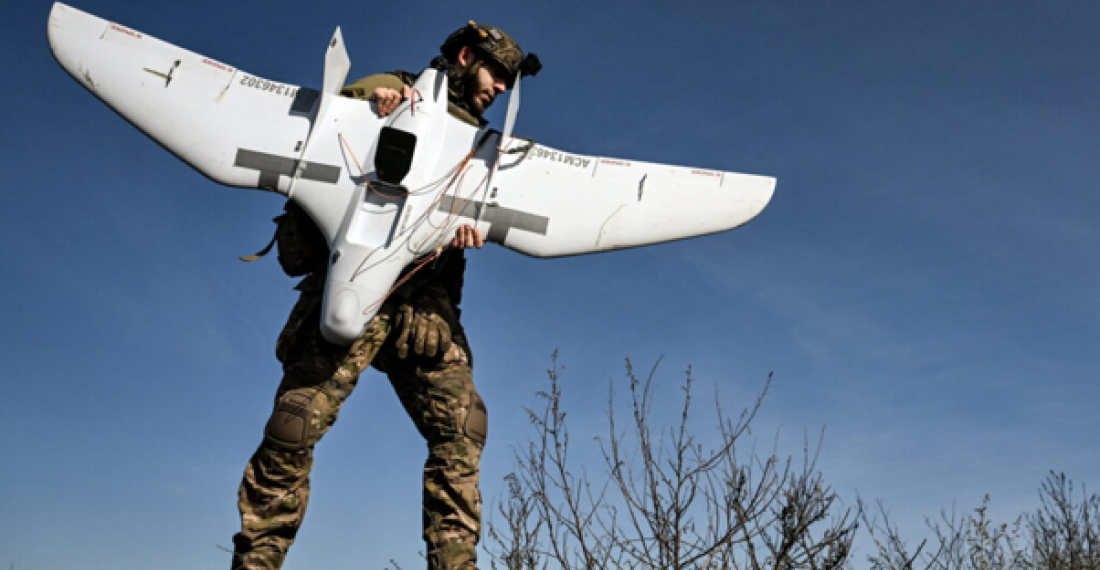
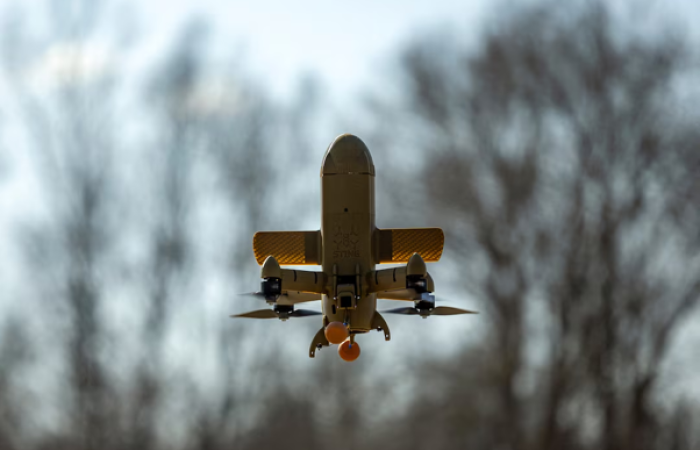
Ukrainian President Volodymyr Zelenskyy warned airlines, insurers and aviation authorities on Monday (September 1) that Russia’s airspace is becoming increasingly dangerous as Ukraine expands its long-range drone operations inside Russian territory. In a Telegram post, he said the growing number of drones could effectively make parts of Russian airspace unusable for civilian aviation.

“We want to warn every airline that uses Russian airspace, every insurer and everyone who still uses Russia’s key airports,” Zelenskyy said in his nightly address. He stressed that Ukraine was not targeting civilian aircraft, but argued that airlines must account for the increasing presence of drones. He also called on foreign diplomats to communicate the warning to their governments and said Ukrainian authorities would provide international organisations with information about the risks.

Russian President Vladimir Putin rejected the warning, describing Zelenskyy’s statements as a “declaration of state terrorism.” Speaking at the Shanghai Cooperation Organisation summit in Kyrgyzstan, Putin said, “you don't negotiate with terrorists,” while maintaining that Russia’s military offensive was continuing to gain momentum.

The warnings come amid an intensification of long-range attacks by both sides. Ukrainian drones have increasingly struck military, energy, industrial and logistics infrastructure deep inside Russia, while Russian authorities have repeatedly restricted or suspended flights at Moscow and other airports during drone attacks. Aviation risk advisory firm Osprey Flight Solutions assessed that most Ukrainian strikes would probably remain within 300km of the border but warned that deeper attacks were likely to continue and could increase in frequency.

Russia has continued operating major airports and passenger flights, including routes used by Chinese, Turkish and Gulf carriers that cross Russian airspace to save time and fuel. Most Western airlines, however, have avoided Russian airspace since Russia’s full-scale invasion of Ukraine began in February 2022.

The aviation risks are particularly significant given previous incidents. The 2014 downing of Malaysia Airlines Flight MH17 by Russian-backed forces killed all 298 people aboard, while in 2024 Russia acknowledged that an airliner crash that killed 38 people occurred as its air defences were responding to Ukrainian drones.

Meanwhile, diplomatic efforts led by the United States remain stalled, despite continued contacts between Washington and Moscow.

Source: commonspace.eu with BBC News (London) and Euromaidan Press (Kyiv).
 

Related articles

Editor's choice
News
Armenian and Azerbaijani officials seek to defuse tension

Armenian and Azerbaijani officials seek to defuse tension

Armenian and Azerbaijani senior officials have moved to reduce tensions that erupted following an outcry in Armenia after a visit by foreign diplomats to Karabakh and surrounding regions, and a subsequent reaction in Azerbaijan. Armenia’s Security Council Secretary Alen Simonyan has said that following the events that took place at Gandzasar Monastery, he spoke by phone with Azerbaijani President Ilham Aliyev’s Assistant Hikmet Hajiyev. Responding to a question about whether he plans to publicly respond to Hajiyev’s statements regarding Gandzasar, Simonyan said at a press briefing that not all statements necessarily need to receive a public response. “I think everything has been said, and not everything that is said always needs a response. We need to realize whether this will change something or not. I can say something sharp now, respond in some way, we can all feel good for 15 minutes, but by doing so I could harm the negotiations,” Simonyan said. He stressed that the peace process requires a cautious approach. (click image to read more)

Popular

Editor's choice
Interview
Thursday Interview: Murad Muradov

Thursday Interview: Murad Muradov

Today, commonspace.eu starts a new regular weekly series. THURSDAY INTERVIEW, conducted by Lauri Nikulainen, will host  persons who are thinkers, opinion shapers, and implementors in their countries and spheres. We start the series with an interview with Murad Muradov, a leading person in Azerbaijan's think tank community. He is also the first co-chair of the Action Committee for a new Armenian-Azerbaijani Dialogue. Last September he made history by being the first Azerbaijani civil society activist to visit Armenia after the 44 day war, and the start of the peace process. Speaking about this visit Murad Muradov said: "My experience was largely positive. My negative expectations luckily didn’t play out. The discussions were respectful, the panel format bringing together experts from Armenia, Azerbaijan, and Turkey was particularly valuable during the NATO Rose-Roth Seminar in Yerevan, and media coverage, while varied in tone, remained largely constructive. Some media outlets though attempted to represent me as more of a government mouthpiece than an independent expert, which was totally misleading.  Overall, I see these initiatives as important steps in rebuilding trust and normalising professional engagement. The fact that soon a larger Azerbaijani civil society visits to Armenia followed, reinforces the sense that this process is moving in the right direction." (click the image to read the interview in full)