


Южная Осетия готовится к празднованию Дня Победы

В Южной Осетии готовятся праздновать День Победы в субботу (9 мая), но в этом году празднование будет более сдержанным из-за пандемии коронавируса.

Празднование победы союзников во Второй мировой войне, известной на постсоветском пространстве как Великая Отечественная война, играет важную роль в нынешнем политическом повествовании о самопровозглашенной «Республике Южная Осетия». В нем подчеркивается связь с Россией и осетинскими братьями через Кавказские горы, в Республике Северная Осетия Алания. Это также является выражением ностальгии по коммунистическому прошлому, все еще ощущаемому многими на небольшой территории, отделившейся от Грузии в 1992 году.

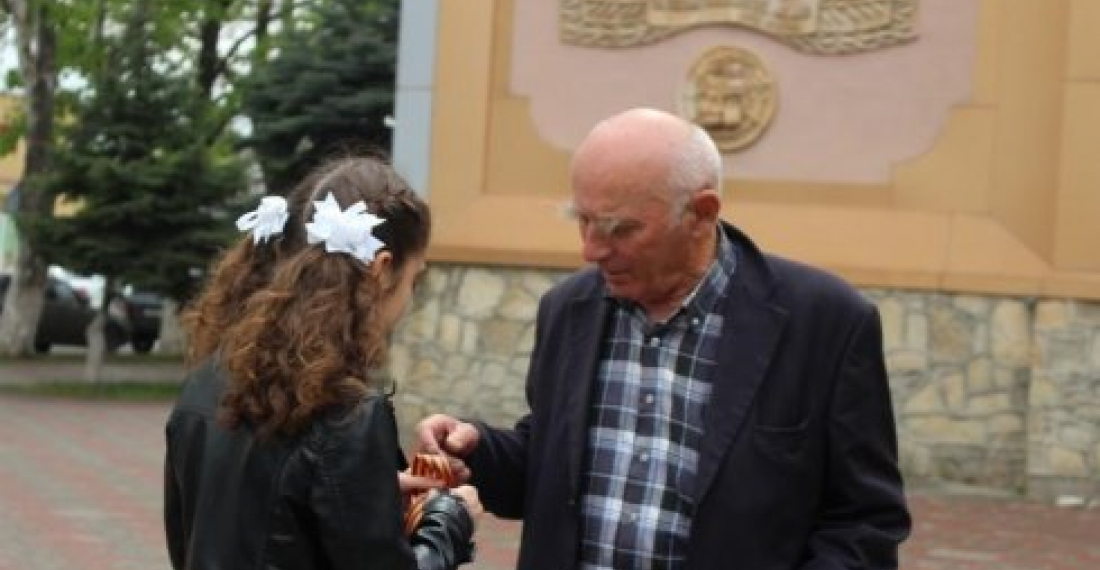
В преддверии празднования Дня Победы в Цхинвали, административной столице края, была развернута кампания «Георгиевская ленточка». Организатором акции является Координационный совет соотечественников России в Южной Осетии.

Это традиция, тесно связанная с празднованием Дня Победы. Как сообщили председатель Совета Наталья Жуйкова, эта акция проводится ежегодно, но в этом году она проходит в контексте пандемии коронавируса, поэтому организаторам пришлось соблюдать все меры безопасности. Ленты раздаются, как и раньше, но с меньшим количеством активистов.

Жуйкова сообщила, что в рамках акции будет распространено около 200 георгиевских лент.

Черно-оранжевые ленты стали символом памяти о победе в Великой Отечественной войне, знаком вечной благодарности ветеранам, освободившим мир от фашизма.

Де-факто власти Южной Осетии ранее решили перенести парад Победы 9 мая и шествие «Бессмертного полка» на другую дату из-за пандемии коронавируса. Анатолий Бибилов, де-факто президент Южной Осетии, заявил об этом на встрече с членами целевой группы по противодействию распространению коронавируса.

"Мы не можем предсказать эпидемиологическую ситуацию во время парада 9 мая, более того, сегодня массовые сборы нежелательны. Мы проведем парад, когда он будет проходить в Москве на Красной площади, поскольку это наш общий праздник, Наша общая дата. Я думаю, что это правильное решение с политической точки зрения. Мы будем исходить из даты парада и внесем определенные коррективы", - сказал Бибилов.

Ранее в Южной Осетии также было объявлено, что в дни национального праздника Цхинвал будет назван городом Сталина. Ожидается, что этот термин будет использован впервые в субботу.

источник: commonspace.eu по материалам агентств

фото: Девушка прикрепляет георгиевскую ленточку ветерану в Цхинвали, в преддверии Дня Победы (фото любезно предоставлено агентством RES, Цхинвали)
 

Related articles

Editor's choice
News
Nikol Pashinyan re-appointed as Armenian prime minister after decisive June election victory

Nikol Pashinyan re-appointed as Armenian prime minister after decisive June election victory

Armenia president, Vahagn Khachaturyan has re-appointed Nikol Pashinyan as Armenian prime minister, after the decisive victory of his Civil Contract party in parliamentary elections in June. During a ceremony at the Presidential Palace in Yerevan, President Khachaturyan signed a decree on the appointment of Nikol Pashinyan as Prime Minister of the Republic. President Vahagn Khachaturyan said in short remarks: It is a great honor for me to sign a decree on appointing you to the post of Prime Minister of the Republic of Armenia, for which I received a proposal from the political majority in the National Assembly, under Article 149 of the Constitution of the Republic of Armenia. I sincerely congratulate you, I wish you great patience, endurance, and determination to lead us in these difficult times, to lead the country to the future, a prosperous future. Nikol Pashinyan thanked the president and added,  I must say honestly that in 2018, when I assumed the post of Prime Minister of the Republic of Armenia as a result of the People's, non-violent, velvet revolution, it would have been difficult to predict that we would go down such a path and I think it would have been difficult to predict that we would be able to overcome this path. But we are where we are, and I think that the key role and significance in all this is unequivocally and undoubtedly the people of the Republic of Armenia, who, after all, have demonstrated special expressions of state consciousness and state-centeredness throughout this period. And of course, this is a great obligation and commitment. Of course, the Government will be formed in the near future and all members of the Government, including me, will already enshrine our obligations to our people in the text of the oath.  In the meantime Ruben Rubinyan has been elected Speaker of the National Assembly of Armenia, following a secret vote of MPs. He is a 36-year-old MP from the ruling Civil Contract party, who was one of the deputy speakers in the previous parliament and, until recently, was the special representative in the negotiations on the normalization of relations with Turkey.

Popular

Editor's choice
Interview
Thursday Interview: Murad Muradov

Thursday Interview: Murad Muradov

Today, commonspace.eu starts a new regular weekly series. THURSDAY INTERVIEW, conducted by Lauri Nikulainen, will host  persons who are thinkers, opinion shapers, and implementors in their countries and spheres. We start the series with an interview with Murad Muradov, a leading person in Azerbaijan's think tank community. He is also the first co-chair of the Action Committee for a new Armenian-Azerbaijani Dialogue. Last September he made history by being the first Azerbaijani civil society activist to visit Armenia after the 44 day war, and the start of the peace process. Speaking about this visit Murad Muradov said: "My experience was largely positive. My negative expectations luckily didn’t play out. The discussions were respectful, the panel format bringing together experts from Armenia, Azerbaijan, and Turkey was particularly valuable during the NATO Rose-Roth Seminar in Yerevan, and media coverage, while varied in tone, remained largely constructive. Some media outlets though attempted to represent me as more of a government mouthpiece than an independent expert, which was totally misleading.  Overall, I see these initiatives as important steps in rebuilding trust and normalising professional engagement. The fact that soon a larger Azerbaijani civil society visits to Armenia followed, reinforces the sense that this process is moving in the right direction." (click the image to read the interview in full)

