


Совет Европы распространил заявление о выборах в органы местного самоуправления в Армении

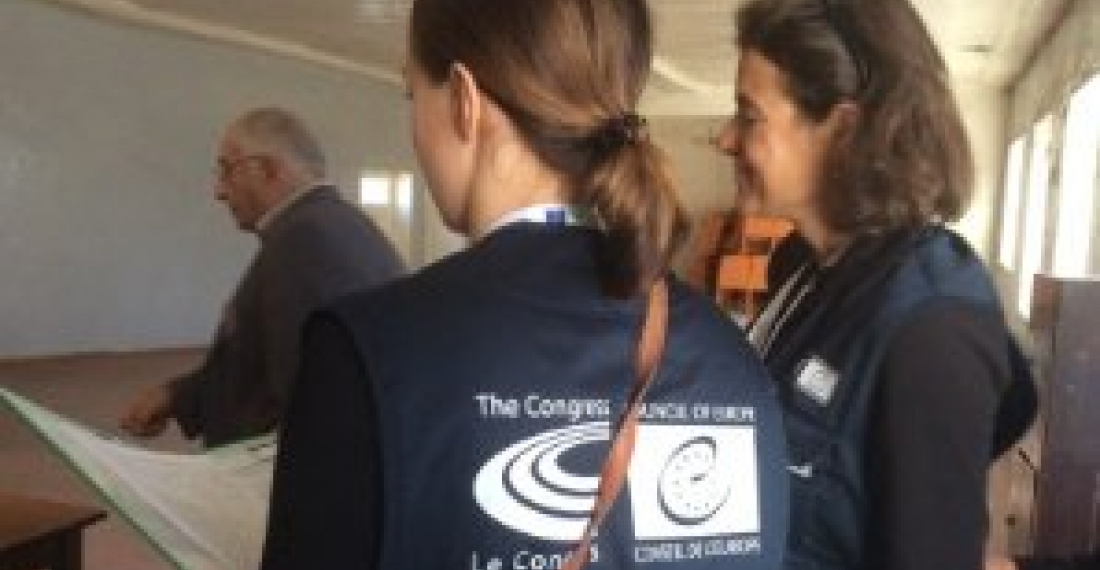
Делегация Конгресса местных и региональных властей Совета Европы, которые наблюдали за ходом местных выборов в Армении в минувшее воскресенье, опубликовали на сайте Конгресса заявление. Глава делегации в заявлении поднял вопрос о точности списка избирателей, а также о том, что он называет "серой зоной" при содействии голосования.

Заявление Миссии было опубликовано на сайте Совета Европы. В нем говорится следующее:

В рамках своей оценочной миссии выборов в органы местного самоуправления, состоявшихся вчера в части общин Армении, делегация из 15 членов Конгресса местных и региональных властей Совета Европы посетила избирательные участки в четырех регионах страны. Делегация во главе с докладчиком Лиизой Ансала (Финляндия, НЛД) вместе с двумя членами Комитета регионов ЕС посетили Арагацотн, Армавир, Арарат и Тавуш, где в общей сложности семь команд наблюдали за голосованием на 100 избирательных участках.

Прошедшие выборы в более чем 300 армянских общинах (всего их в стране около 900) в ходе которых одновременно избирались руководители общин и члены совета старейшин. В большинстве муниципалитетах были проведены избирались как руководители общин, так и члены совета старейшин, в 22 общинах голосовали только за руководителей общин, в 80 только за членов совета старейшин. В целом, "делегация Конгресса пришла к выводу, что выборы были хорошо организованы и день голосования прошел в нормальном режиме, за исключением нескольких инцидентов и тесноту на некоторых избирательных участках. В целом, большая политическая конкуренция между кандидатами был замечена в крупных общинах, в то время как во многих меньших населенных пунктах часто в списке присутствовал только один кандидат.

В дополнение к индивидуальным особенностям избирательного процесса, которые власти должны скорректировать во время будущих выборов, в частности в отношении так называемого «голосования при содействии» для пожилых людей и избирателей с ограниченными возможностями, делегация Конгресса отметила в списках высокое число избирателей, которые де-факто проживают за границей. Эта ситуация содержит риск фальсификации выборов и, следовательно, вызывает обеспокоенность наблюдателей.

Правительство, оппозиция, гражданское общество и Венецианская комиссия Совета Европы в течение последних месяцев обсуждают новый Избирательный кодекс Армении и перечисленные в нем положения, в частности, предотвращение фальсификаций из-за многократного голосования. Муниципальные выборы, состоявшиеся 18 сентября, регулировались существующим с 2011 года Избирательным кодексом и, следовательно, наблюдатели Конгресса не смогли оценить эффективность мер, предусмотренных для повышения прозрачности избирательного процесса, в частности, доступа различных заинтересованных сторон к спискам избирателей, принявших участие в голосовании.

По словам главы делегации Конгресса Лиизы Ансала улучшение качества списка избирателей в Армении имеет решающее значение для доверия граждан к системе: "Прозрачность, наряду с большей конкуренцией между кандидатами, необходимы повышения интереса населения к выборам в местные органы самоуправления, которые в настоящее время в основном рассматривается гражданами как формальность. Мы увидим, в какой степени новый Избирательный кодекс, введение пропорциональной избирательной системы, а также реформа децентрализации, которая в настоящее время реализуется, дадут возможность изменить ситуацию к лучшему".

"Совершенно очевидно, что местные общины в Армении должны быть усилены - в финансовом, материально-техническом плане, но и с точки зрения повышения осведомленности общественности о значимости выборов. Организация всех выборов в органы местного самоуправления в один день по всей стране может способствует этому", сказала Ансала.

Подробный отчет миссии по оценке выборов будет обсуждаться в рамках 31-го Конгресса сессии 19-21 октября в Страсбурге.

Согласно заявлению опубликованного на веб-сайте Конгресса:

Армения ратифицировала Европейскую хартию местного самоуправления в 2002 году. Страны, ратифицировавшие Устав связаны с его положениями. Устав требует соблюдения минимального количества прав, которые образуют европейскую основу местного самоуправления. Конгресс местных и региональных властей гарантирует соблюдение этих принципов.

источник: Совет Европы, Конгресс местных и региональных властей

 

Related articles

Editor's choice
News
Germany accuses Russia of cyberattacks and disinformation campaign

Germany accuses Russia of cyberattacks and disinformation campaign

The German government holds Russia responsible for a cyberattack on German air traffic control, and for targeted disinformation campaigns before the last federal election. According to the German Foreign Office in Berlin, the incidents could be clearly attributed to the Russian military intelligence service, the GRU. In response, the Russian ambassador to Berlin was summoned to the Foreign Ministry. "We have been observing a massive increase in threatening hybrid activities by Russia for some time now," a spokesperson for the Foreign Ministry stated. These range from disinformation campaigns and espionage to cyberattacks and sabotage attempts. The aim is to divide society, sow distrust, and undermine confidence in democratic institutions. The spokesperson added that with these actions, Russia is "very concretely threatening our security, not only through its war of aggression against Ukraine, but also here in Germany."  The Foreign Ministry spokesperson explained that the cyberattack on air traffic control in August 2024 was clearly attributed to the hacker collective "APT28," known as "Fancy Bear," and to the responsibility of the Russian military intelligence service, the GRU. Furthermore, it could now be "conclusively stated" that Russia had attempted "to influence and destabilize both the last Federal election and the ongoing internal affairs of the Federal Republic of Germany." There was "absolutely irrefutable evidence" for this". The so-called "Storm 1516" campaign, which has been running since 2024, is allegedly backed by "reliable information" that the Moscow-based think tank "Center for Geopolitical Expertise" is behind it. The Center is also said to be supported by Russian military intelligence. Its primary aim is to influence democratic elections in the West. (Click the image to read more).
Editor's choice
News
NATO Chief says war is on Europe's doorstep, and warns against complacency

NATO Chief says war is on Europe's doorstep, and warns against complacency

Russia could attack a NATO country within the next five years, the Secretary General of NATO, Mark Rutte, said in a stark new warning. "NATO's own defences can hold for now," Rutte warned in Berlin, but conflict was "next door" to Europe, and he feared "too many are quietly complacent, and too many don't feel the urgency, too many believe that time is on our side. "Russia is already escalating its covert campaign against our societies," Rutte said in a speech in Germany. "We must be prepared for the scale of war our grandparents or great-grandparents endured." Earlier this month, Russia's President Vladimir Putin said his country was not planning to go to war with Europe, but it was ready "right now" if Europe wanted to - or started a war. But similar reassurances were given by Moscow in 2022, just before 200,000 Russian troops crossed the border and invaded Ukraine. Putin has accused European countries of hindering US efforts to bring peace in Ukraine - a reference to the role Ukraine's European allies have recently played in trying to change a US peace plan to end the war, whose initial draft was seen as favouring Russia. But Putin was not sincere, Nato's secretary-general said in the German capital, Berlin. Supporting Ukraine, he added, was a guarantee for European security. "Just imagine if Putin got his way; Ukraine under the boot of Russian occupation, his forces pressing against a longer border with Nato, and the significantly increased risk of an armed attack against us." Russia's economy has been on a war footing for more than three years now - its factories churn out ever more supplies of drones, missiles and artillery shells. According to a recent report by the Kiel Institute for the World Economy, Russia has been producing each month around 150 tanks, 550 infantry fighting vehicles, 120 Lancet drones and more than 50 artillery pieces. The UK, and most of its Western allies, are simply not anywhere near this point. Analysts say it would take years for Western Europe's factories to come close to matching Russia's mass-production of weapons. "Allied defence spending and production must rise rapidly, our armed forces must have what they need to keep us safe," the Nato chief said.

Popular

Editor's choice
News
Germany accuses Russia of cyberattacks and disinformation campaign

Germany accuses Russia of cyberattacks and disinformation campaign

The German government holds Russia responsible for a cyberattack on German air traffic control, and for targeted disinformation campaigns before the last federal election. According to the German Foreign Office in Berlin, the incidents could be clearly attributed to the Russian military intelligence service, the GRU. In response, the Russian ambassador to Berlin was summoned to the Foreign Ministry. "We have been observing a massive increase in threatening hybrid activities by Russia for some time now," a spokesperson for the Foreign Ministry stated. These range from disinformation campaigns and espionage to cyberattacks and sabotage attempts. The aim is to divide society, sow distrust, and undermine confidence in democratic institutions. The spokesperson added that with these actions, Russia is "very concretely threatening our security, not only through its war of aggression against Ukraine, but also here in Germany."  The Foreign Ministry spokesperson explained that the cyberattack on air traffic control in August 2024 was clearly attributed to the hacker collective "APT28," known as "Fancy Bear," and to the responsibility of the Russian military intelligence service, the GRU. Furthermore, it could now be "conclusively stated" that Russia had attempted "to influence and destabilize both the last Federal election and the ongoing internal affairs of the Federal Republic of Germany." There was "absolutely irrefutable evidence" for this". The so-called "Storm 1516" campaign, which has been running since 2024, is allegedly backed by "reliable information" that the Moscow-based think tank "Center for Geopolitical Expertise" is behind it. The Center is also said to be supported by Russian military intelligence. Its primary aim is to influence democratic elections in the West. (Click the image to read more).


