


Новый посол ЕС в Азербайджане вступил в должность

Новый посол Европейского Союза в Азербайджане Кестутис Янкаускас официально приступил к своей деятельности после вручения сегодня утром верительных грамот президенту Азербайджана Ильхаму Алиеву.

В своем слове на церемонии вручения верительных грамот он сказал, что не пожалеет усилий "для дальнейшего развития отношений между ЕС и Азербайджаном, которые основаны на взаимной выгоде, общих ценностях и взаимных интересах во всех сферах. Это касается не только энергетической сферы, но и в сфере транспорта, диверсификации экономики и строительства современного государства и общества. Мы высоко ценим роль Азербайджана как стабильного и надежного партнера в регионе и его важность как страны, которая построила толерантное, многокультурное и светское общество".

В ответ президент Алиев сказал: "Мы очень довольны уровнем нашего партнерства с Европейским союзом, и Европейский союз является нашим ключевым торговым партнером. Конечно, наше сотрудничество не ограничивается торговым и энергетическим секторами, оно охватывает широкий диапазон областей".

Охарактеризовав свой последний визит в Брюссель как успешный, президент Алиев отметил, что поездка способствовала активному переговорному процессу по новому документу партнерства между Азербайджаном и Европейским Союзом, и эти переговоры в настоящее время успешно продолжаются.

Президент Алиев выразил надежду, что позиция Европейского Союза в отношении территориальной целостности Азербайджана останется без изменений.

источник: commonspace.eu по материалам агентств

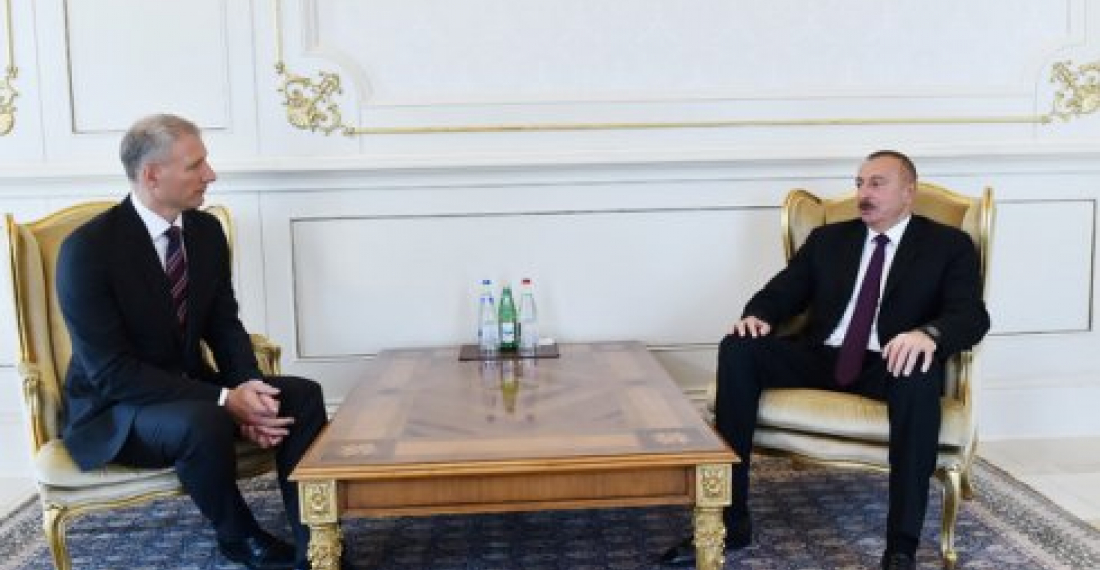
фото: Новый посол ЕС в Азербайджане во время встречи с президентом Алиевым вскоре после церемонии вручения верительных грамот, состоявшейся в Баку 12 сентября 2017 года (фото предоставлено пресс-службой президента Азербайджана)


Related articles

Editor's choice
News
The British prime minister says Europe must "stand on its own two feet" when it comes to defence

The British prime minister says Europe must "stand on its own two feet" when it comes to defence

The UK will deploy a carrier strike group, led by the aircraft carrier HMS Prince of Wales to the Arctic and the High North as part of efforts to bolster security against Russian threats. British prime minister, Sir Keir Starmer announced the deployment in a speech on Saturday (14 February) at the Munich Security Conference. Europe must be ready to fight to protect its people, values, and way of life,  Sir Keir told the Conference. Starmer also called for deeper links and cooperation, including economic ties, between the UK and EU. The PM stressed the continent must "stand on its own two feet" when it comes to defence commitments. "We must build our hard power, because that is the currency of the age," he told the conference. (Click image to read the full story).

Popular

Editor's choice
Interview
Thursday Interview: Murad Muradov

Thursday Interview: Murad Muradov

Today, commonspace.eu starts a new regular weekly series. THURSDAY INTERVIEW, conducted by Lauri Nikulainen, will host  persons who are thinkers, opinion shapers, and implementors in their countries and spheres. We start the series with an interview with Murad Muradov, a leading person in Azerbaijan's think tank community. He is also the first co-chair of the Action Committee for a new Armenian-Azerbaijani Dialogue. Last September he made history by being the first Azerbaijani civil society activist to visit Armenia after the 44 day war, and the start of the peace process. Speaking about this visit Murad Muradov said: "My experience was largely positive. My negative expectations luckily didn’t play out. The discussions were respectful, the panel format bringing together experts from Armenia, Azerbaijan, and Turkey was particularly valuable during the NATO Rose-Roth Seminar in Yerevan, and media coverage, while varied in tone, remained largely constructive. Some media outlets though attempted to represent me as more of a government mouthpiece than an independent expert, which was totally misleading.  Overall, I see these initiatives as important steps in rebuilding trust and normalising professional engagement. The fact that soon a larger Azerbaijani civil society visits to Armenia followed, reinforces the sense that this process is moving in the right direction." (click the image to read the interview in full)

