МИД Грузии опубликовал документ, посвященный ситуации на оккупированных территориях

Министерство иностранных дел Грузии опубликовало доклад за октябрь-декабрь 2015, посвященный ситуации с правами человека на окупированных территориях страны.

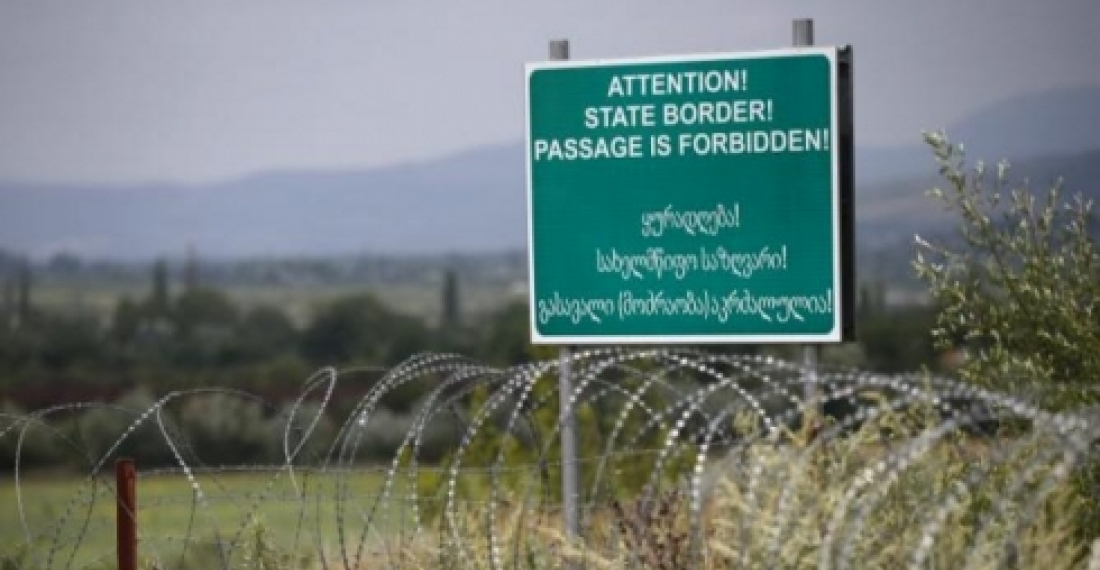
В документе сообщается, "что с оккупированных территорий продолжают поступать данные о грубых нарушениях прав человека, в том числе бесчеловечном обращении, произвольных задержаниях, ограничении свободы на передвижение и массовые нарушения прав собственности и прав на получение образования на родном языке. Монтаж заграждений с колючей проволокой вдоль всей линии оккупации усугубляет и без того тяжелую ситуацию."

В документе упоминается и о так называемом происходящем процессе "паспортизации" на этих территориях, что может привезти к новому витку этнических зачисток. Процесс "паспортизации" должен завершится к февралю 2016 года. Жители Гальского района опасаются, что это так называемая "паспортизация" ухудшит еще больше их положение.

"Несомненно, что так называемый процесс "паспортизации" может привести к ситуации, когда людям откажут в получении так называемого нового "абхазского паспорта" ... что приведет к осложнениям в вопросах прав на собственность и свободу передвижения на окупированных территориях."

Общая длина заграждений незаконно возведенных российскими оккупационными войсками на территории Грузии на сегодняшний день составляет 63 км.

Из этого около 51 км заграждений возведены вдоль линии оккупации в Цхинвальском регионе (Южная Осетия) и более чем 12 км вдоль линии оккупации в абхазском регионе.

Оба этих региона - Абхазия и Цхинвали - составляют 20 процентов территории Грузии, которые в настоящее время находятся под окупацией России.

С полным докладом можно ознакомиться здесь.

источник: commonspace.eu
 

Related articles

Editor's choice
News
The British prime minister says Europe must "stand on its own two feet" when it comes to defence

The British prime minister says Europe must "stand on its own two feet" when it comes to defence

The UK will deploy a carrier strike group, led by the aircraft carrier HMS Prince of Wales to the Arctic and the High North as part of efforts to bolster security against Russian threats. British prime minister, Sir Keir Starmer announced the deployment in a speech on Saturday (14 February) at the Munich Security Conference. Europe must be ready to fight to protect its people, values, and way of life,  Sir Keir told the Conference. Starmer also called for deeper links and cooperation, including economic ties, between the UK and EU. The PM stressed the continent must "stand on its own two feet" when it comes to defence commitments. "We must build our hard power, because that is the currency of the age," he told the conference. (Click image to read the full story).

Popular

Editor's choice
Interview
Thursday Interview: Murad Muradov

Thursday Interview: Murad Muradov

Today, commonspace.eu starts a new regular weekly series. THURSDAY INTERVIEW, conducted by Lauri Nikulainen, will host  persons who are thinkers, opinion shapers, and implementors in their countries and spheres. We start the series with an interview with Murad Muradov, a leading person in Azerbaijan's think tank community. He is also the first co-chair of the Action Committee for a new Armenian-Azerbaijani Dialogue. Last September he made history by being the first Azerbaijani civil society activist to visit Armenia after the 44 day war, and the start of the peace process. Speaking about this visit Murad Muradov said: "My experience was largely positive. My negative expectations luckily didn’t play out. The discussions were respectful, the panel format bringing together experts from Armenia, Azerbaijan, and Turkey was particularly valuable during the NATO Rose-Roth Seminar in Yerevan, and media coverage, while varied in tone, remained largely constructive. Some media outlets though attempted to represent me as more of a government mouthpiece than an independent expert, which was totally misleading.  Overall, I see these initiatives as important steps in rebuilding trust and normalising professional engagement. The fact that soon a larger Azerbaijani civil society visits to Armenia followed, reinforces the sense that this process is moving in the right direction." (click the image to read the interview in full)