


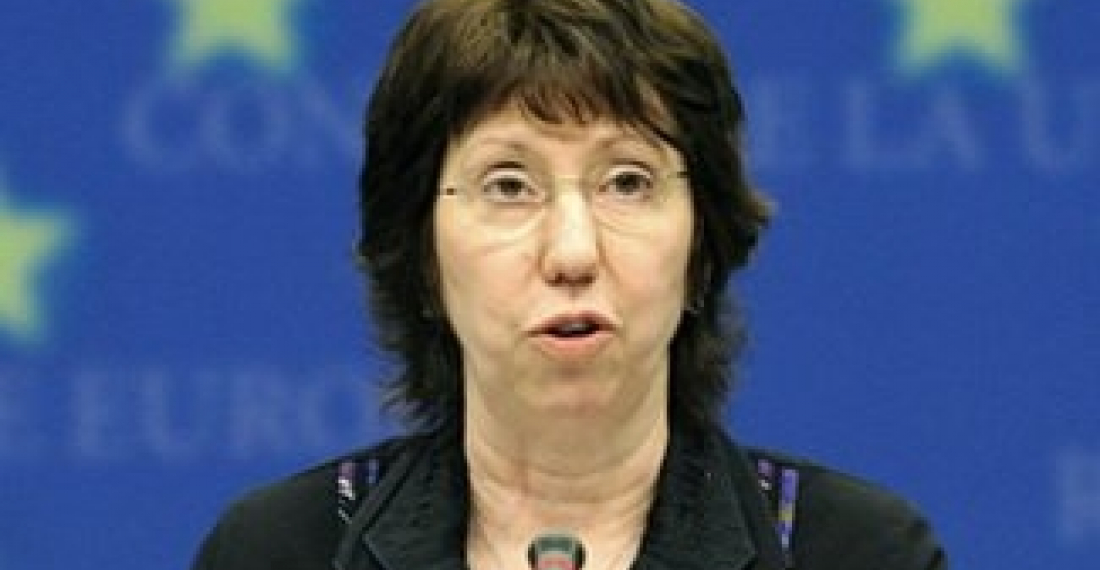
Кэтрин Эштон: «Азербайджану и Армении нужно достичь соглашения по базовым принципам до конца года»

БАКУ, 6 июль – 1NEWS.AZ

«Азербайджану и Армении нужно удвоить усилия, чтобы достичь соглашения по базовым принципам урегулирования нагорно-карабахского конфликта до конца 2011 года».

Об этом, как передает 1news.az со ссылкой на APA, заявила верховный представитель Евросоюза по внешней политике и вопросам безопасности Кэтрин Эштон, выступая на пленарной сессии Европарламента в Страсбурге.

«Наступило время для достижения решения по нагорно-карабахскому конфликту. К сожалению, ожидаемый прорыв в переговорах в Казани не был достигнут. Президенты Азербайджана и Армении не смогли воспользоваться возможностью для того, чтобы достичь компромисса»-заявила К. Эштон, отметив, что обе стороны должны оставаться приверженными дипломатическому пути решения конфликта.

«Сторонам нужно удвоить усилия чтобы достичь соглашения до конца этого года».- заявила она, отметив что выборы в 2012 году в Армении и потом в Азербайджане могут замедлить переговорный процесс.

Эштон заявила, что сохранение статус-кво неприемлем и решение конфликта положительно отразится на развитии региона. «Мирное разрешение этого конфликта - это ключевой стратегический интерес для ЕС, решение этого конфликта позволит трансформировать регион Южного Кавказа на путь экономической стабильности. Границы могли бы открыться не только между Арменией и Азербайджаном, но и между Арменией и Турцией, тем самым страны региона смогли бы стать ближе друг другу», сказала она

Эштон отметила, что ЕС готов оказать поддержку в урегулировании нагорно-карабахского конфликта, в том числе Минской группе ОБСЕ, которая напрямую вовлечена в переговорный процесс. «Мы проводим регулярные консультации с МГ ОБСЕ о том, какую помощь можем оказать в этом вопросе.» - отметила верховный представитель ЕС.

Она также сообщила, что намерена посетить Азербайджан и Армению, чтобы обсудить вопрос урегулирования нагорно-карабахского конфликта.

А.Ф.

 

Related articles

Editor's choice
News
The British prime minister says Europe must "stand on its own two feet" when it comes to defence

The British prime minister says Europe must "stand on its own two feet" when it comes to defence

The UK will deploy a carrier strike group, led by the aircraft carrier HMS Prince of Wales to the Arctic and the High North as part of efforts to bolster security against Russian threats. British prime minister, Sir Keir Starmer announced the deployment in a speech on Saturday (14 February) at the Munich Security Conference. Europe must be ready to fight to protect its people, values, and way of life,  Sir Keir told the Conference. Starmer also called for deeper links and cooperation, including economic ties, between the UK and EU. The PM stressed the continent must "stand on its own two feet" when it comes to defence commitments. "We must build our hard power, because that is the currency of the age," he told the conference. (Click image to read the full story).

Popular

Editor's choice
Interview
Thursday Interview: Murad Muradov

Thursday Interview: Murad Muradov

Today, commonspace.eu starts a new regular weekly series. THURSDAY INTERVIEW, conducted by Lauri Nikulainen, will host  persons who are thinkers, opinion shapers, and implementors in their countries and spheres. We start the series with an interview with Murad Muradov, a leading person in Azerbaijan's think tank community. He is also the first co-chair of the Action Committee for a new Armenian-Azerbaijani Dialogue. Last September he made history by being the first Azerbaijani civil society activist to visit Armenia after the 44 day war, and the start of the peace process. Speaking about this visit Murad Muradov said: "My experience was largely positive. My negative expectations luckily didn’t play out. The discussions were respectful, the panel format bringing together experts from Armenia, Azerbaijan, and Turkey was particularly valuable during the NATO Rose-Roth Seminar in Yerevan, and media coverage, while varied in tone, remained largely constructive. Some media outlets though attempted to represent me as more of a government mouthpiece than an independent expert, which was totally misleading.  Overall, I see these initiatives as important steps in rebuilding trust and normalising professional engagement. The fact that soon a larger Azerbaijani civil society visits to Armenia followed, reinforces the sense that this process is moving in the right direction." (click the image to read the interview in full)


