


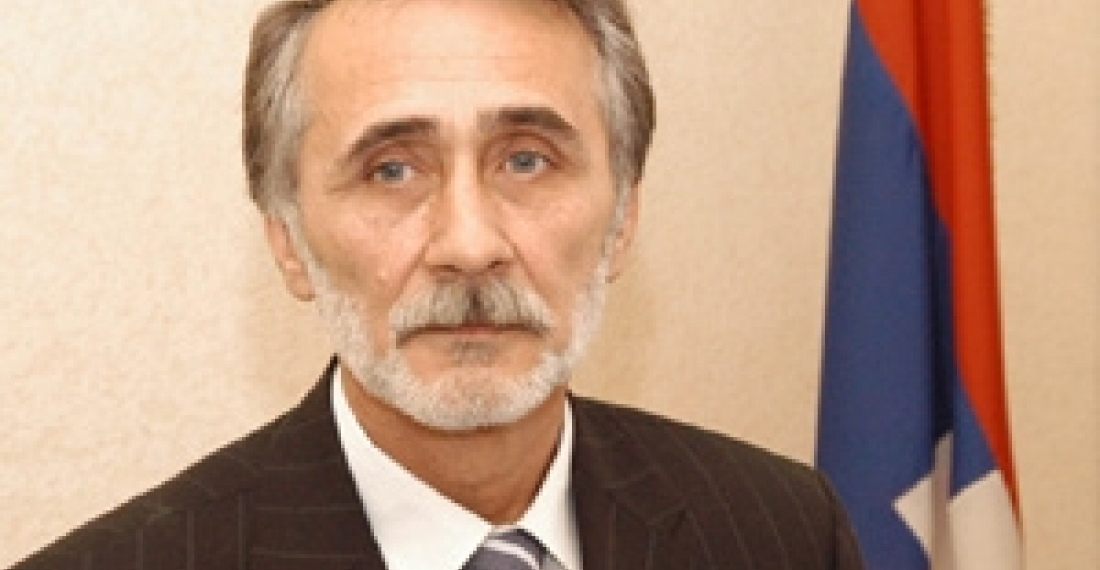
Глава МИД НКР:

Трудно говорить с человеком, у которого в кармане запрятан нож, и именно поэтому стороны переговоров по урегулированию нагорно-карабахского конфликта должны взять на себя ответственность не возобновлять войну. Подобное мнение выразил сегодня в ходе встречи с журналистами, прибывшими в Карабах из Абхазии, Южной Осетии, Грузии и Армении, в рамках проекта "Кавказский перекресток: создание интерактивного диалога на Южном Кавказе" глава МИД НКР Георгий Петросян.

Выразив сожаление ввиду отсутствия азербайджанских журналистов, Петросян отметив, что в Довиле президенты США, Франции и России призвали стороны готовить свои народы к миру, выразил недоумение по поводу отсутствия этой подготовки со стороны Азербайджана.

"Более того, воинственные заявления Азербайджана вполне укладываются в рамки государственной политики Азербайджана, которую в Степанакерте расценивают  как государственный терроризм. Мы считаем эти заявления шантажом, направленным против посредников и международного сообщества", - заявил министр.

Глава МИД также отметил, что в случае участия в переговорах, НКР готова говорить обо всем, поскольку, несмотря на то, что республика в переговорах не участвует, практически карабахцы осведомлены обо всех последних событиях.

Отметив, что Нагорный Карабах неоднократно выражал готовность вступить в переговоры с Азербайджаном, Петросян подчеркнул, что этого не происходит лишь потому, что Азербайджан пока публично отклоняет это предложение.

"Совершенно очевидно, что Нагорно-Карабахская Республика является стороной конфликта. Об этом говорилось в международных документах, которые касались Карабаха. Таким образом, если мы, будучи стороной конфликта, имели возможность, прекратив войну, подписаться под соглашением, то мы также имеем право строить будущее своей страны. В этом состоит наша главная позиция, которую мы выкладываем на стол в качестве аргумента с нашей стороны", - подытожил Петросян.

Related articles

Editor's choice
News
The British prime minister says Europe must "stand on its own two feet" when it comes to defence

The British prime minister says Europe must "stand on its own two feet" when it comes to defence

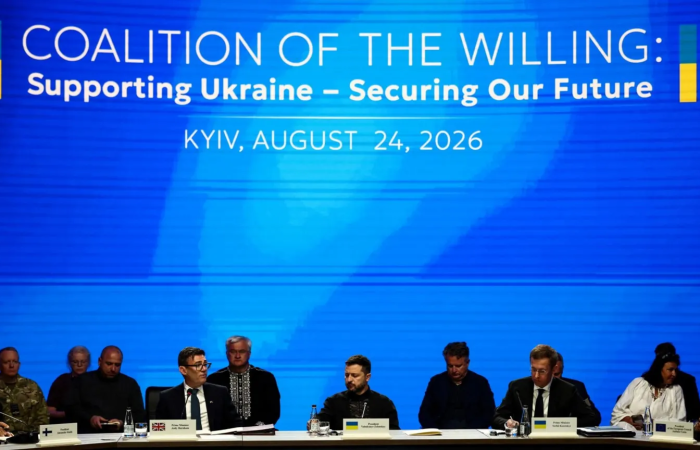
The UK will deploy a carrier strike group, led by the aircraft carrier HMS Prince of Wales to the Arctic and the High North as part of efforts to bolster security against Russian threats. British prime minister, Sir Keir Starmer announced the deployment in a speech on Saturday (14 February) at the Munich Security Conference. Europe must be ready to fight to protect its people, values, and way of life,  Sir Keir told the Conference. Starmer also called for deeper links and cooperation, including economic ties, between the UK and EU. The PM stressed the continent must "stand on its own two feet" when it comes to defence commitments. "We must build our hard power, because that is the currency of the age," he told the conference. (Click image to read the full story).

Popular

Editor's choice
Interview
Thursday Interview: Murad Muradov

Thursday Interview: Murad Muradov

Today, commonspace.eu starts a new regular weekly series. THURSDAY INTERVIEW, conducted by Lauri Nikulainen, will host  persons who are thinkers, opinion shapers, and implementors in their countries and spheres. We start the series with an interview with Murad Muradov, a leading person in Azerbaijan's think tank community. He is also the first co-chair of the Action Committee for a new Armenian-Azerbaijani Dialogue. Last September he made history by being the first Azerbaijani civil society activist to visit Armenia after the 44 day war, and the start of the peace process. Speaking about this visit Murad Muradov said: "My experience was largely positive. My negative expectations luckily didn’t play out. The discussions were respectful, the panel format bringing together experts from Armenia, Azerbaijan, and Turkey was particularly valuable during the NATO Rose-Roth Seminar in Yerevan, and media coverage, while varied in tone, remained largely constructive. Some media outlets though attempted to represent me as more of a government mouthpiece than an independent expert, which was totally misleading.  Overall, I see these initiatives as important steps in rebuilding trust and normalising professional engagement. The fact that soon a larger Azerbaijani civil society visits to Armenia followed, reinforces the sense that this process is moving in the right direction." (click the image to read the interview in full)
