


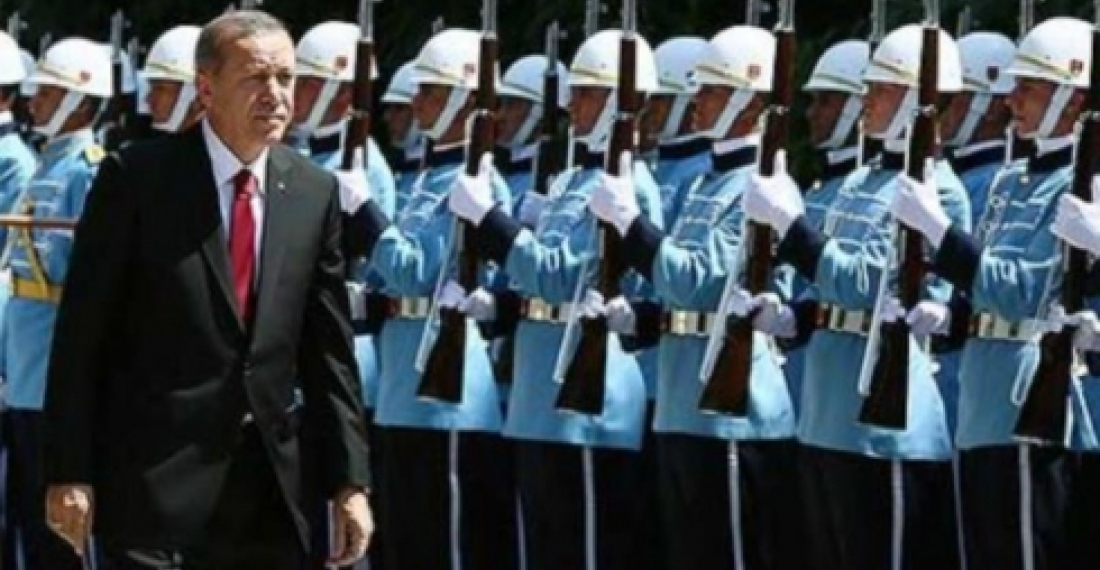
Эрдоган приведен к присяге в качестве нового президента Турции. В своей инаугурационной речи президент Эрдоган пообещал новую эру для Турции.

Реджеп Тайип Эрдоган был приведен к присяге в качестве 12-го президента Турции в минувший четверг, 28 августа, после 12 лет служения в качестве премьер-министра страны, что еще больше укрепило его позиции в качестве самого влиятельного лидера страны.

Эрдоган принял президентскую присягу перед парламентом Турции до переезда в Президентский дворец в Анкаре, где состоялась великолепная церемония передачи власти с участием представителей более чем 90 стран.

Эрдоган был избран на пост президента прямым голосованием народа 10 августа, набрав 52 процента голосов.

В своем первом обращении после принятия присяги в качестве главы турецкого государства президент Эрдоган заявил, что он является первым главой Турции, избранным непосредственно народом за две тысячи лет истории Турции, он также заявил, что  сегодня начинается новая эра в истории Турции. "Я очень горжусь этим", добавил он.

Эрдоган пообещал, что продолжит работать над тем, чтобы сделать Турцию более демократической и процветающей страной и говорил о принципах, которые будут обеспечивать внешнюю политику

"Основная ось нашей внешней политики является мир, солидарность и социальное обеспечение. Турция не претендует на территории других стран и не интересуется их внутренними вопросами. У нас нет никаких планов или проектов по этому поводу" добавил он. Он также добавил, что путь Турции к членству в ЕС будет продолжен.

источник: commonspace.eu по материалам агентств.

фото: Президент Эрдоган осматривает Почетный караул в Президентском дворце в Анкаре вскоре после вступления в должность первого избранного непосредственно народом главы Турции, 28 августа 2014 года.


Related articles

Editor's choice
News
European leaders outline position on current situation in the Middle East

European leaders outline position on current situation in the Middle East

The leaders of the 27 member states of the European Union met in Brussels on Thursday, 19 March 2026, to discuss the current global situation, and, in particular, the crisis in the Gulf, and the wider Middle East. EU leaders adopted conclusions on Ukraine, the Middle East, competitiveness and the single market, European defence and security, migration, multilateralism, strengthening Europe's democratic resilience, protecting children online, the EU's eastern regions and Dniester river. The leaders also met UN Secretary-General António Guterres to discuss the geopolitical situation and multilateralism. In their decision the EU leaders said, "Developments in Iran and the wider region threaten regional and global security. The European Council calls for de-escalation and maximum restraint, the protection of civilians and civilian infrastructure and full respect of international law by all parties, including the principles of the United Nations Charter and international humanitarian law. In this regard, it calls for a moratorium on strikes against energy and water facilities." The statement adds, "The European Union will continue to protect its security and interests, working with regional and global partners to counter the impact of the ongoing hostilities. The European Union and its Member States are taking all necessary steps to ensure the safety of EU citizens in the region, including by providing conditions for their safe departure." (Click the image above to read more).

Popular

Editor's choice
Interview
Thursday Interview: Murad Muradov

Thursday Interview: Murad Muradov

Today, commonspace.eu starts a new regular weekly series. THURSDAY INTERVIEW, conducted by Lauri Nikulainen, will host  persons who are thinkers, opinion shapers, and implementors in their countries and spheres. We start the series with an interview with Murad Muradov, a leading person in Azerbaijan's think tank community. He is also the first co-chair of the Action Committee for a new Armenian-Azerbaijani Dialogue. Last September he made history by being the first Azerbaijani civil society activist to visit Armenia after the 44 day war, and the start of the peace process. Speaking about this visit Murad Muradov said: "My experience was largely positive. My negative expectations luckily didn’t play out. The discussions were respectful, the panel format bringing together experts from Armenia, Azerbaijan, and Turkey was particularly valuable during the NATO Rose-Roth Seminar in Yerevan, and media coverage, while varied in tone, remained largely constructive. Some media outlets though attempted to represent me as more of a government mouthpiece than an independent expert, which was totally misleading.  Overall, I see these initiatives as important steps in rebuilding trust and normalising professional engagement. The fact that soon a larger Azerbaijani civil society visits to Armenia followed, reinforces the sense that this process is moving in the right direction." (click the image to read the interview in full)

