"ДАВАЙТЕ НЕ БУДЕМ ЗАБЕГАТЬ ВПЕРЕД" Соглашение о Евразийском экономическом союзе было подписано в Москве.

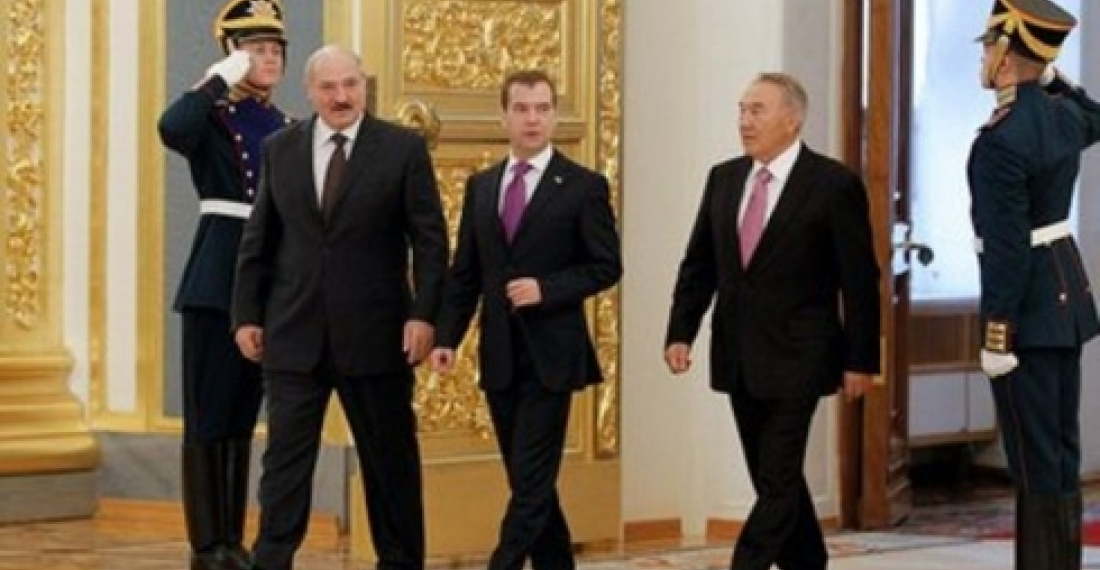
Президенты России, Казахстана и Белорусси, Дмитрий Медведев, Нурсултан Назарбаев и Александр Лукашенко вчера на церемонии в Кремле подписали Декларацию о Евразийской экономической интеграции, Договор о Евразийской экономической комиссии и резолюцию Правил по Евразийской экономической комиссии.

Выступая после церемонии подписания президент России не исключил, что Евразийский экономический союз может быть полностью создан к 2015 году. "Если созреют предпосылки – будем двигаться быстрее, если сможем. Не будем забегать вперёд, не будем суетиться, совершать лишних действий, но если будут созревать для этого возможности, будем двигаться быстрее.", сказал он. Президент Медведев также добавил, что некоторые соседние страны были заинтересованы в участии в новом экономическом союзе.

"Сама жизнь подсказывает, что наше многоплановое взаимодействие – это огромный общий ресурс, поэтому интерес к новой интеграционной структуре проявляют и другие партнёры по ЕврАзЭС, по СНГ.", сказал он.

Президент России заявил, что "И следующий этап (он тоже всем понятен) – это создание к 2015 году Евразийского экономического союза. Мы тоже сейчас это обсуждали. Если созреют предпосылки – будем двигаться быстрее, если сможем. Не будем забегать вперёд, не будем суетиться, совершать лишних действий, но если будут созревать для этого возможности, будем двигаться быстрее. Сегодня мы впервые договорились о формировании наднационального, нейтрального по отношению к нашим странам органа, которому будут передаваться всё новые и новые полномочия. Это, конечно, очень серьёзное решение. Особо отмечу, что механизм принятия решений в рамках Комиссии абсолютно исключает доминирование какой-либо страны над другой. Это равноправная комиссия. Она будет работать, надеюсь, эффективно, а принципы её работы – строиться на рыночных, демократических началах и, надеюсь, будут учитывать лучший мировой интеграционный опыт."

Россия лидер говорил о Европейском Союзе и о евро, отвечая на вопросы журналистов после церемонии. Он сказал, что "несмотря на большие трудности, которые сегодня переживает Евросоюз и еврозона, это всё-таки очень успешное объединение, которое, по сути, позволило создать большой общий рынок и вывести целый ряд весьма средненьких стран, которые входили в состав Европейского экономического сообщества, на весьма приличный уровень за счёт интеграции, взаимной помощи и поддержки. Я не говорю даже о евро, которое сейчас находится под ударом. Но скажу одну вещь, о которой говорил неоднократно и на «двадцатке», и в других форматах: если бы не евро, я не знаю, как бы мир справился с кризисом, который разразился в 2008 году, только за счёт одного доллара в качестве резервной валюты. Но у евро есть свои проблемы, связанные с тем, что евро обслуживает не только очень сильные экономики, развитые экономики, но и экономики значительно более слабые или же попавшие в силу определённых проблем и некачественного управления в тяжёлую ситуацию."

Медведев подчеркнул, что новый союз будет основан на принципах равенства: "Особо отмечу, что механизм принятия решений в рамках [Евразийской экономической] Комиссии абсолютно исключает доминирование какой-либо страны над другой. Это равноправная комиссия. Она будет работать, надеюсь, эффективно, а принципы её работы – строиться на рыночных, демократических началах и, надеюсь, будут учитывать лучший мировой интеграционный опыт."

Источник: commonspace.eu

Фото: Любезно предоставлено пресс-службой Президента России

Related articles

Editor's choice
News
Council of Europe launches new International Claims Commission for Ukraine

Council of Europe launches new International Claims Commission for Ukraine

Thirty-four countries and the European Union have signed a new convention establishing an International Claims Commission for Ukraine at a diplomatic conference co-hosted by the 46-nation Council of Europe and the Netherlands in the Hague. The diplomatic conference was attended by leaders and high-level representatives from over 50 states, including the President of Ukraine, Volodymyr Zelenskyy, the President of the Republic of Moldova, Maia Sandu, and the Prime Minister of the Netherlands, Dick Schoof.  “Today marks a major step forward in ensuring accountability for Ukraine. The International Claims Commission represents justice and hope for tens of thousands of victims—our determination that those who have suffered will not be forgotten. I call for quick ratifications so we can get the commission rapidly up and running for the people of Ukraine,” said Council of Europe Secretary General Alain Berset. Ukrainian President Volodymyr Zelenskyy said: “We expect that every mechanism for compensation from the Register of Damage and Claims Commission to the actual payments – will start working and receive strong and sufficient international support, so that people can truly feel that any kind of damage caused by the war can be compensated. This war, and Russia’s responsibility for it, MUST become a clear example – so that others learn not to choose aggression.” “Accountability is about creating the conditions for peace that endures. And therefore, accountability is a condition of security – today and for the future. But accountability is not only about Ukraine. And it is not only about one aggressor and one victim. Accountability is about Europe. About every country in Europe. It is about whether Europe, as a whole, is willing to defend its peace,” said Maia Sandu, President of the Republic of Moldova, which currently holds the Presidency of the Council of Europe’s Committee of Ministers. The Prime Minister of the Netherlands, Dick Schoof, said: “Every day Russia is deliberately bombarding homes, destroying businesses and damaging infrastructure in Ukraine. Russia must compensate Ukraine for the damage caused. That is why we have launched the International Claims Commission for Ukraine and we are honoured to host it.” The International Claims Commission will be the second part of a comprehensive compensation mechanism related to Russia’s war of aggression, building on the existing Register of Damage for Ukraine. The claims commission will be established within the framework of the Council of Europe and will also be open to other countries. The Register of Damage for Ukraine, created in 2023, collects and records compensation claims submitted by individuals, organisations and public bodies in Ukraine. Forty-four states and the European Union have so far joined the Register, which has already received 86,000 claims. The International Claims Commission will review, assess and decide upon claims submitted to the Register of Damage for Ukraine and determine the amount of compensation, if any, which is due in each case. The convention establishing the commission will enter into force once it has been ratified by 25 signatories, as long as sufficient funds have been secured to support its initial work.

Popular

Editor's choice
News
Council of Europe launches new International Claims Commission for Ukraine

Council of Europe launches new International Claims Commission for Ukraine

Thirty-four countries and the European Union have signed a new convention establishing an International Claims Commission for Ukraine at a diplomatic conference co-hosted by the 46-nation Council of Europe and the Netherlands in the Hague. The diplomatic conference was attended by leaders and high-level representatives from over 50 states, including the President of Ukraine, Volodymyr Zelenskyy, the President of the Republic of Moldova, Maia Sandu, and the Prime Minister of the Netherlands, Dick Schoof.  “Today marks a major step forward in ensuring accountability for Ukraine. The International Claims Commission represents justice and hope for tens of thousands of victims—our determination that those who have suffered will not be forgotten. I call for quick ratifications so we can get the commission rapidly up and running for the people of Ukraine,” said Council of Europe Secretary General Alain Berset. Ukrainian President Volodymyr Zelenskyy said: “We expect that every mechanism for compensation from the Register of Damage and Claims Commission to the actual payments – will start working and receive strong and sufficient international support, so that people can truly feel that any kind of damage caused by the war can be compensated. This war, and Russia’s responsibility for it, MUST become a clear example – so that others learn not to choose aggression.” “Accountability is about creating the conditions for peace that endures. And therefore, accountability is a condition of security – today and for the future. But accountability is not only about Ukraine. And it is not only about one aggressor and one victim. Accountability is about Europe. About every country in Europe. It is about whether Europe, as a whole, is willing to defend its peace,” said Maia Sandu, President of the Republic of Moldova, which currently holds the Presidency of the Council of Europe’s Committee of Ministers. The Prime Minister of the Netherlands, Dick Schoof, said: “Every day Russia is deliberately bombarding homes, destroying businesses and damaging infrastructure in Ukraine. Russia must compensate Ukraine for the damage caused. That is why we have launched the International Claims Commission for Ukraine and we are honoured to host it.” The International Claims Commission will be the second part of a comprehensive compensation mechanism related to Russia’s war of aggression, building on the existing Register of Damage for Ukraine. The claims commission will be established within the framework of the Council of Europe and will also be open to other countries. The Register of Damage for Ukraine, created in 2023, collects and records compensation claims submitted by individuals, organisations and public bodies in Ukraine. Forty-four states and the European Union have so far joined the Register, which has already received 86,000 claims. The International Claims Commission will review, assess and decide upon claims submitted to the Register of Damage for Ukraine and determine the amount of compensation, if any, which is due in each case. The convention establishing the commission will enter into force once it has been ratified by 25 signatories, as long as sufficient funds have been secured to support its initial work.