


Бордюжа: ОДКБ не нужны непредсказуемые и ненадежные члены-обузы

 Каких-либо заявок о вступлении в Организацию договора о коллективной безопасности не поступало, но заинтересованность в участии в тех или иных акциях в рамках этой организации выражают многие страны. Об этом 18 сентября в Ереване на пресс-конференции заявил генеральный секретарь ОДКБ Николай Бордюжа, отвечая на вопрос о том, планируется ли расширение данной военно-политической структуры.

По словам, на сегодняшний день многие соседние государства выражают желание участвовать в совместных действиях по борьбе с незаконным оборотом наркотиков, и подобное сотрудничество успешно развивается с более чем 20 странами. "На повестке дня стоит повышение информационной безопасности. Мы также намерены создать серьезную систему коллективного реагирования на кризисные ситуации, которые могут возникнуть в результате техногенных катастроф", - отметил он.

Он считает, что для ОДКБ важно не количество, а качество участников. "К сожалению, у нас есть опыт, когда страна входила в ОДКБ, при этом не имея особого желания принимать участия в работах организации. Спустя некоторое время она вышла из организации, фактически дав понять, что данная система безопасности не для нее. Нам такие партнеры не нужны", - заявил Бордюжа, имея в виду Узбекистан, вышедший из ОДКБ в июне текущего года.

Напомним, с 15 по 19 сентября в Армении проходят учения КСОР ОДКБ "Взаимодействие 2012". Они проходят на полигоне "Маршал Баграмян". Командует объединенными силами КСОР ОДКБ генерал-майор Камо Кочунц. В учениях задействованы около 2 тысяч человек из Армении и других стран ОДКБ.
Related articles

Editor's choice
News
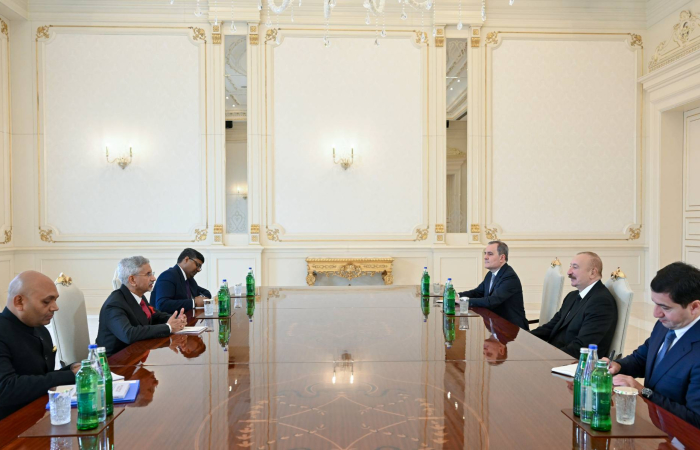
Indian Foreign Minister meets Aliyev in Baku

Indian Foreign Minister meets Aliyev in Baku

On October 23, the president of Azerbaijan Ilham Aliyev met in Baku with Subrahmanyam Jaishankar, Minister of External Affairs of India. This was the highest level visit by an Indian official to Azerbaijan in a long time. According to the website of the Azerbaijani president, Aliyev fondly recalled his meeting with Indian Prime Minister Narendra Modi in Bishkek and the exchange of views during that meeting. President Ilham Aliyev highly appreciated the visit of India’s Minister of External Affairs to Azerbaijan on the instructions of Prime Minister Narendra Modi, stressing its importance for discussing the current state and prospects of bilateral relations. During the meeting, the sides held an extensive exchange of views on the current state of relations between Azerbaijan and India, highlighting ample opportunities to develop cooperation in areas of mutual interest. The sides noted that Azerbaijan and India, as members of the Global South, share similar positions on a number of issues on the international agenda, including matters of concern to countries of the Global South. In this regard, they discussed prospects for bilateral cooperation in political, trade and economic, high-tech, cultural, humanitarian and other fields. The conversation also touched upon the importance of cooperation within international organizations. The sides emphasized the need to intensify political contacts and organize reciprocal visits at various levels, including exchanges involving economic and business delegations, to further advance bilateral relations.

Popular

Editor's choice
Interview
Thursday Interview: Murad Muradov

Thursday Interview: Murad Muradov

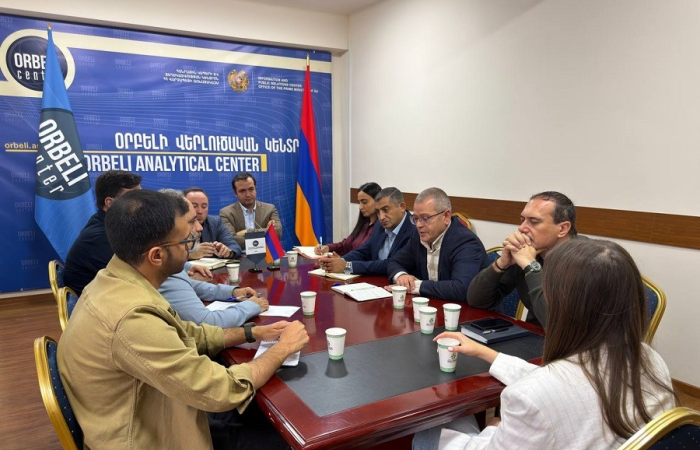
Today, commonspace.eu starts a new regular weekly series. THURSDAY INTERVIEW, conducted by Lauri Nikulainen, will host  persons who are thinkers, opinion shapers, and implementors in their countries and spheres. We start the series with an interview with Murad Muradov, a leading person in Azerbaijan's think tank community. He is also the first co-chair of the Action Committee for a new Armenian-Azerbaijani Dialogue. Last September he made history by being the first Azerbaijani civil society activist to visit Armenia after the 44 day war, and the start of the peace process. Speaking about this visit Murad Muradov said: "My experience was largely positive. My negative expectations luckily didn’t play out. The discussions were respectful, the panel format bringing together experts from Armenia, Azerbaijan, and Turkey was particularly valuable during the NATO Rose-Roth Seminar in Yerevan, and media coverage, while varied in tone, remained largely constructive. Some media outlets though attempted to represent me as more of a government mouthpiece than an independent expert, which was totally misleading.  Overall, I see these initiatives as important steps in rebuilding trust and normalising professional engagement. The fact that soon a larger Azerbaijani civil society visits to Armenia followed, reinforces the sense that this process is moving in the right direction." (click the image to read the interview in full)

