


Более активная роль немецкоговорящих стран в дебатах вокруг европейской безопасности.

В этом обзоре для commonspace.eu Деннис Саммут рассуждает об итогах встречи министров иностранных дел немецкоязычных стран, прошедшей в Невшатель, на прошлой неделе.

В швейцарском Невшатель на прошлой неделе состоялась встреча министров иностранных дел немецко-говорящих стран. В отличие от аналогичных встреч их английских коллег или французских, которые объединяют десятки стран со всех пяти континентов, в Невшатель собрались только четыре центральные европейские страны: Германия, Австрия, Швейцария и Лихтенштейн. Тем не менее, в текущей неопределенности вокруг мира и безопасности в Европе укромная встреча в Невшатель была весьма значимым мероприятием, символом набирающей важности роли, которую немецко-говорящие страны играют в определении новой повестки дня безопасности в Европе.

В Невшатель министры иностранных дел затронули вопрос продвижения немецкого языка - обязательная тема на таких встречах - но их обсуждения быстро перешли к повседневным вопросам, с которыми в настоящее время поглащена Европа, в том числе конфликты на Ближнем Востоке, кризис беженцев на пороге у Европы и конечно Украина.

Германия готовится взять на себя председательство в Организации по безопасности и сотрудничеству в Европе (ОБСЕ) в 2016 году, вслед за ней в 2017 председательство перейдет Австрии. Швейцария, которая председательствовала в ОБСЕ в 2014 году по-прежнему продолжает по специальной договоренности с ныне председательствующей Сербией отвечать за некоторые вопросы и в 2015 году. В этой роли, находясь у штурвала главного форума безопасности в Европе от немецко-говорящих стран ожидают руководства, но, возможно, что еще более важно, они, как ожидается, зададут тон продолжающейся дискуссии о будущем мира и безопасности в Европе.

То, что Европа в настоящее время сталкнулась с наиболее серьезным вызовов безопасности с момента конца холодной войны всем хорошо известно. Однако, как бороться с этими проблемами остается спорным, в том числе ключевой вопрос о том, до какой степени противостоять или же втсупать в бой с напористостью России - хотя, к счастью, вряд ли кто в настоящее время считает, что это больше выбор одного либо другого. Помимо Украины несколько других очагов на просторах ОБСЕ, где Россия также прямо или косвенно вовлечена, в том числе Нагорный Карабах, Приднестровье, Абхазия и Южная Осетия, похоже, не стали ближе к разрешению конликтов, чем они были двадцать лет назад

Эта дискуссия также включает в себя вопрос о будущей роли ОБСЕ - организации, которую часто обвиняют в том, что она сбилась со своего пути, и, которая пока в неё не вдохнули новую жизнь в результате кризиса в Украине, казалось, направляется к вымиранию. Благодаря швейцарскому председательству в 2014 ОБСЕ избавили от еще одного драматического провала, подобный тому, что был в Грузии в 2008 году. Действительно немецкие наций и в прошлом показывали большую приверженность и взаимодействие с ОБСЕ, чем, возможно, какая-либо другая группа стран в рамках организации. Скорее всего, так и продолжится в рамках приблежающего немецкого и австрийского председательства и более скоординированно, как было сказано в заключительной декларации встречи в Невшатель. Совместная декларация также содержит следующие четыре конкретных момента: общие обязательства по решению украинского кризиса, укрепление потенциала ОБСЕ в её действиях, обсуждение будущего европейской безопасности, и укрепление экономических связей на просторах ОБСЕ. Министры также подтвердили их политическую поддержку работе Специальной миссии наблюдателей ОБСЕ в Украине.

Послание Невшатель было ясным. Дорога вперед пролегает через решение текущих проблем по дипломатическим каналам, проявляя "терпение и упорство". Это быстро стало ключевой фразой в германской внешней политике. Министр иностранных дел Франк-Вальтер Штайнмайер ссылался на этот подход при решении Постоянного совета ОБСЕ в Вене несколько недель назад. По этому случаю он также привел слова покойного европейского и немецкого государственного деятеля Вилли Брандта о том, что "небольшие шаги лучше, чем их отсутствие". В Швейцарии, Штайнмайер подчеркнул успех переговоров по Ирану в качестве примера того, как терпение и упорство могут добиться успеха. Лейтмотивом стало то, что дипломатия работает и нуждается в том, чтобы ей дали шанс, и Европа не должна ввязываться в военные авантюры, которые лекго могут выльется в серьезные конфликты с непредсказуемыми последствиями.

По стечению обстоятельств, или, возможно, нет, опытный немец, Вольфганг Ишингер, в настоящее время также руководит обзором работы ОБСЕ в рамках усилий "Хельсинки+40", чтобы пересмотреть темы и инструменты европейского мира и безопасности спустя сорок лет после подписания Заключительного акта Хельсинки. Команда видных авторов обзора, как ожидается, выступит с отчетом на встрече министров ОБСЕ в Белграде в декабре. У Германии и Австрии будут хорошие позиции для продвижения предложений, поступающие от группы во время их председательства в 2016 году и 2017 году соответственно.

В то время как терпение и упорство являются важнейшими предпосылками успешной дипломатии, видение и гибкость точно также необходимы для ее успеха. Нынешними проблемами, стоящими перед европейской безопасностью, не нужно просто управлять, сдерживать, и передавать в аккуратных файлах от одних групп дипломатов к другим. Успех нужно судить по достигнутому в их решении прогрессу. Европейские дипломаты, будь они немецко-говорящими или же нет, должны избегать чрезмерного подчеркивания процесса, и не должны стесняться напрвлять основные вопросы в самое сердце текущих проблем. Однако в целом, такая возросшая роль немецкоязычных наций в обеспечении будущего мира и безопасности в Европе является позитивным событием.

Деннис Саммут является исполнительным директором LINKS (Диалог, анализ и исследования). Этот обзор был предоставлен им для Commonspace.eu. Для дополнительной информации посетите www.dennissammut.info

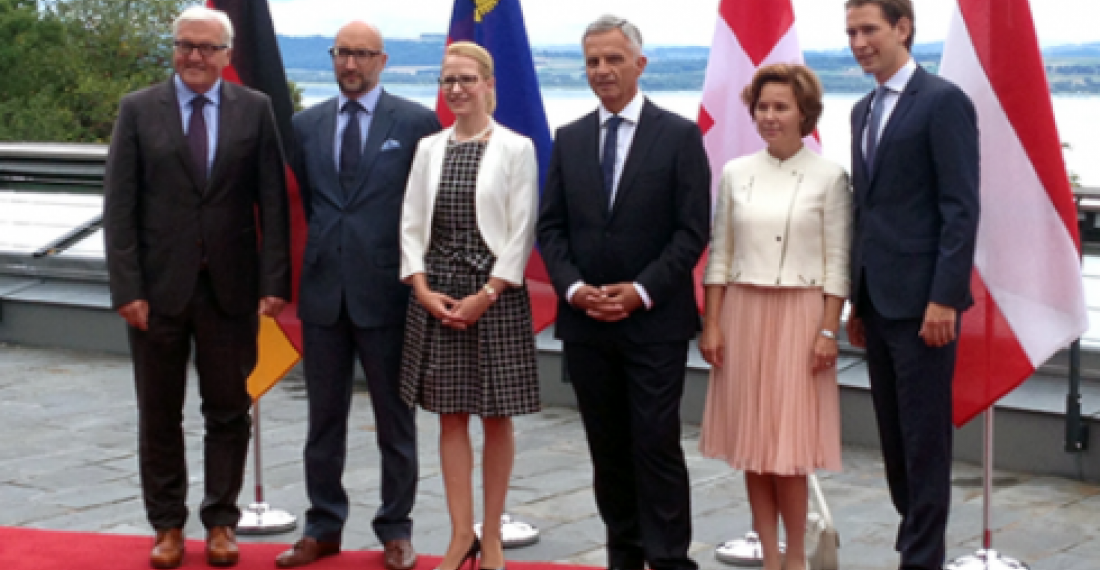
Фото: Министры иностранных дел Германии, Лихтенштейна, Швейцарии и Австрии на встрече в швейцарском городе Невшатель, 16 августа 2015 фото любезно предоставлено Федеральным департаментом по внешним связям Швейцарии).

 

Related articles

Editor's choice
News
COP 17 in Armenia

COP 17 in Armenia

Armenia is currently hosting the COP17 conference of the Convention on Biological Diversity, which began earlier this week (19 October) and will run until 30 October, bringing around 15,000 participants from 196 different countries to Yerevan. At a leaders' summit held as part of COP17, Prime Minister Nikol Pashinyan expressed realistic ambitions: “We are halfway towards achieving these goals (Kunming-Montreal Global Biodiversity Framework), and we must honestly acknowledge that we are not yet moving in the right direction. Our task now is not to make new promises, but to fulfil the commitments we have already made.” Pashinyan pointed towards Armenia's own records, noting that the whitefish stock in Lake Sevan has increased substantially in the last ten years. Iranian President Masoud Pezeshkian and Georgian Prime Minister Irakli Kobakhidze also addressed the summit, with Turkiye sending its agriculture minister. However, there were no reports of Azerbaijani representatives attending. The conference has given Yerevan a valuable international platform, yet the absence of Azerbaijan is likely to be read as a sign that the peace process in the South Caucasus has not yet been translated into wider regional cooperation. The leaders' summit was opened by Armenian Prime Minister Nikol Pashinyan, who stressed that hosting the conference was a great honour for Armenia. He expressed hope that it would 'be productive and contribute to protecting our planet's biodiversity'. 'We – the citizens of Armenia, the government, state authorities and local governments – owe a debt to our nature,' the prime minister said. He noted that the international community had already developed the concept of 'living in harmony with nature’ and adopted the Kunming-Montreal Global Biodiversity Framework in 2022, setting out goals and specific targets to be achieved by 2030. 'We are halfway towards achieving these goals, and we must honestly acknowledge that we are not yet moving in the right direction. Our task now is not to make new promises, but to fulfil the commitments we have already made,' Nikol Pashinyan said. The COP17 conference is expected to adopt a declaration at leaders' level. More than 30 documents are scheduled for discussion. If approved, the commitments set out in them will become legally binding on countries that are parties to the Convention on Biological Diversity.”
Editor's choice
News
Landmines present to the European Union both a contradiction and a dilemma

Landmines present to the European Union both a contradiction and a dilemma

Finland’s decision to buy one million landmines creates a serious contradiction in the policy of the European Union, and is symbolic of a bigger dilemma facing European countries as they get used to the need to acquire “hard” power to face an increasing threat from Russia. Finland is seeking to acquire one million anti-personnel mines at a cost of 100 million euros. Finland, together with Poland, Latvia, Lithuania and Estonia last year abandoned the Ottawa agreement, the international framework that bans the use of anti-personnel mines, which the EU had been instrumental in establishing and supporting. All five countries cite the threat from Moscow as the reason. Colonel Riku Mikkonen of the Army Command told Finland’s national news agency STT that officials are now gathering information from suppliers regarding the deal, the AFP news agency reports. Helsinki would like domestic manufacturers to supply the mines, with contracts signed by the end of 2027 and production up and running by 2028. “It would be useful in many ways if Finnish companies produced the anti-personnel mines in Finland,” Mikkonen said. About half a dozen Finnish firms qualify, he told STT. “However, at this stage, buying the mines from abroad is not totally ruled out,” he added. LANDMINES PROVIDE THE EU WITH BOTH A CONTRADICTION, AND A DILEMMA Eliminating landmine contamination worldwide is one of the EU’s main soft power postures, and it basks in its record as the biggest funder of anti-landmine action in the world. But the fact that 5 of its 27 member states  have now left the Ottawa Treaty dents the EU moral high ground. It is a contradiction that is too big and important to be ignored. It also presents the European Union with a deeper dilemma. The threat from Russia is changing what the EU has stood for decades, namely a force for good able to mobilise its considerable soft power for the greater good of humanity. How the Union will implement this change will define its future. In the meantime landmines have not become any less lethal, benign, or unimportant. They remain in many parts of the world a major threat to life, an impediment to prosperity, and a potential trigger to further conflict. The 22 EU members states that still adhere to the Ottawa treaty must regroup, and be more assertive in their quest against anti-personnel land mines. All the reasons why they supported the Ottawa treaty in the first place still exist. The message must be clear: NO TO LANDMINES!

Popular

Editor's choice
Interview
Thursday Interview: Murad Muradov

Thursday Interview: Murad Muradov

Today, commonspace.eu starts a new regular weekly series. THURSDAY INTERVIEW, conducted by Lauri Nikulainen, will host  persons who are thinkers, opinion shapers, and implementors in their countries and spheres. We start the series with an interview with Murad Muradov, a leading person in Azerbaijan's think tank community. He is also the first co-chair of the Action Committee for a new Armenian-Azerbaijani Dialogue. Last September he made history by being the first Azerbaijani civil society activist to visit Armenia after the 44 day war, and the start of the peace process. Speaking about this visit Murad Muradov said: "My experience was largely positive. My negative expectations luckily didn’t play out. The discussions were respectful, the panel format bringing together experts from Armenia, Azerbaijan, and Turkey was particularly valuable during the NATO Rose-Roth Seminar in Yerevan, and media coverage, while varied in tone, remained largely constructive. Some media outlets though attempted to represent me as more of a government mouthpiece than an independent expert, which was totally misleading.  Overall, I see these initiatives as important steps in rebuilding trust and normalising professional engagement. The fact that soon a larger Azerbaijani civil society visits to Armenia followed, reinforces the sense that this process is moving in the right direction." (click the image to read the interview in full)

