


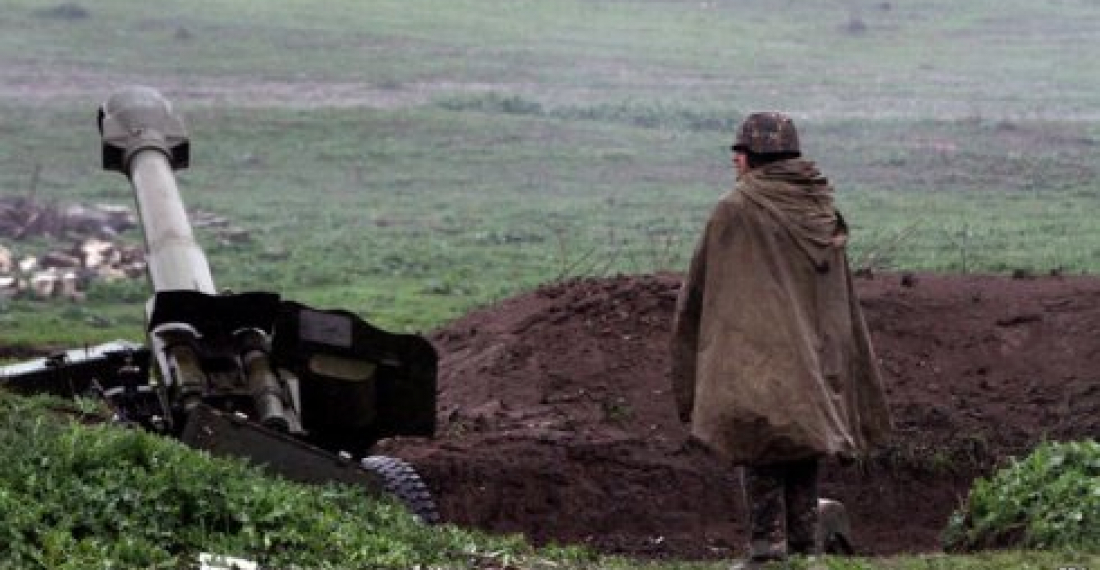
Азербайджан сообщает об инциденте на границе с Арменией

По данным азербайджанских источников, в результате нарушения режима прекращения огня в четверг (18 июля) был ранен военнослужащий Государственной пограничной службы Азербайджана Джейхун Байрамов. Те же источники сообщают, что армянские силы открыли огонь из крупнокалиберного оружия из села Зоракан в Ноябрьском районе Армении. Состояние азербайджанского солдата не представляет угрозы для его жизни.

Инциденты на международной границе между Арменией и Азербайджаном происходят реже, чем в зоне нагорно-карабахского конфликта. В прошлом году Армения заменила часть своего военного персонала на международной границе с Азербайджаном войсками Министерства внутренних дел, в то время как Азербайджан заменил военнослужащих солдатами Государственной пограничной службы, что считается позитивным моментом для ослабления напряженности между двумя сторонами.

В интервью Армянской службе Радио Свободная Европа / Радио Свобода в начале этой недели, премьер-министр Армении Никол Пашинян подтвердил, что горячая линия, установленная между двумя странами в прошлом году, работает, но добавил, что сама по себе она не может предотвратить жертвы.

источник: commonspace.eu по материалам агентств

Related articles

Popular

Editor's choice
Interview
Thursday Interview: Murad Muradov

Thursday Interview: Murad Muradov

Today, commonspace.eu starts a new regular weekly series. THURSDAY INTERVIEW, conducted by Lauri Nikulainen, will host  persons who are thinkers, opinion shapers, and implementors in their countries and spheres. We start the series with an interview with Murad Muradov, a leading person in Azerbaijan's think tank community. He is also the first co-chair of the Action Committee for a new Armenian-Azerbaijani Dialogue. Last September he made history by being the first Azerbaijani civil society activist to visit Armenia after the 44 day war, and the start of the peace process. Speaking about this visit Murad Muradov said: "My experience was largely positive. My negative expectations luckily didn’t play out. The discussions were respectful, the panel format bringing together experts from Armenia, Azerbaijan, and Turkey was particularly valuable during the NATO Rose-Roth Seminar in Yerevan, and media coverage, while varied in tone, remained largely constructive. Some media outlets though attempted to represent me as more of a government mouthpiece than an independent expert, which was totally misleading.  Overall, I see these initiatives as important steps in rebuilding trust and normalising professional engagement. The fact that soon a larger Azerbaijani civil society visits to Armenia followed, reinforces the sense that this process is moving in the right direction." (click the image to read the interview in full)


