


Азербайджан и Турция выражают недовольство Минским процессом. Давутоглу заявил, что помимо стран-сопредседателей в процесс должны быть вовлечены другие члены Минской группы.

Азербайджан и Турция выступили с критикой текущей работы Минской группы ОБСЕ. Выступая на пресс-конференции в Баку, министры иностранных дел двух стран выразили обеспокоенность в связи с отсутствием прогресса в нынешнем формате переговоров.

Министр иностранных дел Турции Ахмед Давутоглу, который в настоящее время находится с визитом в Азербайджане заявил, что настало время международному сообществу подвести итоги. Он сказал, что высоко ценит приложенные усилия за последние двадцать лет, но к сожалению эти усилия не дали результатов. Каждый теперь должен задаться вопросом, почему этот процесс потерпел неудачу. Он также сказал, что помимо трех стран-сопредседателей (Франции, России и США), другим членом Минской группы, среди которых числится и Турция, должно быть позволено более активное участие в поиске решения нагорно-карабахского конфликта.

Выступая на той же пресс-конференции, министр иностранных дел Азербайджана Эльмар Мамедъяров заявил, что Азербайджан имеет объективные причины быть недовольными деятельностью сопредседателей: "Мы были бы очень рады, если бы за прошедший период при посредничестве этих стран был достигнут какой-либо прогресс. Но мы не видим никакого прогресса, и, естественно, мы также недовольны работой сопредседателей".

Однако, Мамедъяров также подтвердил, что во время встречи с министром иностранных дел Армении в Вене несколько дней назад они обсудили возможность встречи на высшем уровне президентов Армении и Азербайджана, и что "Азербайджан поддерживает эту идею".

Позже в тот же день министр иностранных дел Ахмед Давутоглу был принят президентом Азербайджана Ильхамом Алиевым.

Источник: commonspace.eu по материалам агентств.

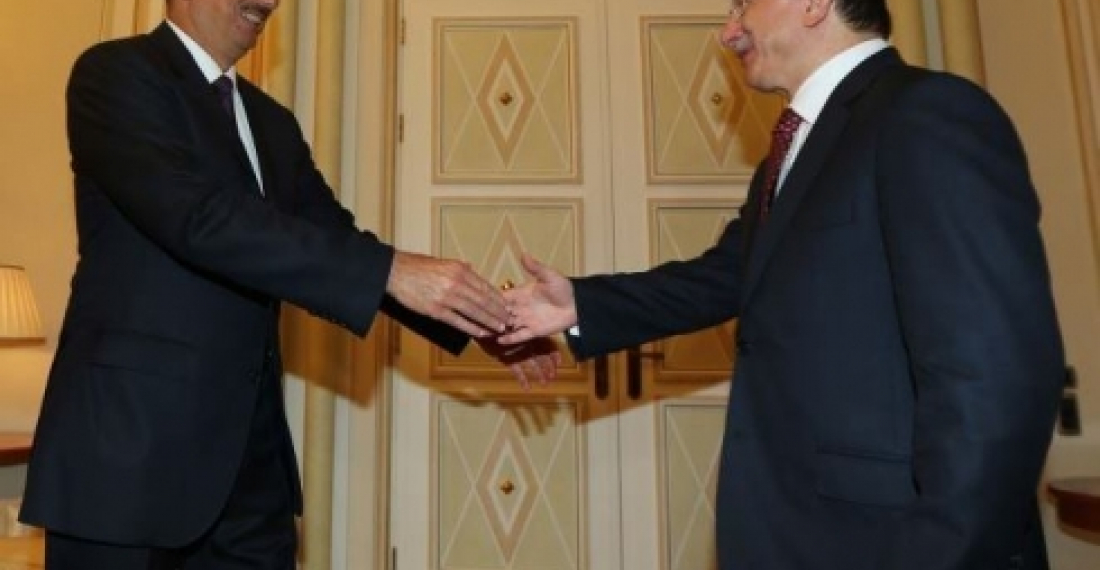
Фото: Президент Азербайджана Алиев и министр иностранных дел Турции Ахмед Давутоглу, в Баку, 17 июля 2013 года. (фото любезно предоставлено Министерством иностранных дел Турции).

Related articles

Editor's choice
News
The British prime minister says Europe must "stand on its own two feet" when it comes to defence

The British prime minister says Europe must "stand on its own two feet" when it comes to defence

The UK will deploy a carrier strike group, led by the aircraft carrier HMS Prince of Wales to the Arctic and the High North as part of efforts to bolster security against Russian threats. British prime minister, Sir Keir Starmer announced the deployment in a speech on Saturday (14 February) at the Munich Security Conference. Europe must be ready to fight to protect its people, values, and way of life,  Sir Keir told the Conference. Starmer also called for deeper links and cooperation, including economic ties, between the UK and EU. The PM stressed the continent must "stand on its own two feet" when it comes to defence commitments. "We must build our hard power, because that is the currency of the age," he told the conference. (Click image to read the full story).

Popular

Editor's choice
Interview
Thursday Interview: Murad Muradov

Thursday Interview: Murad Muradov

Today, commonspace.eu starts a new regular weekly series. THURSDAY INTERVIEW, conducted by Lauri Nikulainen, will host  persons who are thinkers, opinion shapers, and implementors in their countries and spheres. We start the series with an interview with Murad Muradov, a leading person in Azerbaijan's think tank community. He is also the first co-chair of the Action Committee for a new Armenian-Azerbaijani Dialogue. Last September he made history by being the first Azerbaijani civil society activist to visit Armenia after the 44 day war, and the start of the peace process. Speaking about this visit Murad Muradov said: "My experience was largely positive. My negative expectations luckily didn’t play out. The discussions were respectful, the panel format bringing together experts from Armenia, Azerbaijan, and Turkey was particularly valuable during the NATO Rose-Roth Seminar in Yerevan, and media coverage, while varied in tone, remained largely constructive. Some media outlets though attempted to represent me as more of a government mouthpiece than an independent expert, which was totally misleading.  Overall, I see these initiatives as important steps in rebuilding trust and normalising professional engagement. The fact that soon a larger Azerbaijani civil society visits to Armenia followed, reinforces the sense that this process is moving in the right direction." (click the image to read the interview in full)


