По железной дороге БТК планируется перевозить более 1,5 млн. пассажиров в год

БАКУ, 4 авг – 1NEWS.AZ

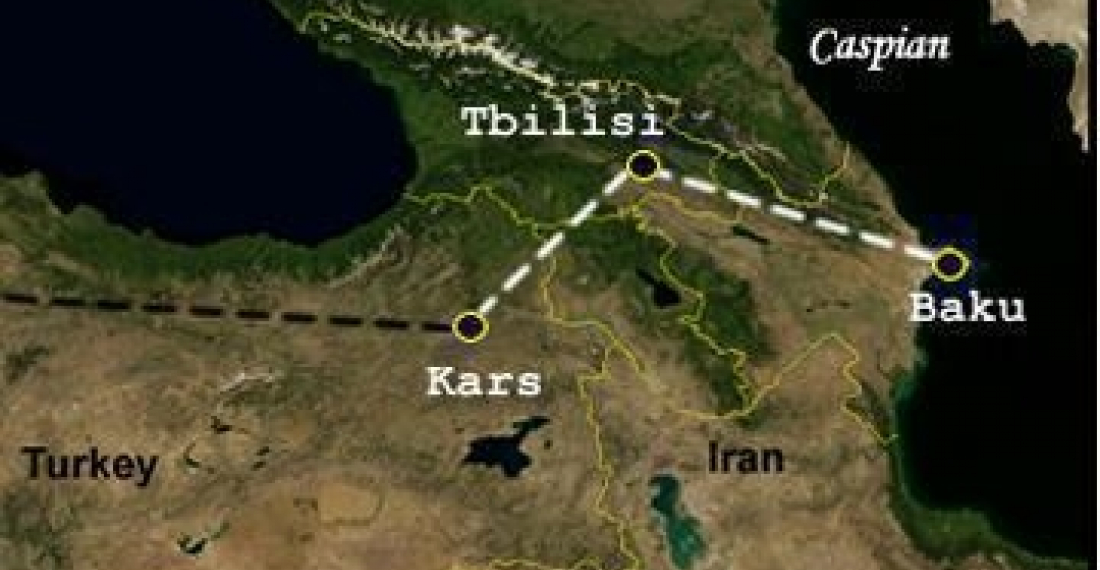
Железная дорога Баку-Тбилиси-Карс станет мостом, связывающим Турцию с тюркоязычными государствами, заявил депутат Великого национального собрания Турции от Партии справедливости и развития Мехмет Арслан во время встречи с общественностью Карса.

«Турецкое правительство пристально отслеживает строительство железной дороги БТК и  надеется, что работы завершатся в намеченные сроки», - отметил депутат.

Как сообщает 1news.az  со ссылкой на турецкие СМИ, по его словам,  завершение строительства ожидается в 2012 году. По железной дороге БТК  планируется перевозить более 1,5 млн. пассажиров  в год и около 3 млн. тонн грузов, а к 2034 году - 3,5 млн. пассажиров и 16 млн. тонн грузов.

Депутат также отметил, что после реализации БТК изменится весь облик Карса, который превратится в важный транспортный и торговый узел Турции. 

Напомним, что старт строительству железной дороги Баку-Тбилиси-Карс был дан в 2008 году.

В рамках данного проекта намечена прокладка новой 105-километровой ветки железнодорожной магистрали, 76 км которой пройдут по территории Турции, 29 км – Грузии.

Кроме того, в Грузии для повышения пропускной способности до 15 млн. тонн грузов в год будет реконструирован 183-километровый участок железной дороги Ахалкалаки-Марабда-Тбилиси.

В Ахалкалаки планируется создание пункта по переходу поездов с существующей в Грузии колеи на европейскую.

После открытия новой магистрали (2012 год), железные дороги Грузии будут соединены с  турецкими. Через уже действующую линию Баку-Тбилиси железнодорожный выход на Турцию получит и Азербайджан.

Согласно изменениям, внесенным в соглашение между правительствами Азербайджана и Грузии по финансированию, проектированию, строительству, реконструкции и реабилитации железнодорожного участка Марабда-граница с Турцией (Карцахи), общий объем кредитной линии составил $775 млн.

Финансирование строительства и реабилитации грузинского участка железной дороги Баку-Тбилиси-Карс осуществляется Государственным нефтяным фондом Азербайджана.

Турецкая сторона финансирует свою часть проекта. 

З.Р., Л.А.
Related articles

Editor's choice
News
The British prime minister says Europe must "stand on its own two feet" when it comes to defence

The British prime minister says Europe must "stand on its own two feet" when it comes to defence

The UK will deploy a carrier strike group, led by the aircraft carrier HMS Prince of Wales to the Arctic and the High North as part of efforts to bolster security against Russian threats. British prime minister, Sir Keir Starmer announced the deployment in a speech on Saturday (14 February) at the Munich Security Conference. Europe must be ready to fight to protect its people, values, and way of life,  Sir Keir told the Conference. Starmer also called for deeper links and cooperation, including economic ties, between the UK and EU. The PM stressed the continent must "stand on its own two feet" when it comes to defence commitments. "We must build our hard power, because that is the currency of the age," he told the conference. (Click image to read the full story).

Popular

Editor's choice
Interview
Thursday Interview: Murad Muradov

Thursday Interview: Murad Muradov

Today, commonspace.eu starts a new regular weekly series. THURSDAY INTERVIEW, conducted by Lauri Nikulainen, will host  persons who are thinkers, opinion shapers, and implementors in their countries and spheres. We start the series with an interview with Murad Muradov, a leading person in Azerbaijan's think tank community. He is also the first co-chair of the Action Committee for a new Armenian-Azerbaijani Dialogue. Last September he made history by being the first Azerbaijani civil society activist to visit Armenia after the 44 day war, and the start of the peace process. Speaking about this visit Murad Muradov said: "My experience was largely positive. My negative expectations luckily didn’t play out. The discussions were respectful, the panel format bringing together experts from Armenia, Azerbaijan, and Turkey was particularly valuable during the NATO Rose-Roth Seminar in Yerevan, and media coverage, while varied in tone, remained largely constructive. Some media outlets though attempted to represent me as more of a government mouthpiece than an independent expert, which was totally misleading.  Overall, I see these initiatives as important steps in rebuilding trust and normalising professional engagement. The fact that soon a larger Azerbaijani civil society visits to Armenia followed, reinforces the sense that this process is moving in the right direction." (click the image to read the interview in full)