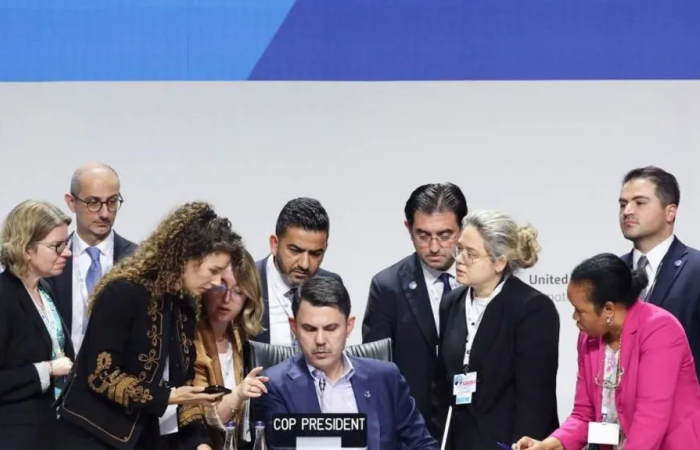


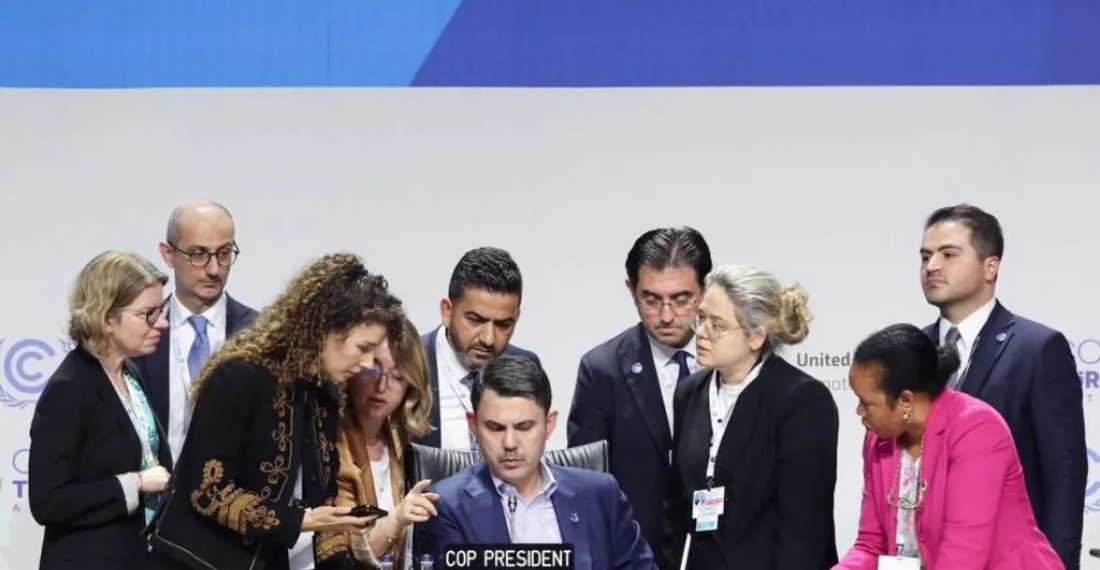
The COP31 climate summit in Antalya, Türkiye, ended on Sunday, November 22, without a final climate agreement after two weeks of negotiations and two additional days of overtime talks. Disagreements over the inclusion of fossil fuels in the final text proved to be the main obstacle, with the European Union and several countries rejecting the proposed agreement for failing to address the transition away from coal, oil and gas.
A new draft agreement was published early Sunday by the Turkish and Australian presidencies following days of negotiations. An earlier version had proposed accelerating the transition away from fossil fuels, but a subsequent draft published on Thursday (November 19) removed all references to them. On Friday (November 20), a group of countries, including France and Panama, sent a letter to the COP presidency demanding a clear commitment to transitioning away from fossil fuels.
The European Union refused to support the final text. Irish Climate and Energy Minister Darragh O’Brien, representing the EU’s rotating presidency, said the bloc could not accept an agreement that did not even mention fossil fuels, which remain the principal driver of climate change. Panama, the Marshall Islands and several other delegations also opposed the proposal, arguing that it weakened previous commitments and failed to reflect the urgency of limiting global warming to 1.5°C. Other countries, including Saudi Arabia, defended maintaining a range of climate solutions, such as carbon capture and storage, while Ghana, speaking on behalf of the African Group, acknowledged shortcomings in the text but chose not to block consensus.
Following these developments, UN Secretary-General António Guterres expressed “deep disappointment” at the failure to reach an agreement, warning that greenhouse gas emissions remain dangerously high and that the world is on course to exceed the 1.5°C threshold. He called on governments to accelerate the energy transition, strengthen emissions reductions and increase climate finance, particularly for vulnerable countries.
COP31 President and Turkish Environment Minister Murat Kurum acknowledged the failure to reach consensus, stating that the decisions could not be adopted in the absence of an agreement. The summit consequently became the longest UN climate conference on record, extending two days beyond its scheduled closing, without resolving the central political disagreements over fossil fuels.
Source: Anna Szedlacsek for commonspace.eu with Euronews (Brussels) and UN News (New York).