About Sokolov, who heads the investment fund financing TRIPP

This article, by Arshaluys Mgdesyan, was first published by the German broadcaster DW (Cologne)

A Russian-born businessman heads the investment fund financing the so-called "Trump Route," a planned corridor through Armenia linking Azerbaijan with Nakhchivan. Who is Konstantin Sokolov, and what role does he play?

Until recently, few people in the South Caucasus had heard of Konstantin Sokolov. Now the 52-year-old Russian-American businessman is at the center of new investment fund backed by US President Donald Trump.

In mid-July, Sokolov — who emigrated from Russia to the US at age 21 and later founded the investment firm IJS Investments in Chicago — was appointed to head a new investment fund of the US State Department.

The TRIPP+ EnterpriseFund, registered in the US as the Trans-Caspian Enterprise Fund and launched with more than $200 million (about €172.5 million) in capital, is expected to invest in countries across the South Caucasus and Central Asia, and help finance the large-scale TRIPP infrastructure project, also known as the "Trump Route for International Peace and Prosperity."

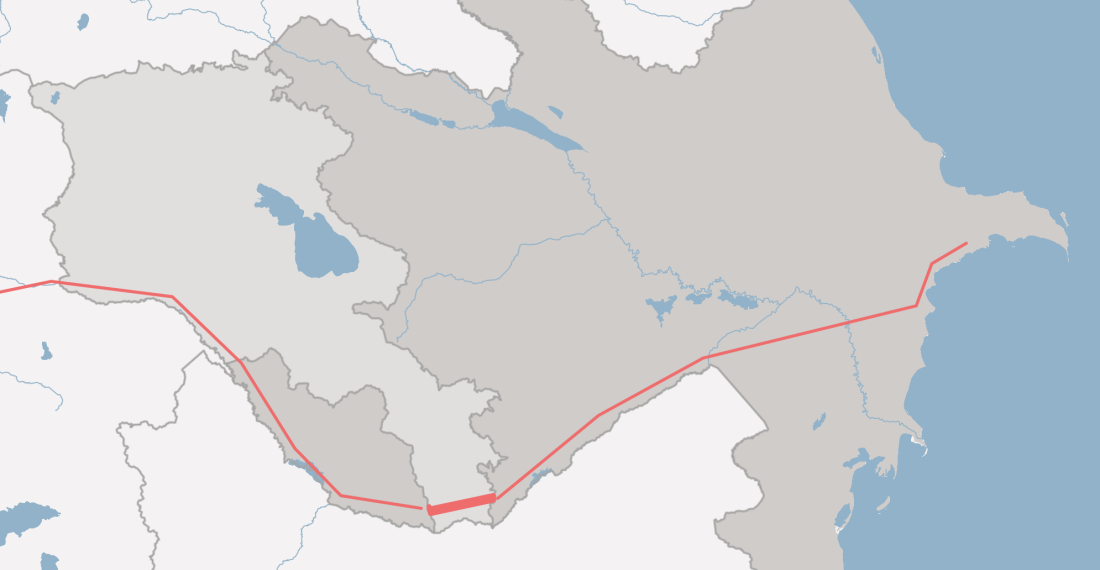
The "Trump Route" is a transit corridor that aims to connect Azerbaijan with its autonomous exclave of Nakhchivan through Armenian territory. The ambitious infrastructure project is part of a peace deal that Armenia and Azerbaijan signed in August 2025 with US mediation. In early June 2026, Washington and Yerevan signed a framework cooperation agreement for the project.

Experts have said construction of the "Trump Route" fits Washington's strategy of creating a trade corridor between Europe and the region that bypasses existing routes through Russia and Iran.

Sokolov buys up Russian assets in Armenia

Long before he was appointed to head TRIPP+, Sokolov had already established a foothold in Armenia.

In 2024, he acquired Viva Armenia, the country's largest telecommunications provider. Despite its subsequent partial nationalization, Sokolov continued to expand his holdings. Recently, his companies also bought up the Armenian subsidiary of Russian telecom giant Rostelecom.

In August 2025, Azerbaijani President Ilham Aliyev (left) and Armenian Prime Minister Nikol Pashinyan (right) signed a joint declaration 'peace road map' after talks with TrumpImage: Azerbaijan Presidency/Anadolu/picture alliance

An even more significant deal, however, was carried out largely out of the public eye: the purchase of the Teghut copper-molybdenum mine. The mine, which holds an estimated 450 million metric tons of ore and has Armenia's second-largest reserves, had been taken over by Russia's state-owned VTB Bank after the company accumulated massive debts. VTB is now under Western sanctions. According to Radio Free Europe/Radio Liberty's Armenian service, the deal was carried out through a third-party company.

"Sokolov wanted to avoid a direct deal with the Russian bank," said Mkrtich Karapetyan, a Radio Liberty journalist who has been investigating the flow of foreign capital into Armenia.

Source: This article, by Arshaluys Mgdesyan, was first published by the German broadcaster DW (Cologne)
Related articles

Editor's choice
News
Leaders of Shanghai Cooperation Organisation gather in Bishkek

Leaders of Shanghai Cooperation Organisation gather in Bishkek

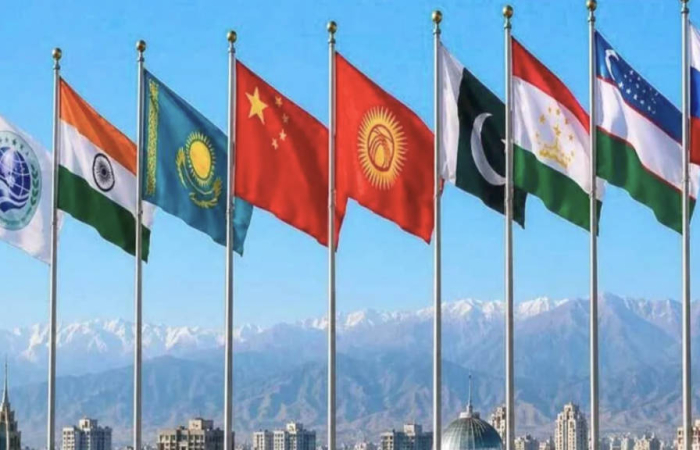
The 2026 Shanghai Cooperation Organisation Heads of State summit takes place from Tuesday, September 1, in Bishkek. It is being hosted by the president of Kyrgyzstan, Sadyr Japarov, who currently holds the SCO chair. High-level meetings will also be held in the SCO Plus format. The SCO summit will be attended by Belarusian President Alexander Lukashenko; Chinese President Xi Jinping; Indian Prime Minister Narendra Modi; Iranian President Masoud Pezeshkian; Kazakh President Kassym-Jomart Tokayev; Pakistani Prime Minister Shehbaz Sharif; Russian President Vladimir Putin; Tajik President Emomali Rahmon; Uzbek President Shavkat Mirziyoyev; as well as  Azerbaijani President Ilham Aliyev; Armenian Prime Minister Nikol Pashinyan; Mongolian President Ukhnaagiin Khürelsükh; Chairman of the Council of Ministers of Togo Faure Essozimna Gnassingbé; Turkish President Recep Tayyip Erdoğan; Laos President Thongloun Sisoulith; the Vice President of Vietnam Võ Thị Ánh Xuân; and the Deputy Prime Minister of Egypt Hussein Issa. Representatives of international organisations include UN Secretary-General António Guterres; CIS Secretary-General Sergei Lebedev; CSTO Secretary-General Taalatbek Masadykov; Chairman of the Board of the Eurasian Economic Commission Bakytzhan Sagintaev; and Secretary General of the Conference on Interaction and Confidence Building Measures in Asia Kairat Sarybay. The member-state session brings together Belarus, China, India, Iran, Kazakhstan, Kyrgyzstan, Pakistan, Russia, Tajikistan, and Uzbekistan. Combined, these ten SCO countries have a collective GDP (PPP) of about 36% of the global total (US$80 trillion) and a population of about 3.4 billion. They will discuss pressing issues on the international and regional agenda and priority areas for the SCO’s development, as well as prospects for deepening cooperation in the political, trade and economic, transport and logistics, digital, environmental, cultural and humanitarian spheres. Following the meeting, a ‘Bishkek Declaration’, marking the 25th anniversary of the SCO, as well as documents and decisions aimed at further strengthening multifaceted cooperation and improving the organisation’s activities, will be signed. A number of thematic statements by the heads of state will also be adopted. At the expanded SCO Plus format, participants will exchange views on strengthening the central coordinating role of the United Nations and international law, as well as promoting sustainable development and expanding mutually beneficial cooperation.

Popular

Editor's choice
Interview
Thursday Interview: Murad Muradov

Thursday Interview: Murad Muradov

Today, commonspace.eu starts a new regular weekly series. THURSDAY INTERVIEW, conducted by Lauri Nikulainen, will host  persons who are thinkers, opinion shapers, and implementors in their countries and spheres. We start the series with an interview with Murad Muradov, a leading person in Azerbaijan's think tank community. He is also the first co-chair of the Action Committee for a new Armenian-Azerbaijani Dialogue. Last September he made history by being the first Azerbaijani civil society activist to visit Armenia after the 44 day war, and the start of the peace process. Speaking about this visit Murad Muradov said: "My experience was largely positive. My negative expectations luckily didn’t play out. The discussions were respectful, the panel format bringing together experts from Armenia, Azerbaijan, and Turkey was particularly valuable during the NATO Rose-Roth Seminar in Yerevan, and media coverage, while varied in tone, remained largely constructive. Some media outlets though attempted to represent me as more of a government mouthpiece than an independent expert, which was totally misleading.  Overall, I see these initiatives as important steps in rebuilding trust and normalising professional engagement. The fact that soon a larger Azerbaijani civil society visits to Armenia followed, reinforces the sense that this process is moving in the right direction." (click the image to read the interview in full)