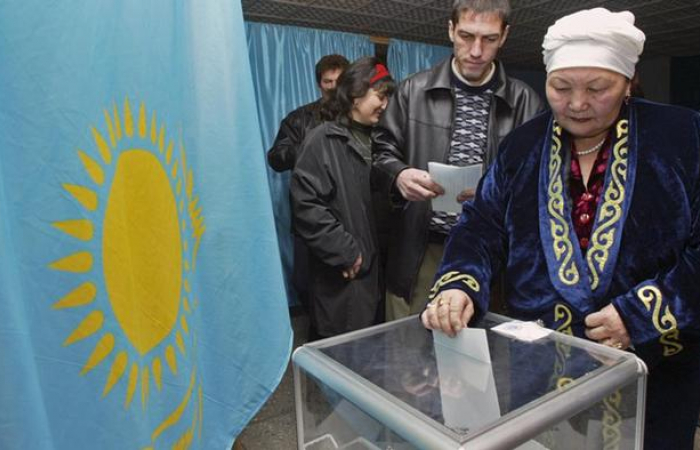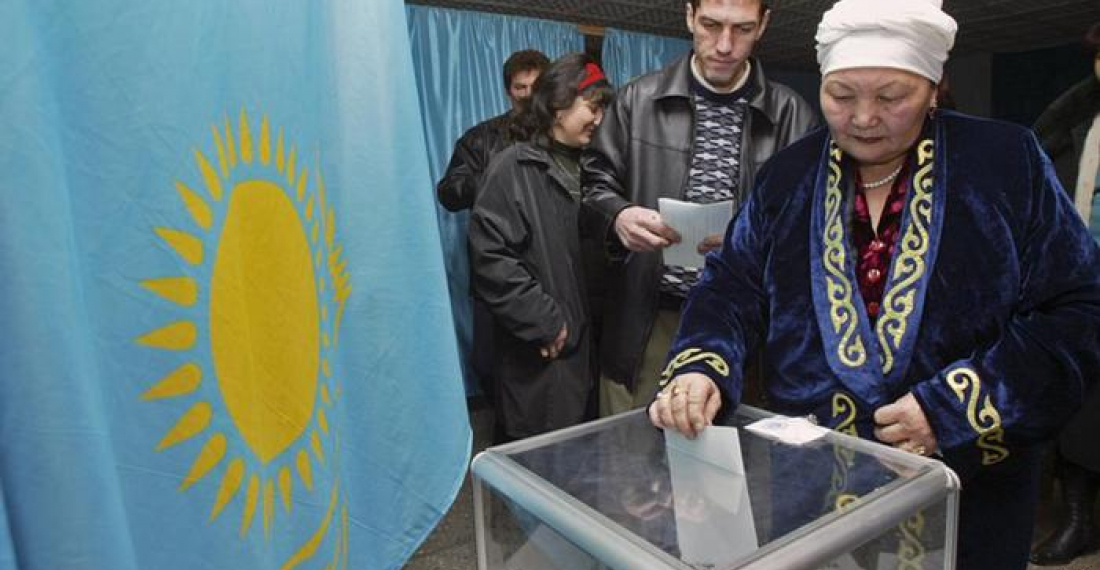
Nearly 80 parliamentarians and staff from some 30 countries are deploying to Kazakhstan for the 23 August early parliamentary elections, marking the 13th time the OSCE PA has observed elections in the country since 1994.
Gábor Hajdu (Romania) is serving as the OSCE Special Co-ordinator and leader of the short-term observers to the elections, and Lucija Tacer Perlin (Slovenia) is serving as Head of the OSCE PA Delegation.
The OSCE PA team will work closely with the OSCE/ODIHR Election Observation Mission, headed by Ambassador Vincent Piket (Netherlands), alongside a partner delegation from the Parliamentary Assembly of the Council of Europe, led by Sevilay Çelenk (Türkiye).
Ahead of election day, observers will be thoroughly briefed by representatives of the Central Election Commission, political parties, civil society, media, and independent experts. Following two days of in-depth discussions, OSCE parliamentarians will deploy across Kazakhstan to assess the election process.
Their findings will be compiled and analyzed for inclusion in the preliminary conclusions of the international election observation mission, to be presented at a joint press conference.
“These elections follow a constitutional referendum that introduced a single nationwide constituency using closed-list proportional representation and a number of other changes,” noted Hajdu. “Working with our partners, we will carefully observe how these changes are implemented, recalling that elections are not judged by a single element but considering all of the commitments that OSCE participating States have undertaken.”
“Our task is not to prejudge how Kazakhstan’s new system will perform, but to examine the process carefully and impartially,” said Tacer Perlin. “We look forward to engaging with institutions, political parties, civil society, journalists and citizens across the country to assess voting procedures, counting, and the overall conduct of the process.”
The elections will be assessed against democratic commitments contained in the OSCE’s 1990 Copenhagen Document.
The preliminary findings and conclusions will be presented at a joint press conference in Astana on 24 August, the day after the election.
source: commonspace.eu with OSCE PA (Copenhagen)