Russia carried out a major overnight missile and drone attack across Ukraine on Tuesday (August 11), killing at least nine civilians, according to Ukrainian authorities. President Volodymyr Zelenskyy said Russian forces used North Korean ballistic missiles in strikes on Zaporizhzhia, where seven workers at the Zaporizhstal steel plant were killed and 24 people injured. A day of mourning was declared in the city for August 12.
Zelenskyy described the Zaporizhzhia attack as deliberately aimed at causing extensive damage to civilian infrastructure. The plant’s operator, Metinvest, said the workers were heading to shelters after an air-raid warning when the strike occurred. Operations at the facility were subsequently suspended because of the damage. Russia’s Defense Ministry said its forces had targeted military-industrial facilities and transport and logistics centers in Kyiv and Zaporizhzhia.
Other Russian strikes caused casualties in the Dnipropetrovsk and Donetsk regions. In Kyiv, explosions damaged an area near a children’s hospital, while strikes elsewhere in the capital caused an industrial fire and injuries. Ukrainian authorities also reported damage to electricity infrastructure in Kherson and Kharkiv.
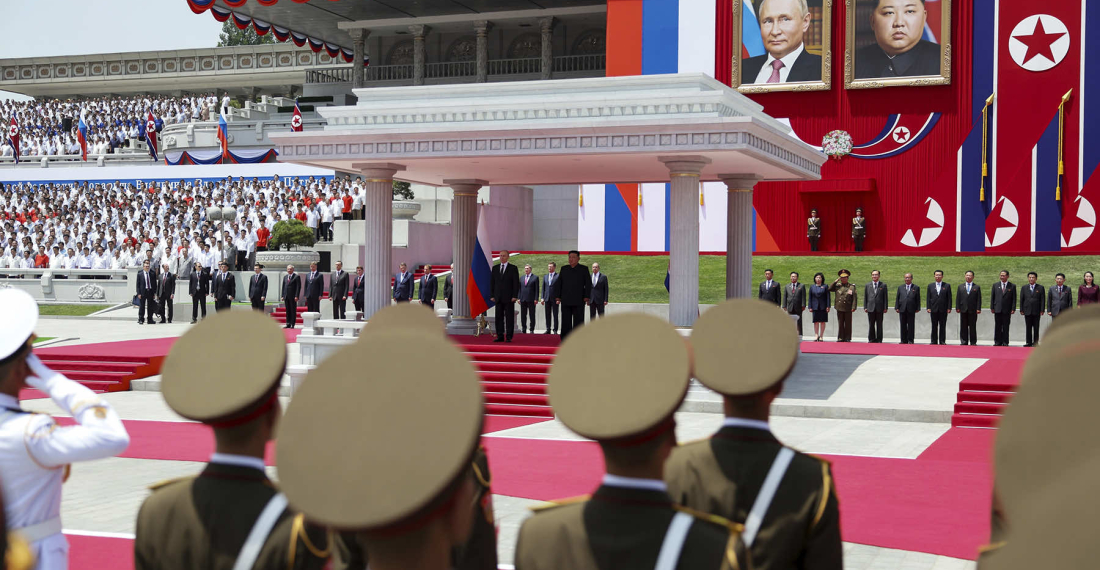
Zelenskyy also linked the latest strikes to expanding military cooperation between Russia and North Korea. He said Moscow had received additional North Korean missiles and was preparing for the possible deployment of more North Korean troops. Ukraine previously estimated that around 12,000 North Korean soldiers were sent to Russia in 2024, while Zelenskyy has recently claimed that preparations were underway for a further deployment.
On Tuesday (August 11), Zelenskyy said Ukraine had submitted proposals to US negotiators for ending the war, calling for stronger air defenses and greater pressure on Moscow. However, he argued that Russia’s increased missile production, cooperation with North Korea and preparations for further mobilisation indicated that Moscow was preparing for continued fighting rather than peace.
The attacks come as Ukraine faces shortages of air-defense interceptors, including missiles used by US-made Patriot systems, which are among the few systems capable of countering ballistic threats. Ukrainian officials have warned that Russia is increasing ballistic missile production while Kyiv struggles to replenish its defenses.
Source: commonspace.eu with The Independent (London), La Dépêche du Midi (Toulouse) and North Korea Times (Sydney).