Houthis bomb Saudi targets

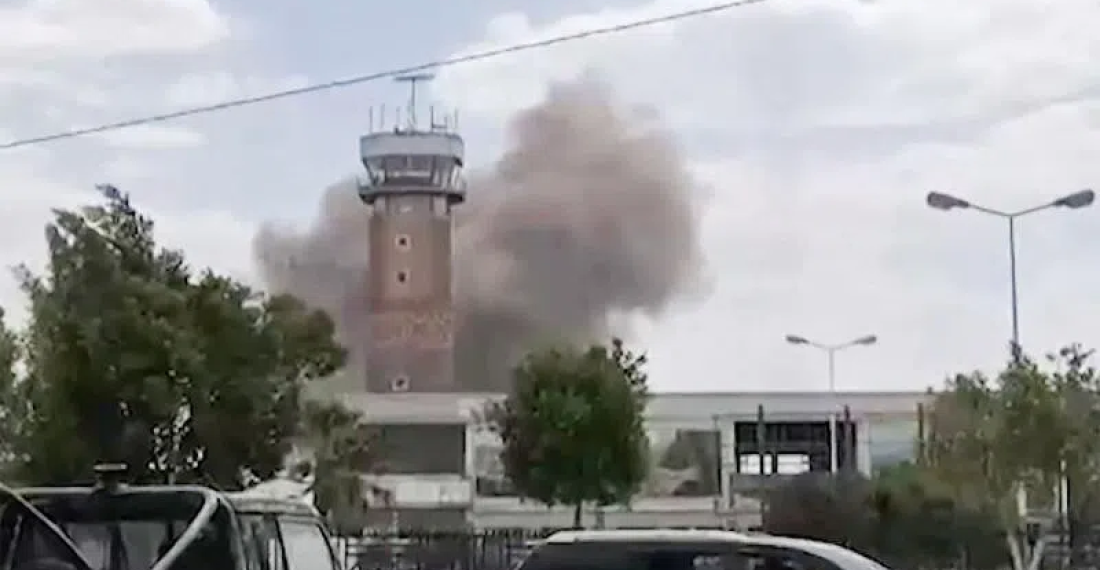
Yemen’s Houthis targeted Saudi Arabia on July 13, hours after they accused the kingdom of attacking Sanaa airport – the biggest flare-up in years between the two sides that threatens to upend a frozen conflict.

The Saudi-backed Yemeni government claimed responsibility for the attack on the Houthi-held airport, saying it wanted to prevent an Iranian plane from landing.

It came after the government failed to convince a Houthi delegation that went to Tehran for the late Iranian supreme leader Ali Khamenei’s funeral to board a flight on domestic carrier Yemenia instead.

“Air defences dealt with a ballistic missile threat launched by the terrorist Houthi militia towards the southern region,” spokesman Turki al-Maliki of the Saudi-led coalition said in a social media post.

Earlier, Houthi military spokesman Yahya Saree accused Saudi Arabia of “ending the de-escalation phase” and warned that “this aggression will not go unanswered or unpunished”.

The latest escalation threatens to unravel a 2022 truce and comes at a time of heightened tensi,ons as the United States and Iran trade attacks impacting the Gulf and traffic in the Strait of Hormuz.

source: commonspace.eu with agencies
Related articles

Popular

Editor's choice
Interview
Thursday Interview: Murad Muradov

Thursday Interview: Murad Muradov

Today, commonspace.eu starts a new regular weekly series. THURSDAY INTERVIEW, conducted by Lauri Nikulainen, will host  persons who are thinkers, opinion shapers, and implementors in their countries and spheres. We start the series with an interview with Murad Muradov, a leading person in Azerbaijan's think tank community. He is also the first co-chair of the Action Committee for a new Armenian-Azerbaijani Dialogue. Last September he made history by being the first Azerbaijani civil society activist to visit Armenia after the 44 day war, and the start of the peace process. Speaking about this visit Murad Muradov said: "My experience was largely positive. My negative expectations luckily didn’t play out. The discussions were respectful, the panel format bringing together experts from Armenia, Azerbaijan, and Turkey was particularly valuable during the NATO Rose-Roth Seminar in Yerevan, and media coverage, while varied in tone, remained largely constructive. Some media outlets though attempted to represent me as more of a government mouthpiece than an independent expert, which was totally misleading.  Overall, I see these initiatives as important steps in rebuilding trust and normalising professional engagement. The fact that soon a larger Azerbaijani civil society visits to Armenia followed, reinforces the sense that this process is moving in the right direction." (click the image to read the interview in full)