On Tuesday (July 7), in a series of Facebook posts, Ukrainian President Volodymyr Zelensky announced that it had signed new military drone cooperation agreements with Denmark, the Netherlands and Estonia. He also confirmed that additional agreements are being prepared with Germany, Finland, Norway and Canada.
The agreements follow the launch of a new Ukrainian mechanism allowing partner countries to purchase Ukrainian-made weapons and defence technologies directly from domestic manufacturers. According to Kyiv, the framework is intended to promote joint production, technology transfers and closer industrial cooperation.
President Zelensky added that the agreements would create "new opportunities for joint production, the development of innovative defence technologies, systematic exchange of expertise, and the export of Ukrainian battlefield-proven solutions." Previously, Ukrainian officials have stated that such arrangements are tailored to each partner but generally involve Ukraine providing drone technology designs in exchange for royalties, investment, and military equipment. For instance, in Estonia's case, the bilateral drone cooperation agreement enables Estonian companies to manufacture drones using Ukrainian expertise. Speaking at the NATO summit in Ankara (July 7), Estonian Prime Minister Kristen Michal stated that the partnership provides Estonian firms with access to Ukrainian intellectual property, combat-tested technologies, and advanced testing expertise. The agreement is intended to leverage Ukraine's rapid wartime innovation in drone development while strengthening Estonia's domestic defence industry.
The financial terms of the agreements have not been disclosed.
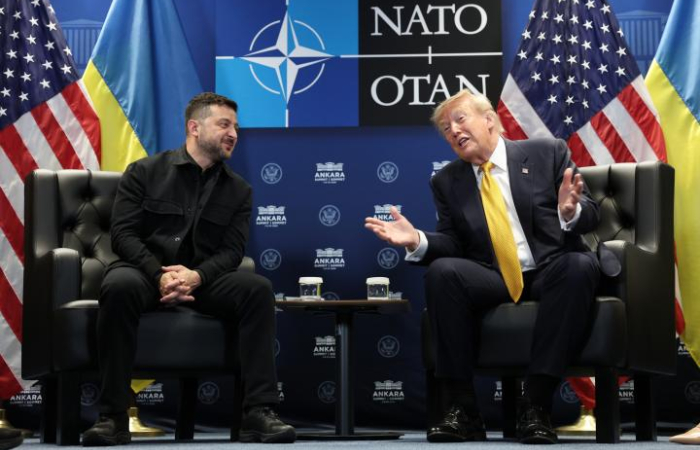
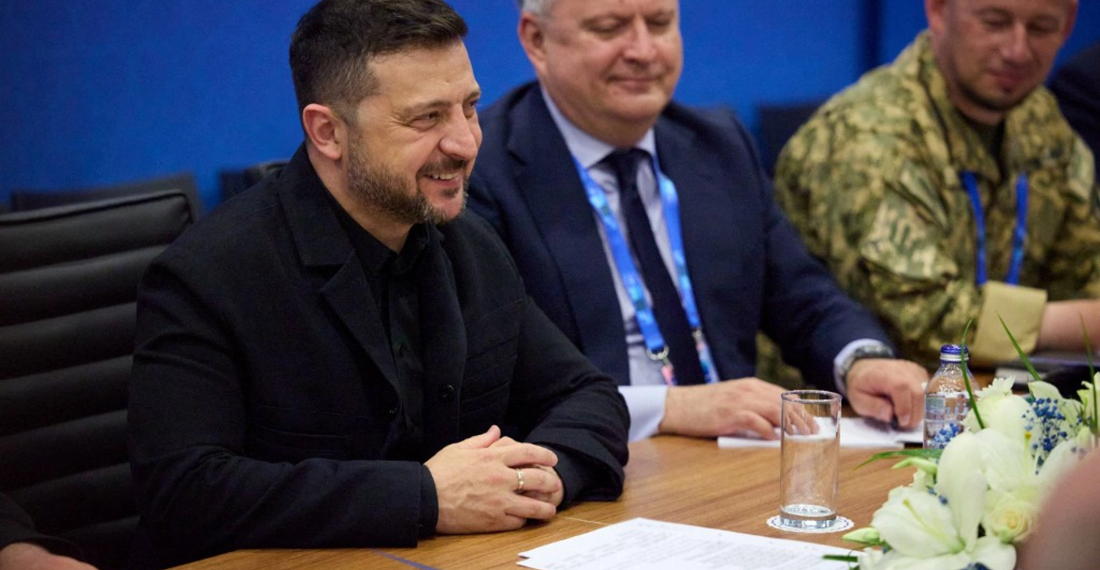
At the summit, Zelensky also renewed his call for Ukraine's future membership in the alliance, arguing that the country could make an "extraordinary" contribution to NATO's collective defence. He urged allies to strengthen Ukraine's air defence capabilities as Russia continues large-scale missile and drone attacks against Ukrainian cities and infrastructure.
During the visit, Zelenskyy also met with NATO Secretary General Mark Rutte to discuss strengthening Ukraine's air defence capabilities, with particular emphasis on protecting civilians from ballistic missile attacks and accelerating the delivery of interceptor missiles. The talks also addressed additional contributions from allied countries to the Prioritized Ukraine Requirements List (PURL) initiative, efforts to establish an Anti-Ballistic Coalition, expanded joint weapons production, and deeper defence cooperation between Ukraine and NATO member states. Following the meeting, Zelenskyy stressed that all bilateral and multilateral mechanisms supporting Ukraine's air defence must operate at full capacity.
Since Russia launched its full-scale invasion in 2022, Ukraine has invested heavily in developing its domestic defence industry, particularly in attack drones, interceptor drones and other unmanned systems that now play a central role in the conflict. It has already concluded similar partnerships with several other countries, including Lithuania, Latvia, Qatar and the United Arab Emirates, as Kyiv continues to strengthen international alliances built around its rapidly expanding defence technology sector.
source: commonspace.eu with Kyiv Post (Kyiv), France 24 (Paris), Euronews (Paris) and Anadolu Agency (Ankara)