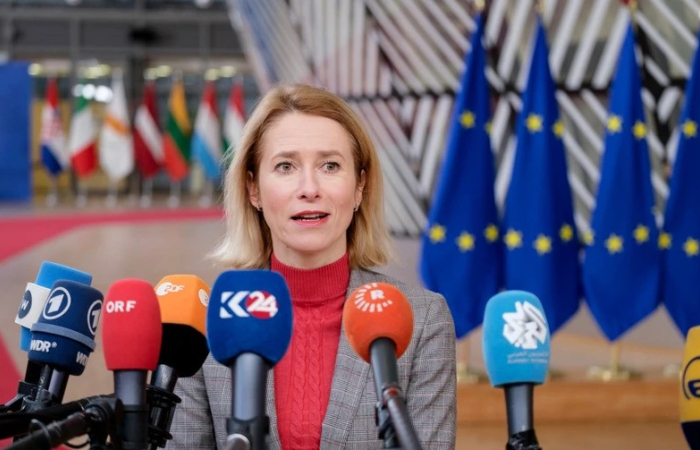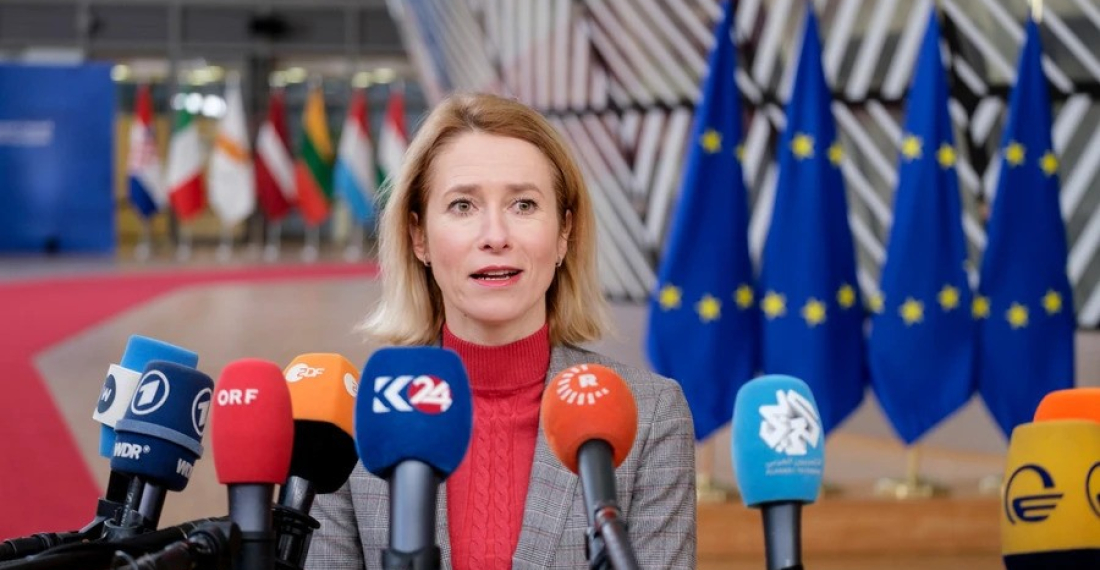
Ahead of the ongoing meeting of the EU Foreign Affairs Council, Kaja Kallas, EU High Representative for Foreign Affairs and Security Policy, said that she expects positive decisions on the €90 billion EU loan for Ukraine on Wednesday (22 April).
"So, first we discuss, of course, the war in Ukraine. And we expect some positive decisions tomorrow on the €90 billion loan. Ukraine really needs this loan, and it is also a sign that Russia cannot outlast Ukraine. This is extremely important at this moment.”
With Hungarian Prime Minister Viktor Orbán’s election defeat, European Union countries will move to unlock the loan package on Wednesday (22 April). EU ambassadors are scheduled to seek final approval for the package. The agenda for a meeting of the Committee of Permanent Representatives (Coreper), scheduled for 22 April, has been expanded to include an amendment to the EU's long-term budget for 2021-2027, which would enable the European Union to provide Ukraine with the loan.
The commission said it was still waiting to see when Ukraine could resume the oil flows through the Druzbha pipeline carrying Russian oil to Hungary and Slovakia. The new Hungarian administration won’t take office before mid-May, and Orbán suggested he would drop his country’s veto on the loan for Ukraine as soon as the oil starts flowing, which could happen this week, according to The Guardian.
The European Commission said it is doing “what we can to complete” the negotiations “as soon as possible” and prepare for a potential political decision on disbursing the funds to Ukraine.
Source: commonspace.eu with The Guardian, Ukrainska Pravda, and European Pravda