


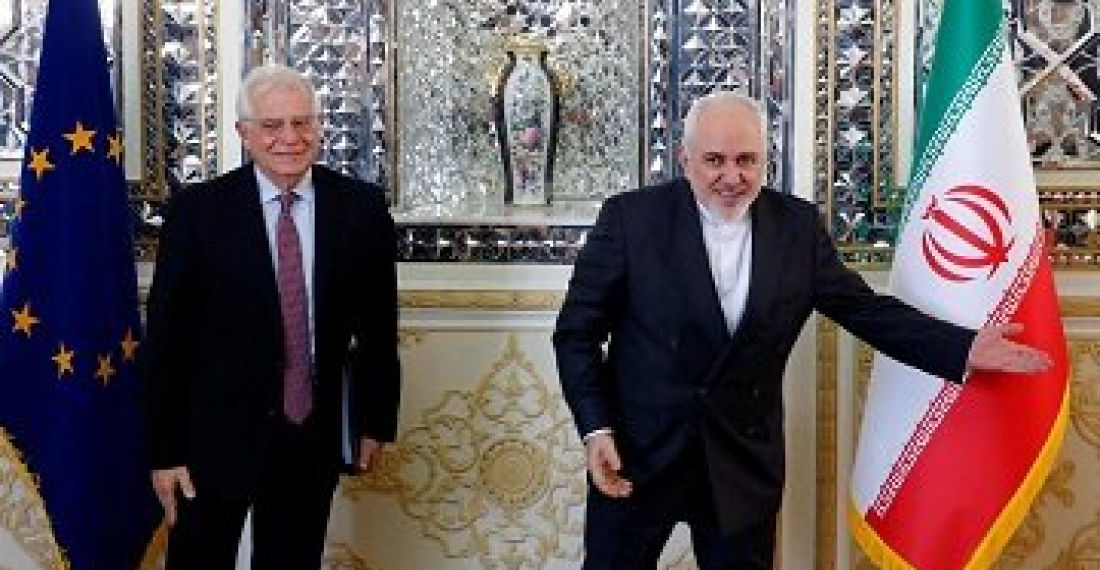
ЕС готов углубить двустороннее сотрудничество с Ираном

Верховный представитель Европейского союза по внешней политике и политике безопасности Джозеп Боррелл 3-4 февраля 2020 года совершил свой первый официальный визит в Исламскуомю Республику Иран. Он провел встречи с президентом Исламской Республики Иран Хасаном Рухани, министром иностранных дел Джавадом Зариф и спикером меджлиса Али Лариджани.

В заявлении Европейской службы внешних действий говорится, что в ходе встреч Верховный представитель подчеркнул свою решимость продолжать усилия ЕС по содействию деэскалации и достижению стабильности в более широком регионе в соответствии с мандатом, данным ему Советом иностранных дел. "Нам нужно искать пути укрепления доверия и регионального сотрудничества между всеми сторонами в таких областях, как реагирование на бедствия, трансграничные экологические или морские проблемы". Он подчеркнул: "Я буду поддерживать связь со всеми соответствующими участниками, чтобы улучшить взаимопонимание".

Верховный представитель прибыл в Иран после официального визита в Иорданию и недавно имел контакты с министром иностранных дел Саудовской Аравии, министром иностранных дел Объединенных Арабских Эмиратов и президентом Ирака по этим вопросам. Позднее на этой неделе Верховный представитель отправится в Соединенные Штаты, где проведет переговоры с госсекретарем Помпео и другими коллегами высокого уровня.

На своих встречах с иранскими собеседниками в Тегеране Верховный представитель Дж.Боррелл также обсудил состояние иранского ядерного соглашения - Совместного комплексного плана действий (СВПД). Он подчеркнул необходимость полного осуществления СВПД всеми сторонами. Он сказал: "Как координатор Совместной комиссии СВПД, я полон решимости сделать все, чтобы сохранить эту сделку, которая имеет ключевое значение для региональной и международной безопасности. Мы продолжаем работать со всеми ее участниками, чтобы добиться прогресса. Мы ожидаем, что Иран вернется к полному выполнению своих ядерных обязательств. Но Иран должен быть в состоянии извлечь экономическую выгоду от отмены санкций". Он также подчеркнул важную роль Международного агентства по атомной энергии в мониторинге ядерных обязательств Ирана.

Верховный представитель также подчеркнул готовность ЕС углублять двустороннее сотрудничество с Ираном по вопросам, представляющим общий интерес. В этом контексте обе стороны договорились продолжить обсуждения в ходе предстоящего диалога на высоком уровне между ЕС и Ираном, который состоится в марте 2020 года в Тегеране. Диалог высокого уровня затрагивает политические вопросы, вопросы безопасности и права человека, а также важное отраслевое сотрудничество, включая торговлю, вопросы окружающей среды, миграцию и вопросы ядерной безопасности. Это сотрудничество подкрепляется финансовым пакетом в размере около 150 миллионов евро в период с 2018 по 2020 год.

источник: commonspace.eu по материалам пресс-службы ЕСВД

фото: Министр иностранных дел Ирана Мохаммад Джавад Зариф (слева) приветствует Верховного представителя ЕС в Европейском Союзе Джозепа Боррелла в министерстве иностранных дел Тегерана, Иран, 3 февраля 2020 года.


Related articles

Editor's choice
News
Germany accuses Russia of cyberattacks and disinformation campaign

Germany accuses Russia of cyberattacks and disinformation campaign

The German government holds Russia responsible for a cyberattack on German air traffic control, and for targeted disinformation campaigns before the last federal election. According to the German Foreign Office in Berlin, the incidents could be clearly attributed to the Russian military intelligence service, the GRU. In response, the Russian ambassador to Berlin was summoned to the Foreign Ministry. "We have been observing a massive increase in threatening hybrid activities by Russia for some time now," a spokesperson for the Foreign Ministry stated. These range from disinformation campaigns and espionage to cyberattacks and sabotage attempts. The aim is to divide society, sow distrust, and undermine confidence in democratic institutions. The spokesperson added that with these actions, Russia is "very concretely threatening our security, not only through its war of aggression against Ukraine, but also here in Germany."  The Foreign Ministry spokesperson explained that the cyberattack on air traffic control in August 2024 was clearly attributed to the hacker collective "APT28," known as "Fancy Bear," and to the responsibility of the Russian military intelligence service, the GRU. Furthermore, it could now be "conclusively stated" that Russia had attempted "to influence and destabilize both the last Federal election and the ongoing internal affairs of the Federal Republic of Germany." There was "absolutely irrefutable evidence" for this". The so-called "Storm 1516" campaign, which has been running since 2024, is allegedly backed by "reliable information" that the Moscow-based think tank "Center for Geopolitical Expertise" is behind it. The Center is also said to be supported by Russian military intelligence. Its primary aim is to influence democratic elections in the West. (Click the image to read more).
Editor's choice
News
NATO Chief says war is on Europe's doorstep, and warns against complacency

NATO Chief says war is on Europe's doorstep, and warns against complacency

Russia could attack a NATO country within the next five years, the Secretary General of NATO, Mark Rutte, said in a stark new warning. "NATO's own defences can hold for now," Rutte warned in Berlin, but conflict was "next door" to Europe, and he feared "too many are quietly complacent, and too many don't feel the urgency, too many believe that time is on our side. "Russia is already escalating its covert campaign against our societies," Rutte said in a speech in Germany. "We must be prepared for the scale of war our grandparents or great-grandparents endured." Earlier this month, Russia's President Vladimir Putin said his country was not planning to go to war with Europe, but it was ready "right now" if Europe wanted to - or started a war. But similar reassurances were given by Moscow in 2022, just before 200,000 Russian troops crossed the border and invaded Ukraine. Putin has accused European countries of hindering US efforts to bring peace in Ukraine - a reference to the role Ukraine's European allies have recently played in trying to change a US peace plan to end the war, whose initial draft was seen as favouring Russia. But Putin was not sincere, Nato's secretary-general said in the German capital, Berlin. Supporting Ukraine, he added, was a guarantee for European security. "Just imagine if Putin got his way; Ukraine under the boot of Russian occupation, his forces pressing against a longer border with Nato, and the significantly increased risk of an armed attack against us." Russia's economy has been on a war footing for more than three years now - its factories churn out ever more supplies of drones, missiles and artillery shells. According to a recent report by the Kiel Institute for the World Economy, Russia has been producing each month around 150 tanks, 550 infantry fighting vehicles, 120 Lancet drones and more than 50 artillery pieces. The UK, and most of its Western allies, are simply not anywhere near this point. Analysts say it would take years for Western Europe's factories to come close to matching Russia's mass-production of weapons. "Allied defence spending and production must rise rapidly, our armed forces must have what they need to keep us safe," the Nato chief said.

Popular

Editor's choice
News
Germany accuses Russia of cyberattacks and disinformation campaign

Germany accuses Russia of cyberattacks and disinformation campaign

The German government holds Russia responsible for a cyberattack on German air traffic control, and for targeted disinformation campaigns before the last federal election. According to the German Foreign Office in Berlin, the incidents could be clearly attributed to the Russian military intelligence service, the GRU. In response, the Russian ambassador to Berlin was summoned to the Foreign Ministry. "We have been observing a massive increase in threatening hybrid activities by Russia for some time now," a spokesperson for the Foreign Ministry stated. These range from disinformation campaigns and espionage to cyberattacks and sabotage attempts. The aim is to divide society, sow distrust, and undermine confidence in democratic institutions. The spokesperson added that with these actions, Russia is "very concretely threatening our security, not only through its war of aggression against Ukraine, but also here in Germany."  The Foreign Ministry spokesperson explained that the cyberattack on air traffic control in August 2024 was clearly attributed to the hacker collective "APT28," known as "Fancy Bear," and to the responsibility of the Russian military intelligence service, the GRU. Furthermore, it could now be "conclusively stated" that Russia had attempted "to influence and destabilize both the last Federal election and the ongoing internal affairs of the Federal Republic of Germany." There was "absolutely irrefutable evidence" for this". The so-called "Storm 1516" campaign, which has been running since 2024, is allegedly backed by "reliable information" that the Moscow-based think tank "Center for Geopolitical Expertise" is behind it. The Center is also said to be supported by Russian military intelligence. Its primary aim is to influence democratic elections in the West. (Click the image to read more).

