


"НАТО и Армению объединяют многочисленные политические приоритеты и интересы безопасности"
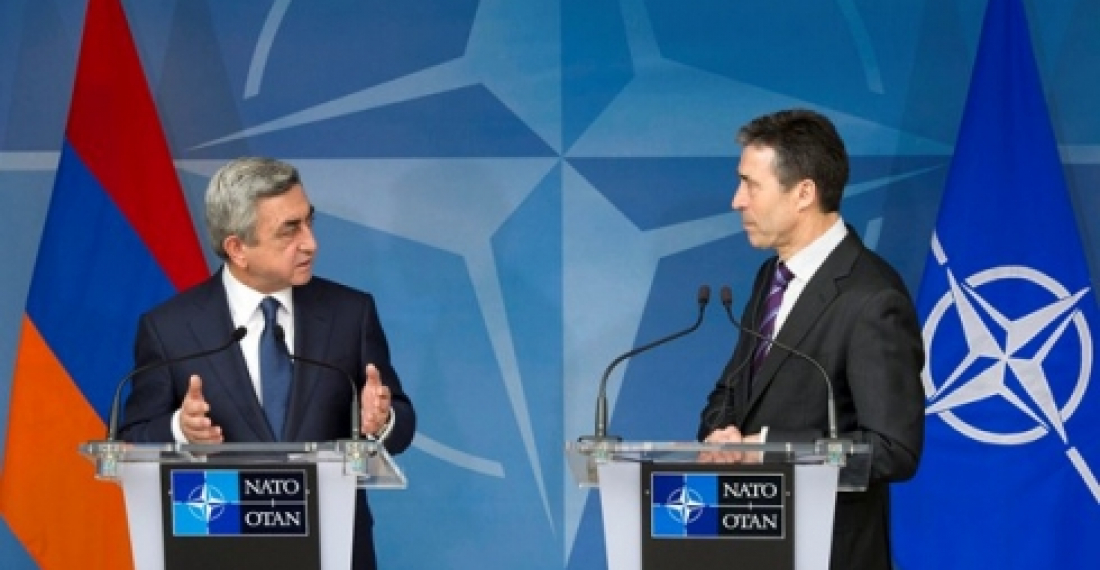
Из всех трех стран Южного Кавказа Армения с начала неохотно налаживала отношения с НАТО. Ее особые отношения с Россией и ее членство в ОДКБ сделали ее более осторожной в отношениях с НАТО. Признаки того, что всё может измениться появились после вчерашнего визита президента Армении Сержа Саргсяна в штаб-квартиру НАТО в Брюсселе.

Президент встретился с генеральным секретарем НАТО Андерсом Фог Расмуссеном, и обратился к представителям государств-членов НАТО собравшихся на Североатлантическом совете.

В комментарий для прессы Расмуссен сказал, что "НАТО и Армению объединяют многочисленные политические приоритеты и интересы безопасности". Он добавил, что "Наше сотрудничество и диалог развивались в течение многих лет. Наши взаимоотношения содействуют обеспечению региональной и евроатланической безопасности. Мы намерены продолжить этот процесс".

В свою очередь президент Армении выразил готовность своей страны продолжать сотрудничество с НАТО. Серж Саргсян сказал: "Я также рад, что генеральный секретарь НАТО высоко ценят усилия, Армения вносит в поддержание международного мира и безопасности. Мы понимаем, что современные угрозы и вызовы могут быть побеждены только благодаря нашим совместным усилиям. По той же причине, летом прошлого года мы утроили число армянских войск, участвующих в международных силах, которые поддерживают безопасность в Афганистане ".

Во время своего визита в Брюссель глава армянского государства также встретится с руководством Европейского Союза.

Источник: commonspace.eu

Фото: Президент Армении Серж Саргсян в штаб-квартире НАТО в Брюсселе 6 марта 2012 года. (фото любезно предоставлено пресс-службой НАТО и информационной службой).

Related articles

Editor's choice
News
Borrell tells the European Parliament that the situation in Afghanistan was critical, but the EU will remain engaged

Borrell tells the European Parliament that the situation in Afghanistan was critical, but the EU will remain engaged

Borrell underlined that the European Union will make every effort to support the peace process and to remain a committed partner to the Afghan people. "Of course, we will have to take into account the evolving situation, but disengagement is not an option.  We are clear on that: there is no alternative to a negotiated political settlement, through inclusive peace talks.
Editor's choice
News
Germany accuses Russia of cyberattacks and disinformation campaign

Germany accuses Russia of cyberattacks and disinformation campaign

The German government holds Russia responsible for a cyberattack on German air traffic control, and for targeted disinformation campaigns before the last federal election. According to the German Foreign Office in Berlin, the incidents could be clearly attributed to the Russian military intelligence service, the GRU. In response, the Russian ambassador to Berlin was summoned to the Foreign Ministry. "We have been observing a massive increase in threatening hybrid activities by Russia for some time now," a spokesperson for the Foreign Ministry stated. These range from disinformation campaigns and espionage to cyberattacks and sabotage attempts. The aim is to divide society, sow distrust, and undermine confidence in democratic institutions. The spokesperson added that with these actions, Russia is "very concretely threatening our security, not only through its war of aggression against Ukraine, but also here in Germany."  The Foreign Ministry spokesperson explained that the cyberattack on air traffic control in August 2024 was clearly attributed to the hacker collective "APT28," known as "Fancy Bear," and to the responsibility of the Russian military intelligence service, the GRU. Furthermore, it could now be "conclusively stated" that Russia had attempted "to influence and destabilize both the last Federal election and the ongoing internal affairs of the Federal Republic of Germany." There was "absolutely irrefutable evidence" for this". The so-called "Storm 1516" campaign, which has been running since 2024, is allegedly backed by "reliable information" that the Moscow-based think tank "Center for Geopolitical Expertise" is behind it. The Center is also said to be supported by Russian military intelligence. Its primary aim is to influence democratic elections in the West. (Click the image to read more).

Popular

Editor's choice
News
Germany accuses Russia of cyberattacks and disinformation campaign

Germany accuses Russia of cyberattacks and disinformation campaign

The German government holds Russia responsible for a cyberattack on German air traffic control, and for targeted disinformation campaigns before the last federal election. According to the German Foreign Office in Berlin, the incidents could be clearly attributed to the Russian military intelligence service, the GRU. In response, the Russian ambassador to Berlin was summoned to the Foreign Ministry. "We have been observing a massive increase in threatening hybrid activities by Russia for some time now," a spokesperson for the Foreign Ministry stated. These range from disinformation campaigns and espionage to cyberattacks and sabotage attempts. The aim is to divide society, sow distrust, and undermine confidence in democratic institutions. The spokesperson added that with these actions, Russia is "very concretely threatening our security, not only through its war of aggression against Ukraine, but also here in Germany."  The Foreign Ministry spokesperson explained that the cyberattack on air traffic control in August 2024 was clearly attributed to the hacker collective "APT28," known as "Fancy Bear," and to the responsibility of the Russian military intelligence service, the GRU. Furthermore, it could now be "conclusively stated" that Russia had attempted "to influence and destabilize both the last Federal election and the ongoing internal affairs of the Federal Republic of Germany." There was "absolutely irrefutable evidence" for this". The so-called "Storm 1516" campaign, which has been running since 2024, is allegedly backed by "reliable information" that the Moscow-based think tank "Center for Geopolitical Expertise" is behind it. The Center is also said to be supported by Russian military intelligence. Its primary aim is to influence democratic elections in the West. (Click the image to read more).



