


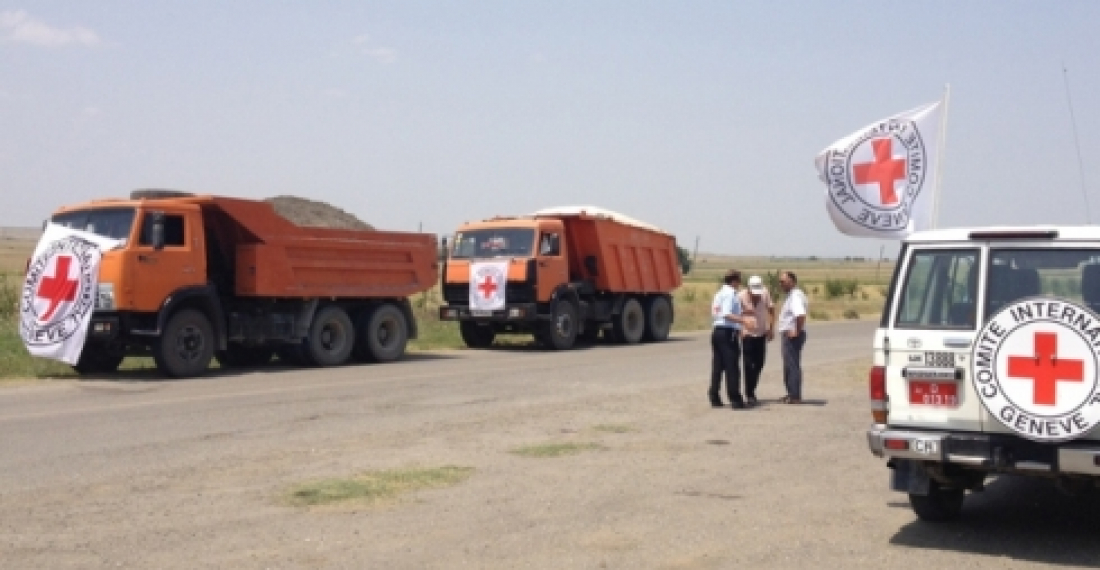
МККК возводит стены в зоне карабахского конфликта, чтобы защитить людей от пуль.

Международный Комитет Красного Креста является одним из наиболее активных и уважаемых международных организаций во всем мире. Такого же мнения о МККК и в Кавказском регионе, где он осуществляет свою деятельность методично и осторожно в течение последних двадцати пяти лет, имея дело с последствиями многочисленных вооруженных конфликтов в этом регион.

МККК известен за свою деятельность в военное время, за организацию  обмена военнопленными. Также, в последние годы особенно активно вовлечен в оказание помощи в случаях, когда армянские или азербайджанские солдаты попадают в плен противнику. МККК также активно работает по  делам пропавших без вести во время прошлых конфликтов.

Но есть и другая сторона МККК, менее известная и менее гламурная. Это оказание помощи на линии фронта гражданскому населению, пострадавших в результате конфликта. Недавно была начата очень важная работа с общинами вдоль всей линии соприкосновения, разделяющей армянские и азербайджанские силы в зоне нагорно-карабахского конфликта.

По данным интернет сайта организации, представительство МККК в Азербайджане различными инициативами помогает людям, проживающим вдоль линии фронта, поддерживая их средствами к существованию и уменьшая риски угрозы их жизни. Одна из таких последних инициатив это строительство защитной стены, чтобы оградить дома мирного населения от шальных пуль, поскольку люди, живущие рядом с линией фронта, иногда получают ранения или погибают. Часто это не простая задача. Примером является бедственное положение семьи Чалаби, которая проживает в селе Тапгарагоюнлу Геранбойского района Азербайджана.

"Когда сотрудники МККК приехали в Тапгарагоюнлу, чтобы оценить влияние конфликта на жизнь сельчан и предложить свою поддержку, члены семьи Чалаби Киши спросили, можем ли мы построить стену, чтобы защитить вход в дом от шальных пуль.  Учитывая место их жительства, было понятно, что они находятся в зоне риска", - говорит Дениза Дюран, глава делегации МККК в Баку.

Перед началом строительства стен МККК уведомляет стороны в конфликте о том, что собирается проводить работы в интересах гражданских лиц.  Через свой офис, находящийся по другую сторону линии соприкосновения, МККК сообщил о своих планах и получил заверения в том, что группы сотрудников МККК, частные подрядчики и местные жители могут работать, не боясь попасть под обстрел.

"Сотрудникам МККК пришлось уговаривать водителей грузовиков возить кирпичи в Тапгарагоюнлу, поскольку всем известно, что это опасный район.  Они согласились лишь тогда, когда мы предложили временно поместить эмблемы Красного Креста на их машины", - говорит Д. Дюран.

Эмблема Красного Креста означает, что осуществляемая деятельность носит исключительно гуманитарный характер.  Женевские конвенции определяют, кто имеет право пользоваться данной эмблемой, и обязывают стороны в вооруженном конфликте защищать персонал и объекты, обозначенные такой эмблемой, и содействовать их работе.

"Наша работа осложнялась еще и тем, что дорога, идущая за домом Чалаби Киши, очень хорошо простреливается, и водители боятся ее использовать, - поясняет Д. Дюран. -  Чалаби и его родственники годами пользуются воротами соседского дома, чтобы попасть в свой, и не рискуют ходить по этой дороге.  Но это единственная дорога, по которой мы могли подвезти кирпичи и другие строительные материалы для защитной стены.  Под защитой эмблемы Красного Креста грузовики первый раз за 19 лет, не опасаясь угрозы, проехали по этой дороге и доставили материалы".

Когда машины въехали во двор, Чалаби потерял дар речи от счастья и изумления.  Его жена высказалась от имени обоих: "К нам никто не приезжал, потому что все боялись попасть под пули. Теперь, через долгие 19 лет, у нас дома снова гости".

Как и следовало ожидать МККК осуществляет деятельность по обе стороны баррикад нагорно-карабахского конфликта. В настоящее время делегация МККК в Армении реализует ряд программ в селах Тавушской области, граничащей с Азербайджаном, сообщает руководитель делегации МККК в Армении Сара Эпрехт агентству Новости Армении-NEWS.am.

Она сообщила, что "были выбраны села исходя из того, что они наиболее уязвимы, поскольку расположены вблизи международной границы, и у жителей меньше доступа к инфраструктуре, пахотным землям."

"В 2013 году в пяти селах мы реализовали проекты по проведению питьевой и ирригационной воды."

Другое направление работы, которая осуществляется как на армянской, так и на азербайджанской сторонах, касается инцидентов с участием гражданского населения. 

"В случае инцидента мы посещаем район и самого пострадавшего, собираем наиболее полную информацию об инциденте, затем обращаемся к ответственным представителям властей," - говорит Эпрехт.

Затем обращаемся к ответственным представителям властей и в конфиденциальном порядке представляем им информацию и рекомендации в плане имевших место нарушений норм международного гуманитарного права (МГП) по данному инциденту.

Источник: commonspace.eu по материалам www.icrc.org и news.am

фото: Гарагоюнлу, Геранбойского района, Азербайджан. Грузовики, нагруженные строительными материалами для возведения стены, которая будет защищать Чалаби Киши и его семью от пуль вдоль дороги, которая не использовалась в течение 19 лет. (фото любезно предоставлено МККК).
Related articles

Editor's choice
News
COP 17 in Armenia

COP 17 in Armenia

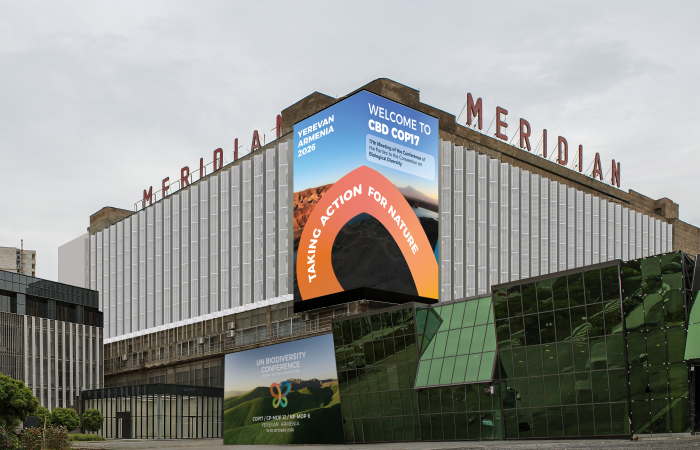
Armenia is currently hosting the COP17 conference of the Convention on Biological Diversity, which began earlier this week (19 October) and will run until 30 October, bringing around 15,000 participants from 196 different countries to Yerevan. At a leaders' summit held as part of COP17, Prime Minister Nikol Pashinyan expressed realistic ambitions: “We are halfway towards achieving these goals (Kunming-Montreal Global Biodiversity Framework), and we must honestly acknowledge that we are not yet moving in the right direction. Our task now is not to make new promises, but to fulfil the commitments we have already made.” Pashinyan pointed towards Armenia's own records, noting that the whitefish stock in Lake Sevan has increased substantially in the last ten years. Iranian President Masoud Pezeshkian and Georgian Prime Minister Irakli Kobakhidze also addressed the summit, with Turkiye sending its agriculture minister. However, there were no reports of Azerbaijani representatives attending. The conference has given Yerevan a valuable international platform, yet the absence of Azerbaijan is likely to be read as a sign that the peace process in the South Caucasus has not yet been translated into wider regional cooperation. The leaders' summit was opened by Armenian Prime Minister Nikol Pashinyan, who stressed that hosting the conference was a great honour for Armenia. He expressed hope that it would 'be productive and contribute to protecting our planet's biodiversity'. 'We – the citizens of Armenia, the government, state authorities and local governments – owe a debt to our nature,' the prime minister said. He noted that the international community had already developed the concept of 'living in harmony with nature’ and adopted the Kunming-Montreal Global Biodiversity Framework in 2022, setting out goals and specific targets to be achieved by 2030. 'We are halfway towards achieving these goals, and we must honestly acknowledge that we are not yet moving in the right direction. Our task now is not to make new promises, but to fulfil the commitments we have already made,' Nikol Pashinyan said. The COP17 conference is expected to adopt a declaration at leaders' level. More than 30 documents are scheduled for discussion. If approved, the commitments set out in them will become legally binding on countries that are parties to the Convention on Biological Diversity.”
Editor's choice
News
Landmines present to the European Union both a contradiction and a dilemma

Landmines present to the European Union both a contradiction and a dilemma

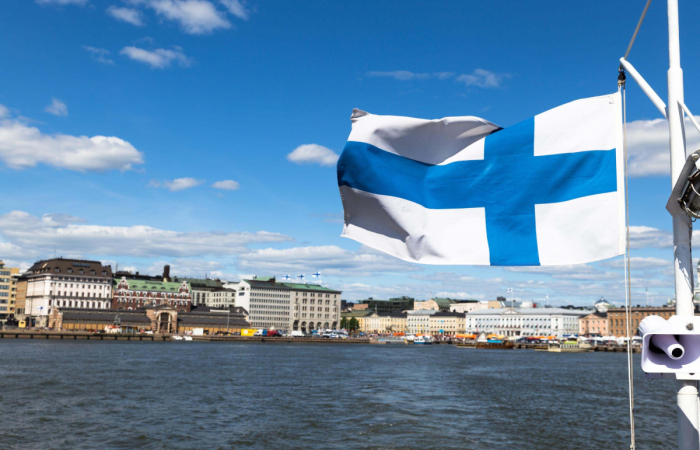
Finland’s decision to buy one million landmines creates a serious contradiction in the policy of the European Union, and is symbolic of a bigger dilemma facing European countries as they get used to the need to acquire “hard” power to face an increasing threat from Russia. Finland is seeking to acquire one million anti-personnel mines at a cost of 100 million euros. Finland, together with Poland, Latvia, Lithuania and Estonia last year abandoned the Ottawa agreement, the international framework that bans the use of anti-personnel mines, which the EU had been instrumental in establishing and supporting. All five countries cite the threat from Moscow as the reason. Colonel Riku Mikkonen of the Army Command told Finland’s national news agency STT that officials are now gathering information from suppliers regarding the deal, the AFP news agency reports. Helsinki would like domestic manufacturers to supply the mines, with contracts signed by the end of 2027 and production up and running by 2028. “It would be useful in many ways if Finnish companies produced the anti-personnel mines in Finland,” Mikkonen said. About half a dozen Finnish firms qualify, he told STT. “However, at this stage, buying the mines from abroad is not totally ruled out,” he added. LANDMINES PROVIDE THE EU WITH BOTH A CONTRADICTION, AND A DILEMMA Eliminating landmine contamination worldwide is one of the EU’s main soft power postures, and it basks in its record as the biggest funder of anti-landmine action in the world. But the fact that 5 of its 27 member states  have now left the Ottawa Treaty dents the EU moral high ground. It is a contradiction that is too big and important to be ignored. It also presents the European Union with a deeper dilemma. The threat from Russia is changing what the EU has stood for decades, namely a force for good able to mobilise its considerable soft power for the greater good of humanity. How the Union will implement this change will define its future. In the meantime landmines have not become any less lethal, benign, or unimportant. They remain in many parts of the world a major threat to life, an impediment to prosperity, and a potential trigger to further conflict. The 22 EU members states that still adhere to the Ottawa treaty must regroup, and be more assertive in their quest against anti-personnel land mines. All the reasons why they supported the Ottawa treaty in the first place still exist. The message must be clear: NO TO LANDMINES!

Popular

Editor's choice
Interview
Thursday Interview: Murad Muradov

Thursday Interview: Murad Muradov

Today, commonspace.eu starts a new regular weekly series. THURSDAY INTERVIEW, conducted by Lauri Nikulainen, will host  persons who are thinkers, opinion shapers, and implementors in their countries and spheres. We start the series with an interview with Murad Muradov, a leading person in Azerbaijan's think tank community. He is also the first co-chair of the Action Committee for a new Armenian-Azerbaijani Dialogue. Last September he made history by being the first Azerbaijani civil society activist to visit Armenia after the 44 day war, and the start of the peace process. Speaking about this visit Murad Muradov said: "My experience was largely positive. My negative expectations luckily didn’t play out. The discussions were respectful, the panel format bringing together experts from Armenia, Azerbaijan, and Turkey was particularly valuable during the NATO Rose-Roth Seminar in Yerevan, and media coverage, while varied in tone, remained largely constructive. Some media outlets though attempted to represent me as more of a government mouthpiece than an independent expert, which was totally misleading.  Overall, I see these initiatives as important steps in rebuilding trust and normalising professional engagement. The fact that soon a larger Azerbaijani civil society visits to Armenia followed, reinforces the sense that this process is moving in the right direction." (click the image to read the interview in full)

