АРФД:

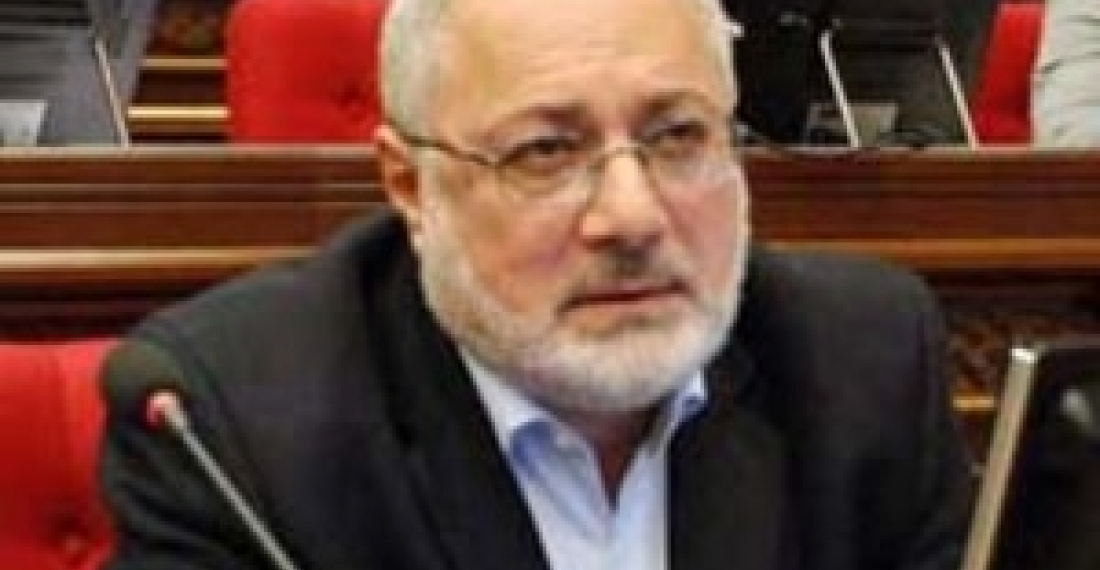
Идея "Северного Азербайджана" может быть использована не США, а Турцией - с целью раскола Ирана. Подобное мнение в интервью АрмИнфо выразил глава парламентской фракции партии АРФ "Дашнакцутюн" Ваан Ованнисян.

По его словам, попытки спекуляции на тему географического названия северного Ирана имели место еще в сороковые годы прошлого века, когда Красная армия вошла в Северный Иран, в советской историографии именуемый Азербайджаном. "Тогда у советского руководства был замысел переименовать Азербайджанскую ССР в "Северный Азербайджан", с учетом того, что "Южный Азербайджан" уже существует в виде северной части Ирана. Это был, по сути, империалистический, захватнический план СССР против Ирана, реализацию которого удалось предотвратить благодаря усилиям иранского народа и британцев. Попытаются ли сегодня американцы воплотить в жизнь эту идею?  Думаю, что нет. США не пойдут на это, но на это вполне может пойти Турция", - отметил Ованнисян.

Политик подчеркнул очевидность того, что правящая в Турции партия "Справедливость и развитие" отходит от идей кемализма к неоосманизму, опираясь при этом на многочисленные политические течения и организации, существующие в этой стране. "Мы видим, что сама политическая доктрина, выдвинутая правящим режимом - "ноль проблем с соседями", предполагает не укрепление равноправных отношений с соседями, а ослабление этих соседей, их приравнивание к нулю. И наибольшую угрозу этим планам Анкары представляют собой не Греция или Кипр, а Иран. Следовательно, раскол Ирана - заветная мечта сегодняшних властей Турции", - отметил он.

По мнению политика, с учетом этих реалий, политика США на Ближнем Востоке должна учитывать такую опасность, потому что раскол Ирана в отличие от его демократизации потенциально может взорвать весь регион.

Ранее депутат от правящей партии "Ени Азербайджан" Сиявуш Новрузов посчитал целесообразным, чтобы Азербайджан, как "расколотое государство", назывался бы Северным Азербайджаном. При этом он подчеркнул, что эту идею в последнее время выдвигает общественность страны. Предложение было поддержано оппозиционным Народным фронтом единого Азербайджана, а также проправительственной партией "Анна Вэтэн".  

 

Related articles

Editor's choice
News
Pope Leo XIV, has called on world leaders to lay down their weapons and choose “encounter” over domination

Pope Leo XIV, has called on world leaders to lay down their weapons and choose “encounter” over domination

The leader of the Catholic Church, Pope Leo XIV, has called on world leaders to lay down their weapons and choose “encounter” over domination. “Let those who have weapons lay them down!”, the Pope urged on Easter Sunday in his traditional Urbi et Orbi message. Speaking to the tens of thousands of pilgrims gathered in St Peter's Square, Pope Leo urged "those who have the power to unleash wars" to chose peace.  This should not be a peace “imposed by force”, he stressed, but one achieved through dialogue – “not with the desire to dominate others, but to encounter them”. Pope Leo warned that the world is “growing accustomed to violence”. We are “becoming indifferent”, he said, not only to the deaths of thousands of people, but to the “hatred and division” war causes, as well as its “economic and social consequences”. Borrowing a phrase from the late Pope Francis, Pope Leo warned of the “ever-increasing ‘globalisation of indifference’”. “We cannot continue to be indifferent!”, he urged. “We cannot resign ourselves to evil!”. For this reason, he said, he would be leading a prayer vigil for peace next Saturday, April 11th, in St Peter’s Basilica.
Editor's choice
News
Israel destroys 17 UNIFIL Cameras

Israel destroys 17 UNIFIL Cameras

Israeli forces destroyed 17 surveillance cameras linked to the United Nations peacekeepers’ main headquarters in southern Lebanon in 24 hours, a UN security official told AFP on Saturday. Since the start of the Israel-Hezbollah war on March 2, the UN Interim Force in Lebanon (UNIFIL) has been caught in the crossfire in the country’s south, with Hezbollah launching attacks on Israel and its troops, and Israeli forces pushing into border towns. The official, who requested anonymity, said “17 of the headquarters’ cameras have been destroyed by the Israeli army” in the coastal town of Naqura. UNIFIL spokeswoman Kandice Ardiel told AFP on Saturday that “the cameras appear to have been destroyed by some kind of laser.” She added that “(Israeli) soldiers are present in Naqura and have been undertaking massive demolitions of buildings in the village this week.” Earlier this week, Ardiel told AFP that “not only have these demolitions destroyed civilian homes and businesses, but the strength of the blasts have caused damage to UNIFIL’s headquarters.” Three Indonesian peacekeepers from the UN force have been killed in two separate incidents over the past week. UNIFIL also reported Friday an “explosion” in one of its bases near Odaisseh in south Lebanon that wounded three personnel, adding that they “do not yet know the origin of the explosion.” The Israeli army accused Hezbollah of firing “a rocket that landed in a UNIFIL outpost.” The UN office in Jakarta said on Saturday the wounded were Indonesian. Indonesia condemned the incident as “unacceptable,” saying “these events underscore the urgent need to strengthen protection for UN peacekeeping forces amid an increasingly dangerous conflict situation.” According to the UN, 97 force members have been killed in violence since its establishment in 1978 to monitor the withdrawal of Israeli forces after they invaded Lebanon.

Popular

Editor's choice
Interview
Thursday Interview: Murad Muradov

Thursday Interview: Murad Muradov

Today, commonspace.eu starts a new regular weekly series. THURSDAY INTERVIEW, conducted by Lauri Nikulainen, will host  persons who are thinkers, opinion shapers, and implementors in their countries and spheres. We start the series with an interview with Murad Muradov, a leading person in Azerbaijan's think tank community. He is also the first co-chair of the Action Committee for a new Armenian-Azerbaijani Dialogue. Last September he made history by being the first Azerbaijani civil society activist to visit Armenia after the 44 day war, and the start of the peace process. Speaking about this visit Murad Muradov said: "My experience was largely positive. My negative expectations luckily didn’t play out. The discussions were respectful, the panel format bringing together experts from Armenia, Azerbaijan, and Turkey was particularly valuable during the NATO Rose-Roth Seminar in Yerevan, and media coverage, while varied in tone, remained largely constructive. Some media outlets though attempted to represent me as more of a government mouthpiece than an independent expert, which was totally misleading.  Overall, I see these initiatives as important steps in rebuilding trust and normalising professional engagement. The fact that soon a larger Azerbaijani civil society visits to Armenia followed, reinforces the sense that this process is moving in the right direction." (click the image to read the interview in full)