


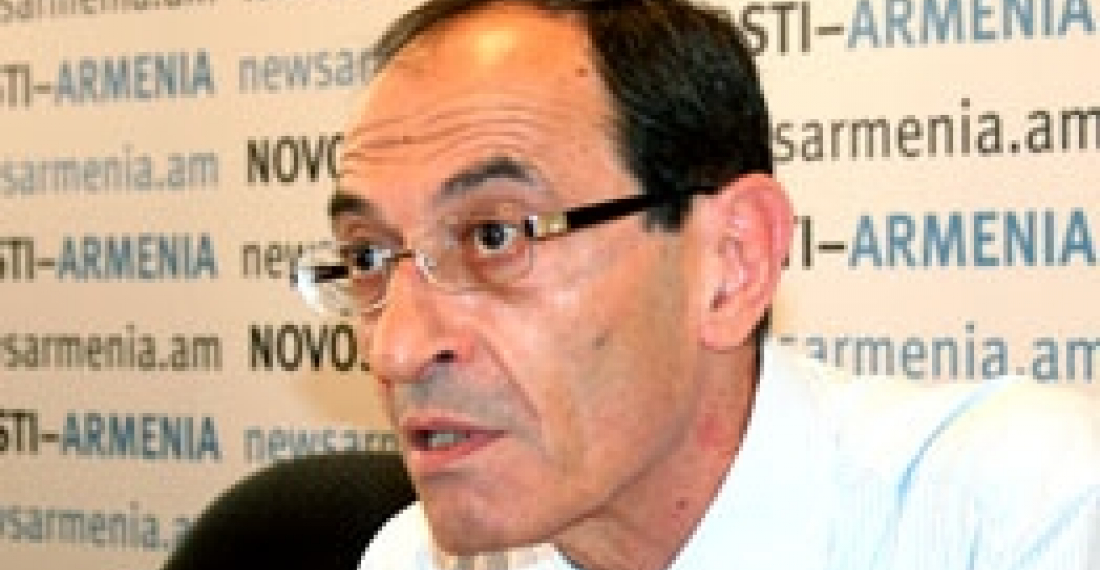
Шаварш Кочарян:

Основные международные документы не создают противоречий между правом на самоопределение и территориальной целостностью. Об этом заявил замминистра иностранных дел Армении Шаварш Кочарян на конференции «Новые подходы к карабахскому вопросу».

По его словам, в статье 2 Устава ООН отмечается, что члены ООН не должны применять силу или угрозу силы против территориальной целостности или политической независимости любого государства или в любых других целях, несовместимых с целями ООН. “Тем не менее, право народов на самоопределение с целями ООН вполне совместимо”, - отметил Кочарян.

Кроме того, Кочарня отметил, что в других документах международного права при возможных противоречиях указывается приоритетность Устава ООН. Ссылку на это делает и Хельсинкский заключительный акт 1975 года. В последнем отмечается, что право на определение внутреннего и внешнего политического статуса в любое время и в любой форме является неотъемлемым правом любого народа. В Декларации ООН о недопустимости интервенции отмечается, что содействие реализации права на самоопределение - право и обязанность государств. Таким образом, Армения имела полное право содействовать реализации самоопределения народа Нагорного Карабаха. Для других стран это может означать и обязанность», - заявил Кочарян. Он добавил, что в резолюции ООН о понятии агрессии дается ее определение как применение вооруженной силы против суверенитета, территориальной неприкосновенности или политической независимости другого государства. “Однако хочу обратить ваше внимание на то, что определение государства в данном случае не предрешается членством в ОО, следовательно, сюда могут входить и международно непризнанные государства. Таким образом, наши позиции с точки зрения международного права неуязвимы. Что касается нашего противника, то он просто искажает международно признанные тезисы”, - резюмировал замглавы МИД Армении.


 

Related articles

Editor's choice
News
Aden under curfew, as problem in Yemen's south deepens

Aden under curfew, as problem in Yemen's south deepens

The port city of Aden, in Yemen's south, has been put under curfew, as the rift in the country between  the Saudi led coalition which  backs Yemen's presidential governing council, and the southern forces led by the Southern Transitional Council (STC), deepens. Abdul Rahman al-Mahrami, a member of the Yemeni Presidential Governing Council and commander of the al-Amalik brigades, has ordered a curfew in the temporary capital, Aden, "to maintain security". "A curfew has been imposed throughout Aden Governorate from 9:00 p.m. to 6:00 a.m., in accordance with the instructions of Commander Abdul Rahman al-Mahrami, a member of the Presidential Management Council," the statement said. It states that only security and military personnel, as well as medical and technical teams with approved permits, will be allowed to move in the area during these hours. Yemen's presidential council, which is backed by Saudi Arabia and which already is in a struggle with the Houthi Movement in the north of the country who also occupy the capital Sanaa, two days ago issued an order for the arrest of the head of the Southern Transitional Council (STC),, Aidarous al Zubaidi. The STC have wide support among people in the South, and advocate that South Yemen restores its independence. The coalition warned of further escalation in Aden, long regarded as an STC stronghold, as the Presidential Leadership Council (PLC) chief accused STC leader Aidarous Al Zubaidi of “high treason” and announced the revocation of his membership in the governing body. The moves mark a sharp escalation in tensions within the anti-Houthi camp, despite National Shield Forces, rivals of the STC and former allies, having recently retaken control of Hadhramaut and Mahra from southern fighters. The STC’s takeover of the two regions last month angered Saudi Arabia and contributed to igniting the current internal conflict. (click the picture to read more)

Popular

Editor's choice
News
Aden under curfew, as problem in Yemen's south deepens

Aden under curfew, as problem in Yemen's south deepens

The port city of Aden, in Yemen's south, has been put under curfew, as the rift in the country between  the Saudi led coalition which  backs Yemen's presidential governing council, and the southern forces led by the Southern Transitional Council (STC), deepens. Abdul Rahman al-Mahrami, a member of the Yemeni Presidential Governing Council and commander of the al-Amalik brigades, has ordered a curfew in the temporary capital, Aden, "to maintain security". "A curfew has been imposed throughout Aden Governorate from 9:00 p.m. to 6:00 a.m., in accordance with the instructions of Commander Abdul Rahman al-Mahrami, a member of the Presidential Management Council," the statement said. It states that only security and military personnel, as well as medical and technical teams with approved permits, will be allowed to move in the area during these hours. Yemen's presidential council, which is backed by Saudi Arabia and which already is in a struggle with the Houthi Movement in the north of the country who also occupy the capital Sanaa, two days ago issued an order for the arrest of the head of the Southern Transitional Council (STC),, Aidarous al Zubaidi. The STC have wide support among people in the South, and advocate that South Yemen restores its independence. The coalition warned of further escalation in Aden, long regarded as an STC stronghold, as the Presidential Leadership Council (PLC) chief accused STC leader Aidarous Al Zubaidi of “high treason” and announced the revocation of his membership in the governing body. The moves mark a sharp escalation in tensions within the anti-Houthi camp, despite National Shield Forces, rivals of the STC and former allies, having recently retaken control of Hadhramaut and Mahra from southern fighters. The STC’s takeover of the two regions last month angered Saudi Arabia and contributed to igniting the current internal conflict. (click the picture to read more)

