


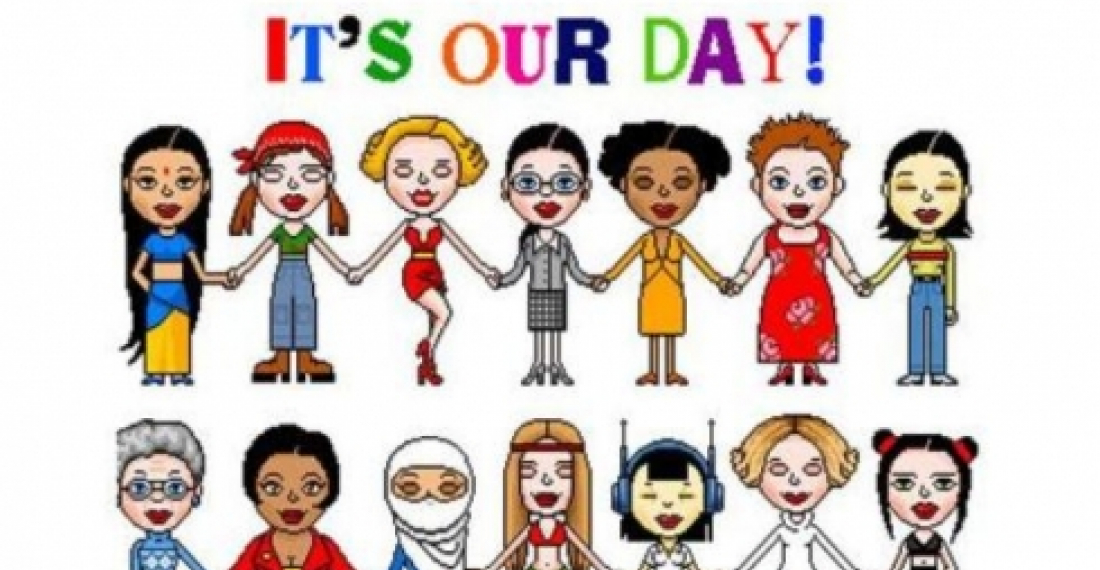
С праздником женщины, строители мира на Кавказе!

По случаю Международного женского дня мы чевствуем и поздравляем смелых женщин Кавказа, которые в течение последних десятилетий, несмотря на критику, занимаются построением мира. Джозеф Александр Смит поговорил с некоторыми из них.

8 марта - Международный женский день, обычно всегда отмечали с большой помпой в Советском Союзе, как день освобождения женщины от домашнего рабства через здравоохранение, образование и труд. Однако, за последнюю четверть века жизнь женщин на Южном Кавказе изменилась под натиском ожесточенных конфликтов и массовых социальных потрясений. Итак, что же этот праздник значит для женщин в этом регионе?

Советский плакат 1932 года по случаю празднования Международного женского дня, на котором освобожденная женщина-комсомолка размахивает красным знаменем в одной руке, а другой тянет другую женщину из-под груды грязных кастрюль для приготовления пищи и пыльных ковров. Вывод очевиден: "8 марта день восстания работницы против кухонного рабства". На заднем плане, рабочие маршируют торжественно мимо светящихся заводов.

Однако, по ходу событий в прошлом веке работающие женщины стали скорее правилом, чем исключением, Международный женский день превратился в более обобщенный праздник - что-то между День матери и День святого Валентина - с цветами, подарками и другими знаками внимания со стороны мужчин их любимым женщинам.

"8 марта, напоминает мне о моем детстве" говорит Манана Гогохия, журналист, живущий и работающий в Гальском районе Абхазии", когда все были счастливы и радостны ... женщины красиво одевались, а вокруг повсюду стоял запах цветов, который  остался в моей памяти об этом дне. Сейчас же, я обычно встречаюсь со своими лучшими друзьями на ужин, мы дарим друг другу подарки, забываем о наших проблемах и веселимся".

Тем не менее, Международный женский день предоставляет также возможность вспомнить успехи, достигнутые женщинами в качестве строителей мира в регионе, раздираемом конфликтами. Женское движение "Белый шарф" принимал активное участие в протестах против конфликта между грузинами и абхазами в начале 1990-х годов, и по сей день такие организаций, как шведская группа "Квинна тилл Квинна" активно содействуют деятельности женщин в качестве строителей мира. Сама же Манана работала в журнале "Женщина и мир" и продолжает изучать эту тему в ее журналистике.

"Из женщин выходят хорошие дипломаты" говорит она, "и они должны быть вовлечены в любой мирный процесс. Они гуманитарий и они могут создать прочные условия для мира и найти способы, чтобы в первую очередь избежать конфликта."

"Участие женщин [в миростроительстве] может обеспечить более полное представление о причинах этих конфликтов и альтернативных решениях", говорит одна из активистов тбилисских феминисток Елена Тамазовна", особенно если учесть, что многие грузинские, абхазские и осетинские женщины разделяют один и тот же культурный фон, обычаи и [в какой-то степени] говорят на том же языке ... Они разделяют потери и турбулентности бытья в состоянии войны или же постоянной опасности войны. Таким образом, прямое взаимодействие этих женщин может привести к предотвращению конфликтов и содействию в  обеспечении полного мирного соглашения, пакта между элитами и поддержке страны в целом".

Безусловно, как бы они ни праздновали этот день, празднование в 107 раз Международного женского дня по-прежнему очень много значит для женщин в Южном Кавказе. Что менее очевидно, смогут ли монументальные усилия, которые женщины по-прежнему прикладывают в качестве миростроителей привести к кардинальной трансформации в конфликтах на Южном Кавказе на политическом уровне. Однако, учитывая поразительные преобразования в жизни женщин за последние 107 лет это дает повод для оптимизма.

Источник: Джозеф Александр Смит из Тбилиси специально для commonspace.eu
Related articles

Editor's choice
News
Finland hosts European Arctic Summit

Finland hosts European Arctic Summit

The Arctic summit of European leaders will be held in Rovaniemi, a municipality in Northern Finland on 13–14 September. Prime Minister Petteri Orpo has invited a group of EU leaders to the summit. The aim of the summit is to strengthen the EU’s common strategic approach to the Arctic region as its geopolitical significance continues to grow rapidly. “The Arctic region is an increasingly important part of Europe's security environment. The European Union has direct interests in its stability, security and sustainable development. It is very valuable to be able to discuss these issues together with a comprehensive group of EU leaders,” said Orpo. The summit will be attended by German Chancellor Friedrich Merz, Prime Minister of Poland Donald Tusk, Prime Minister of Denmark Mette Frederiksen, Prime Minister of Estonia Kristen Michal, Prime Minister of Latvia Andris Kulbergs, President of Lithuania Gitanas Nausėda and President of Romania Nicușor Dan. President of the European Council António Costa and High Representative of the Union for Foreign Affairs and Security Policy Kaja Kallas will also take part in the summit. The summit is taking place against an extremely dynamic backdrop. In the face of accelerating climate change and geopolitical tensions in the Strait of Hormuz, the economic importance of the northeast passage is growing. For 2026, more than forty million tonnes of freight are expected to pass through the Northern Sea Route for the first time, primarily due to expanded trade between Russia and China. Furthermore, in August, China launched its first regular container service through the Arctic. Finally, the EU’s Arctic policy itself is set for a reorientation: the Commission intends to present an updated Arctic strategy this autumn, in which security is to play a central role for the first time. Kaja Kallas had already advocated for this at the Arctic Frontiers conference in Tromsø earlier this year, stating that the Arctic needed more attention, more resources, and more hard power. The summit in Rovaniemi can therefore also be seen as a dress rehearsal for the new strategy. Finland brings a unique perspective to this debate: over 95 per cent of Finland’s foreign trade in goods is conducted by sea, and its ports freeze over almost every winter. This structural peculiarity has given rise to a strong export sector in the field of icebreakers: Finnish companies have designed around 80 per cent of all icebreakers worldwide and built around 60 per cent; even the US Coast Guard is having the first vessels of its new Arctic Security Cutter class built in Finland because the domestic alternative could not meet the schedule. The fact that this leverage can also be utilised geopolitically has already been successfully demonstrated. At the end of September 2022, the Finnish Ministry of Foreign Affairs refused to grant an export licence for an LNG icebreaker ordered by the Russian mining group Norilsk Nickel, thereby bringing to an end a project that would have created around 2,100 person-years of employment. (click the image to read more).

Popular

Editor's choice
Interview
Thursday Interview: Murad Muradov

Thursday Interview: Murad Muradov

Today, commonspace.eu starts a new regular weekly series. THURSDAY INTERVIEW, conducted by Lauri Nikulainen, will host  persons who are thinkers, opinion shapers, and implementors in their countries and spheres. We start the series with an interview with Murad Muradov, a leading person in Azerbaijan's think tank community. He is also the first co-chair of the Action Committee for a new Armenian-Azerbaijani Dialogue. Last September he made history by being the first Azerbaijani civil society activist to visit Armenia after the 44 day war, and the start of the peace process. Speaking about this visit Murad Muradov said: "My experience was largely positive. My negative expectations luckily didn’t play out. The discussions were respectful, the panel format bringing together experts from Armenia, Azerbaijan, and Turkey was particularly valuable during the NATO Rose-Roth Seminar in Yerevan, and media coverage, while varied in tone, remained largely constructive. Some media outlets though attempted to represent me as more of a government mouthpiece than an independent expert, which was totally misleading.  Overall, I see these initiatives as important steps in rebuilding trust and normalising professional engagement. The fact that soon a larger Azerbaijani civil society visits to Armenia followed, reinforces the sense that this process is moving in the right direction." (click the image to read the interview in full)


