


Руководство России делает осторожные комментарии к 5-й годовщине войны с Грузией.

Руководство России в последние несколько дней делает осторожные комментарии к 5-й годовщине войны с Грузией в 2008 году. С наиболее обширными комментариями выступил премьер-министр Дмитрий Медведев в это воскресенье в интревью телекомпании Russia Today. Российское информационное агентство РИА Новости публикует его интервью:

Премьер-министр России Дмитрий Медведев в воскресенье заявил, что он смотрит оптимистично в отношении перспектив двусторонних отношений между Россией и Грузией спустя пять лет после короткой войны между двумя странами.

"Вы знаете, я в этом смысле абсолютный оптимист. Я уверен, что все будет нормально. Наши народы и не ссорились", - заявил Медведев в интервью телеканалу Russia Today.

"К сожалению, этот конфликт, конечно, не помогает взаимопониманию, но это не глубинный конфликт народов, это, к сожалению, еще раз говорю, ошибка, переросшая в преступление со стороны отдельных руководителей страны. И сейчас действительно ситуация несколько другая. Новое политическое руководство страны в соответствии с изменениями, которые произошли в политической системе, в конституции страны, занимают гораздо более прагматичную позицию. Мы этому рады", - заявил российский премьер.

Россия и Грузия разорвали дипломатические отношения в 2008 году после того, как Москва признала де-факто независимые грузинские республики Южную Осетию и Абхазию в качестве независимых государств после короткого военного конфликта вокруг Южной Осетии.

Коалиция "Грузинская мечта" во главе с нынешним премьер-министром Бидзиной Иванишвили одержала победу на парламентских выборах 1 октября 2012 года, заставив уйти в оппозицию "Единое национальное движение", которая правила Грузией с Революции роз в 2003 году и во главе которой стоял президент Михаил Саакашвили.

Выборы были жизненно важны в свете закона, принятого в 2010 году, который предусматривал передачу большинства исполнительных полномочий президента к премьер-министру, к концу второго срока Саакашвили, который заканчивается осенью 2013 года.

Новое правительство Грузии, избранное 1 октября 2012 года, заявило о курсе на нормализацию отношений с Россией, что является одним из ее приоритетов.

Медведев заявил, что это не Москва разорвала дипломатические отношения с Грузией.

"Мы готовы к их восстановлению при определенных условиях, а они простые - признание того факта, что произошло. Может быть, это будет идти гораздо более таким аккуратным, сложным путем... Но я уверен, что возврата к прежнему не будет. И эта самая печальная страница в наших отношениях последних лет будет перевернута и уйдет вместе с исчезновением с политической арены Саакашвили и некоторых других людей, которые причастны к принятию этого преступного решения", - добавил он.

Медведев также заявил, что народы Грузии, Абхазии и Южной Осетии будут сами решать, как развивать свои отношения.

"Все будет зависеть от воли народов, которые живут на этих территориях. От воли грузинского народа и от того, кого они изберут руководителями своей страны. От воли народа Абхазии, Южной Осетии - они могут им дать любые мандаты, и это будет в пределах их конституции и общепризнанной международной человеческой практики", - заявил премьер.

"Мы хотели бы, чтобы они жили в мире. В какой форме будут осуществляться их отношения - это их дело, мы не будем на эти процессы влиять. Но мы, конечно, будем защищать национальные интересы России

Источник: РИА Новости

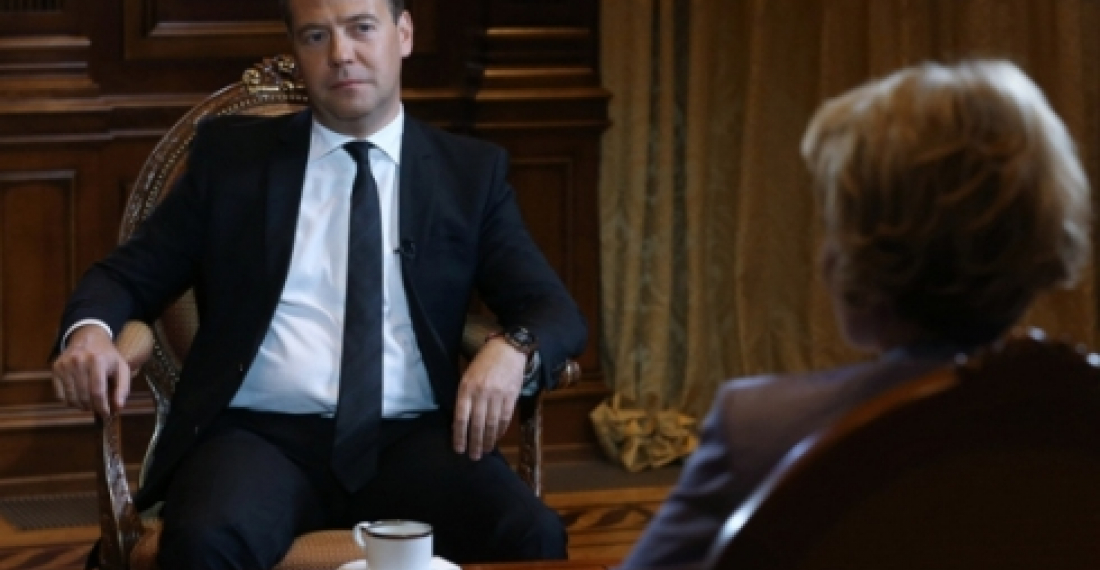
Фото: Премьер-министр России Дмитрий Медведев


Похожие статьи на commonspace.eu

Деннис Саммут:  Война без победителей, которую можно было избежать, и которая не должна повториться.

Интервью с Дмитрием Медоев, послом Южной Осетии в Москве (опубликовано 7 августа 2013 года)

Грузия отмечает пятую годовщину войны с Россией; заявление Министерства иностранных дел (опубликовано 7 августа 2013 года)

Никогда больше! Десять вопросов об августовской войне 2008 года между Грузией и Россией (опубликовано 6 августа 2013 года)


Россия возводит искусственный забор в центре Кавказа (опубликовано 5 августа 2013)

Related articles

Editor's choice
News
Germany accuses Russia of cyberattacks and disinformation campaign

Germany accuses Russia of cyberattacks and disinformation campaign

The German government holds Russia responsible for a cyberattack on German air traffic control, and for targeted disinformation campaigns before the last federal election. According to the German Foreign Office in Berlin, the incidents could be clearly attributed to the Russian military intelligence service, the GRU. In response, the Russian ambassador to Berlin was summoned to the Foreign Ministry. "We have been observing a massive increase in threatening hybrid activities by Russia for some time now," a spokesperson for the Foreign Ministry stated. These range from disinformation campaigns and espionage to cyberattacks and sabotage attempts. The aim is to divide society, sow distrust, and undermine confidence in democratic institutions. The spokesperson added that with these actions, Russia is "very concretely threatening our security, not only through its war of aggression against Ukraine, but also here in Germany."  The Foreign Ministry spokesperson explained that the cyberattack on air traffic control in August 2024 was clearly attributed to the hacker collective "APT28," known as "Fancy Bear," and to the responsibility of the Russian military intelligence service, the GRU. Furthermore, it could now be "conclusively stated" that Russia had attempted "to influence and destabilize both the last Federal election and the ongoing internal affairs of the Federal Republic of Germany." There was "absolutely irrefutable evidence" for this". The so-called "Storm 1516" campaign, which has been running since 2024, is allegedly backed by "reliable information" that the Moscow-based think tank "Center for Geopolitical Expertise" is behind it. The Center is also said to be supported by Russian military intelligence. Its primary aim is to influence democratic elections in the West. (Click the image to read more).
Editor's choice
News
NATO Chief says war is on Europe's doorstep, and warns against complacency

NATO Chief says war is on Europe's doorstep, and warns against complacency

Russia could attack a NATO country within the next five years, the Secretary General of NATO, Mark Rutte, said in a stark new warning. "NATO's own defences can hold for now," Rutte warned in Berlin, but conflict was "next door" to Europe, and he feared "too many are quietly complacent, and too many don't feel the urgency, too many believe that time is on our side. "Russia is already escalating its covert campaign against our societies," Rutte said in a speech in Germany. "We must be prepared for the scale of war our grandparents or great-grandparents endured." Earlier this month, Russia's President Vladimir Putin said his country was not planning to go to war with Europe, but it was ready "right now" if Europe wanted to - or started a war. But similar reassurances were given by Moscow in 2022, just before 200,000 Russian troops crossed the border and invaded Ukraine. Putin has accused European countries of hindering US efforts to bring peace in Ukraine - a reference to the role Ukraine's European allies have recently played in trying to change a US peace plan to end the war, whose initial draft was seen as favouring Russia. But Putin was not sincere, Nato's secretary-general said in the German capital, Berlin. Supporting Ukraine, he added, was a guarantee for European security. "Just imagine if Putin got his way; Ukraine under the boot of Russian occupation, his forces pressing against a longer border with Nato, and the significantly increased risk of an armed attack against us." Russia's economy has been on a war footing for more than three years now - its factories churn out ever more supplies of drones, missiles and artillery shells. According to a recent report by the Kiel Institute for the World Economy, Russia has been producing each month around 150 tanks, 550 infantry fighting vehicles, 120 Lancet drones and more than 50 artillery pieces. The UK, and most of its Western allies, are simply not anywhere near this point. Analysts say it would take years for Western Europe's factories to come close to matching Russia's mass-production of weapons. "Allied defence spending and production must rise rapidly, our armed forces must have what they need to keep us safe," the Nato chief said.

Popular

Editor's choice
News
Germany accuses Russia of cyberattacks and disinformation campaign

Germany accuses Russia of cyberattacks and disinformation campaign

The German government holds Russia responsible for a cyberattack on German air traffic control, and for targeted disinformation campaigns before the last federal election. According to the German Foreign Office in Berlin, the incidents could be clearly attributed to the Russian military intelligence service, the GRU. In response, the Russian ambassador to Berlin was summoned to the Foreign Ministry. "We have been observing a massive increase in threatening hybrid activities by Russia for some time now," a spokesperson for the Foreign Ministry stated. These range from disinformation campaigns and espionage to cyberattacks and sabotage attempts. The aim is to divide society, sow distrust, and undermine confidence in democratic institutions. The spokesperson added that with these actions, Russia is "very concretely threatening our security, not only through its war of aggression against Ukraine, but also here in Germany."  The Foreign Ministry spokesperson explained that the cyberattack on air traffic control in August 2024 was clearly attributed to the hacker collective "APT28," known as "Fancy Bear," and to the responsibility of the Russian military intelligence service, the GRU. Furthermore, it could now be "conclusively stated" that Russia had attempted "to influence and destabilize both the last Federal election and the ongoing internal affairs of the Federal Republic of Germany." There was "absolutely irrefutable evidence" for this". The so-called "Storm 1516" campaign, which has been running since 2024, is allegedly backed by "reliable information" that the Moscow-based think tank "Center for Geopolitical Expertise" is behind it. The Center is also said to be supported by Russian military intelligence. Its primary aim is to influence democratic elections in the West. (Click the image to read more).


