


Плохое начало года на передовой в Карабахе. Первый месяц года был омрачен ежедневными инцидентами, сотнями нарушений режима прекращения огня, и гибелью нескольких человек.

Первый месяц 2014 еще не закончился, но уже сейчас можно сказать, что он  выдался плохим на фронтовой линии в Карабахе - линии соприкосновения, разъединяющей тысячи армянских и азербайджанских солдат, которые сидят в окопах друг против друга последние двадцать лет, ожидая разрешения политиками данного конфликта.

То, что это далеко не замороженный конфликт очевидно всем. Ежедневно поступают сообщения о нарушениях прекращения огня, и это не случайные  инциденты, или же просто выпускающие пар молодые призывники. Использование снайперов с обеих сторон уже привели к серьезным потерям. Обе стороны теперь также регулярно обвиняют друг друга в вторжений.

Во вторник, армянская сторона сообщила о гибели одного из ее солдат. Карену Галстяну было всего девятнадцать лет. Обе стороны также  сообщали и о других потерях в начале этого месяца.

В то же время азербайджанская сторона заявила о том, что она захватила армянина, который по их словам, действовал в качестве разведчика группы коммандос, которая пыталась проникнуть через линию соприкосновения. Армянская сторона заявляет, что это семидесяти летний житель местной деревни, который сбился с пути. 

Международный Комитет Красного Креста пытается получить доступ к этому человеку, но как и всегда в таких обстоятельствах установить истинные факты будет сложно. 

Эта ситуация отталкивает назад в переговорах, которые продолжаются между двумя сторонами. Встреча двух министров иностранных дел, состоявшаяся в Париже на прошлой неделе, показала, что по крайней мере линия связи остается открытой. Тем не менее, для людей, которые гибнут на линии соприкосновения любое решение будет слишком поздним. Многие задаются вопросом, сколько еще должно умереть людей прежде чем этот конфликт будет разрешен?

Источник: commonspace.eu

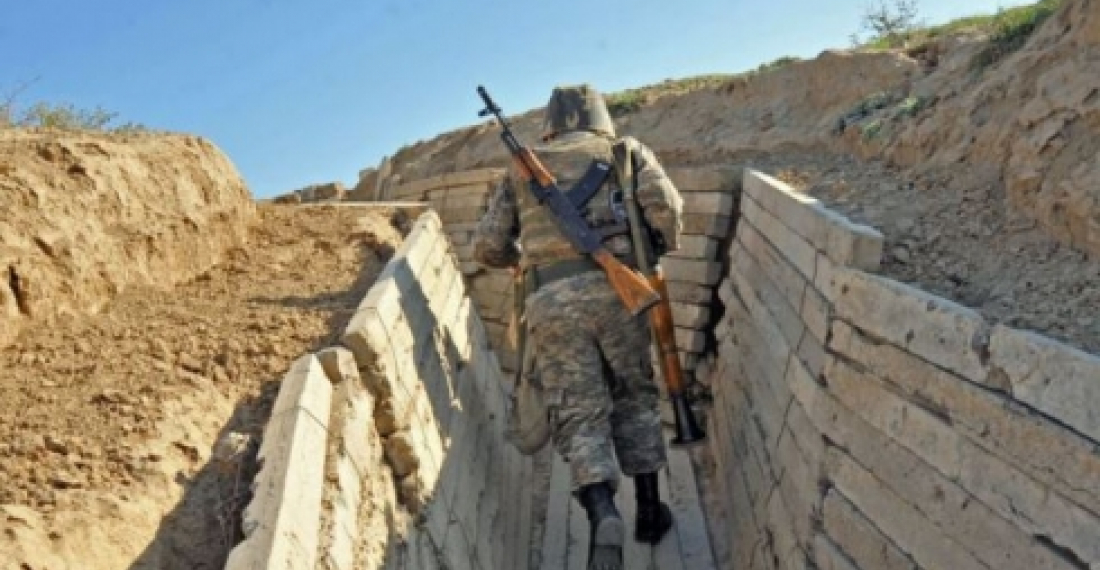
фото: траншеи на линии фронта в Карабахе (фото из архива).

Related articles

Editor's choice
News
(Updated) European leaders arrive in Armenia for Monday's summit of the European Political Community

(Updated) European leaders arrive in Armenia for Monday's summit of the European Political Community

Updated at 1700 CEST. European leaders are arriving in Armenia on Sunday, for the 8th summit of the European Political Community (EPC), which is expected to take place in Yerevan on Monday 4 April. This is the biggest gathering of European leaders in the South Caucasus ever. This afternoon, British Prime Minister, Sir Keir Starmer, and Polish prime minister Donald Tusk where amongst those arriving. Sir Keir was welcomed at Zvarnots International Airport by Vahagn Khachaturyan, the president of Armenia Also among those arriving will be French President, Emanuel Macron, European Commission president, Ursula von der Leyen and European Council president, Antonio Costa. Ukrainian president Volodmyr Zelenski is also expected to attend and he is already in the Armenian capital. Turkish Vice president, Turkish Vice President Cevdet Yilmaz will represent his country in the summit. Also present will be Canadian prime minister, Mark Carney. The European Political Community (EPC) is an intergovernmental forum for political and strategic discussions about the future of Europe established in 2022 after the Russian invasion of Ukraine The group first met in October 2022 in Prague. The 47 EPC participating states are home to 689.5 million people, constitute 8.7 percent of the world's population and represent about 23.5 percent of the global GDP.

Popular

Editor's choice
Interview
Thursday Interview: Murad Muradov

Thursday Interview: Murad Muradov

Today, commonspace.eu starts a new regular weekly series. THURSDAY INTERVIEW, conducted by Lauri Nikulainen, will host  persons who are thinkers, opinion shapers, and implementors in their countries and spheres. We start the series with an interview with Murad Muradov, a leading person in Azerbaijan's think tank community. He is also the first co-chair of the Action Committee for a new Armenian-Azerbaijani Dialogue. Last September he made history by being the first Azerbaijani civil society activist to visit Armenia after the 44 day war, and the start of the peace process. Speaking about this visit Murad Muradov said: "My experience was largely positive. My negative expectations luckily didn’t play out. The discussions were respectful, the panel format bringing together experts from Armenia, Azerbaijan, and Turkey was particularly valuable during the NATO Rose-Roth Seminar in Yerevan, and media coverage, while varied in tone, remained largely constructive. Some media outlets though attempted to represent me as more of a government mouthpiece than an independent expert, which was totally misleading.  Overall, I see these initiatives as important steps in rebuilding trust and normalising professional engagement. The fact that soon a larger Azerbaijani civil society visits to Armenia followed, reinforces the sense that this process is moving in the right direction." (click the image to read the interview in full)


