Медведев заявляет, что СНГ "является важным фактором стабильности на постсоветском пространстве"
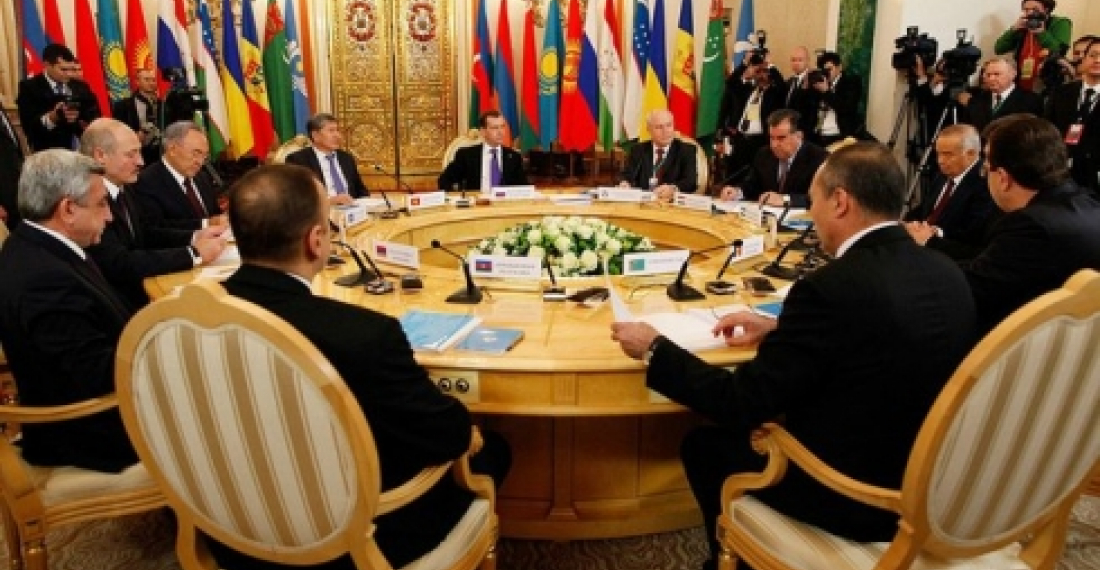
Лидеры одиннадцати стран СНГ на этой неделе собрались в Москве, чтобы отметить 20-летие создания Содружества Независимых Государств, которое заменило СССР в декабре 1991 года. Это встреча была возможность для размышления, а также немного для ностальгии. Президент России Дмитрий Медведев напомнил о своих собственных воспоминаниях того дня. "Так получилось, что я улетел из одной страны, которая называлась Союз Советских Социалистических Республик, улетел в Германию, а когда я вернулся – я вернулся в ситуацию принципиально другую, когда нашего общего государства не стало."

Российский лидер добавил: "Не скрою, это тоже создало тогда у меня очень сложные эмоции, но самое главное, что сегодня мы сидим за этим столом, что мы друзья и что мы готовы развивать наши добросердечные отношения."

"Мы про СНГ много чего говорим, за 20 лет очевидно, что Содружество прошло очень непростой путь развития, стороны с разными экономическими условиями, близкой и в то же время отличной культурой доказали, что они не только могут друг друга отлично понимать, но и эффективно сотрудничать на добровольной, равноправной и взаимовыгодной основе."

"СНГ стало важным фактором стабильности, стабильности на постсоветском пространстве, и на самом деле стало влиятельным региональным объединением, даже несмотря на те издержки, которые мы всегда видели и которые на сегодняшний день сохраняются. Вместе нам удалось сделать достаточно много."

Медведев добавил, что СНГ поможет на долгие годы вперед в решении самых разнообразных задач.

Политический редактор Commonspace.eu в своем комментарии говорит, что за двадцать лет своего существования у СНГ немного есть того, что можно показать , и она часто подвергалось критике, как организация, которая создаёт большое количество различных соглашений, и только некоторые из которых когда-нибудь реализовываются. Возможно, её самая большая неудача была неспособность предотвратить войну между Грузией и Россией в августе 2008 года. Признание Россией независимости Абхазии и Южной Осетии впоследствии получило негативную оценку другими странами СНГ, а Грузия покинула организацию вскоре после этого. Однако, СНГ продолжает служить форумом для большинства бывших советских республик, чтобы встретиться и обменяться мнениями, и её роль постепенно перешла в руки других организаций, таких как ОДКБ и ЕврАзЭС, хотя некоторые члены СНГ ясно дали понять, что они не хотят участвовать в этих организациях

Источник: commonspace.eu по материалам www.kremlin.ru

Фото: Лидеры 11 стран СНГ провели встречу в Москве 20 декабря 2011 года (фотография любезно предоставлена пресс-службой Президента России)

Related articles

Editor's choice
News
Council of Europe launches new International Claims Commission for Ukraine

Council of Europe launches new International Claims Commission for Ukraine

Thirty-four countries and the European Union have signed a new convention establishing an International Claims Commission for Ukraine at a diplomatic conference co-hosted by the 46-nation Council of Europe and the Netherlands in the Hague. The diplomatic conference was attended by leaders and high-level representatives from over 50 states, including the President of Ukraine, Volodymyr Zelenskyy, the President of the Republic of Moldova, Maia Sandu, and the Prime Minister of the Netherlands, Dick Schoof.  “Today marks a major step forward in ensuring accountability for Ukraine. The International Claims Commission represents justice and hope for tens of thousands of victims—our determination that those who have suffered will not be forgotten. I call for quick ratifications so we can get the commission rapidly up and running for the people of Ukraine,” said Council of Europe Secretary General Alain Berset. Ukrainian President Volodymyr Zelenskyy said: “We expect that every mechanism for compensation from the Register of Damage and Claims Commission to the actual payments – will start working and receive strong and sufficient international support, so that people can truly feel that any kind of damage caused by the war can be compensated. This war, and Russia’s responsibility for it, MUST become a clear example – so that others learn not to choose aggression.” “Accountability is about creating the conditions for peace that endures. And therefore, accountability is a condition of security – today and for the future. But accountability is not only about Ukraine. And it is not only about one aggressor and one victim. Accountability is about Europe. About every country in Europe. It is about whether Europe, as a whole, is willing to defend its peace,” said Maia Sandu, President of the Republic of Moldova, which currently holds the Presidency of the Council of Europe’s Committee of Ministers. The Prime Minister of the Netherlands, Dick Schoof, said: “Every day Russia is deliberately bombarding homes, destroying businesses and damaging infrastructure in Ukraine. Russia must compensate Ukraine for the damage caused. That is why we have launched the International Claims Commission for Ukraine and we are honoured to host it.” The International Claims Commission will be the second part of a comprehensive compensation mechanism related to Russia’s war of aggression, building on the existing Register of Damage for Ukraine. The claims commission will be established within the framework of the Council of Europe and will also be open to other countries. The Register of Damage for Ukraine, created in 2023, collects and records compensation claims submitted by individuals, organisations and public bodies in Ukraine. Forty-four states and the European Union have so far joined the Register, which has already received 86,000 claims. The International Claims Commission will review, assess and decide upon claims submitted to the Register of Damage for Ukraine and determine the amount of compensation, if any, which is due in each case. The convention establishing the commission will enter into force once it has been ratified by 25 signatories, as long as sufficient funds have been secured to support its initial work.

Popular

Editor's choice
News
Council of Europe launches new International Claims Commission for Ukraine

Council of Europe launches new International Claims Commission for Ukraine

Thirty-four countries and the European Union have signed a new convention establishing an International Claims Commission for Ukraine at a diplomatic conference co-hosted by the 46-nation Council of Europe and the Netherlands in the Hague. The diplomatic conference was attended by leaders and high-level representatives from over 50 states, including the President of Ukraine, Volodymyr Zelenskyy, the President of the Republic of Moldova, Maia Sandu, and the Prime Minister of the Netherlands, Dick Schoof.  “Today marks a major step forward in ensuring accountability for Ukraine. The International Claims Commission represents justice and hope for tens of thousands of victims—our determination that those who have suffered will not be forgotten. I call for quick ratifications so we can get the commission rapidly up and running for the people of Ukraine,” said Council of Europe Secretary General Alain Berset. Ukrainian President Volodymyr Zelenskyy said: “We expect that every mechanism for compensation from the Register of Damage and Claims Commission to the actual payments – will start working and receive strong and sufficient international support, so that people can truly feel that any kind of damage caused by the war can be compensated. This war, and Russia’s responsibility for it, MUST become a clear example – so that others learn not to choose aggression.” “Accountability is about creating the conditions for peace that endures. And therefore, accountability is a condition of security – today and for the future. But accountability is not only about Ukraine. And it is not only about one aggressor and one victim. Accountability is about Europe. About every country in Europe. It is about whether Europe, as a whole, is willing to defend its peace,” said Maia Sandu, President of the Republic of Moldova, which currently holds the Presidency of the Council of Europe’s Committee of Ministers. The Prime Minister of the Netherlands, Dick Schoof, said: “Every day Russia is deliberately bombarding homes, destroying businesses and damaging infrastructure in Ukraine. Russia must compensate Ukraine for the damage caused. That is why we have launched the International Claims Commission for Ukraine and we are honoured to host it.” The International Claims Commission will be the second part of a comprehensive compensation mechanism related to Russia’s war of aggression, building on the existing Register of Damage for Ukraine. The claims commission will be established within the framework of the Council of Europe and will also be open to other countries. The Register of Damage for Ukraine, created in 2023, collects and records compensation claims submitted by individuals, organisations and public bodies in Ukraine. Forty-four states and the European Union have so far joined the Register, which has already received 86,000 claims. The International Claims Commission will review, assess and decide upon claims submitted to the Register of Damage for Ukraine and determine the amount of compensation, if any, which is due in each case. The convention establishing the commission will enter into force once it has been ratified by 25 signatories, as long as sufficient funds have been secured to support its initial work.