


ЕС выжидает в отношениях с Азербайджаном и Арменией. На ежегодных встречах в Брюсселе стороны обязались в вечной дружбе. Но не совсем ясно, куда будут двигаться отношения в будущем.

В понедельник в Брюсселе состоялись заседания Совета по сотрудничеству Армения-ЕС и Совета по сотрудничеству ЕС-Азербайджан. Ежегодные встречи предоставляют возможность ЕС и двум кавказским республикам рассмотреть прогресс в двусторонних отношениях и запланировать дальнейшие шаги.

Это странный момент в текущих отношениях и заявления, сделанные после встречи, отражают действительность, в то время как стороны, как обычно, пытались сделать хорошую мину и создать деловое впечатление. На самом же деле вряд ли это так. 

Что касается отношении с Арменией, то КС до сих пор не оправился от решения правительства Армении в последнюю минуту не подписывать Соглашение об ассоциации, по которому шли кропотливые переговоры в течение последних трех лет. На пресс-конференции после заседания Совета по сотрудничеству ЕС-Армения, на которой также присутствовал министр иностранных дел Армении Эдвард Налбандян, Комиссар Штефан Фюле заявил:

"По сравнению с предыдущим Совета сотрудничества, безусловно, есть разница в содержании наших дискуссий - с учетом новых международных обязательств Армении. Но, одно остается без изменении, это наше желание иметь тесные отношения и продвигать их вперед, на основе того, чего мы достигли до сих пор. В этом свете, мы вновь подтвердили необходимость пересмотра основы наших двусторонних отношений, а также необходимость обновления Плана действий Европейской политики соседства ЕС-Армения, чтобы он соответствовал нашим амбициям будущего сотрудничества".

Отношения с Азербайджаном также находятся, что-то вроде в неловком моменте. Азербайджан не проявляет энтузиазма в подписании Соглашения об ассоциации с ЕС, предпочитая более обширное "стратегическое партнерство". В ЕС озабоченны по поводу темпов и масштабов политических и экономических реформ в Азербайджане. На пресс-конференции, на которой также присутствовал представитель Азербайджана, заместитель министра иностранных дел Махмуд Мамед-Гулиев, Комиссар Фюле заявил:

"Могу ли я начать с той же фразы, которую я использовал в прошлом году? Она хорошо вписывается и в этом году: "Мы рады видеть сближение Азербайджана и Европейского Союза друг с другом. Наше сотрудничество приносит плоды" - просто посмотрите на результаты саммита Восточного партнерства в Вильнюсе и подписание соглашения об облегчении визового режима".

Был, однако, и некоторая завуалированная критика о том, что воспринимаются, как недостатки Азербайджана. Фюле отметил:

"Другим важным элементом наших отношений является уважение основных свобод. Мы призываем Азербайджан уважать его международные обязательства в этом отношении. Еще многое предстоит сделать в таких областях, как свобода средств массовой информации, свобода собраний, свобода объединений. 

Не менее важно привезти избирательное законодательство в соответствие с рекомендациями ОБСЕ / БДИПЧ. Это должно произойти в ближайшее время для того, чтобы в Азербайджане были проведены справедливые и прозрачные муниципальные выборы в следующем году и парламентские выборы в 2015 году. Также предстоит проделать важную работу в борьбе с коррупцией.

Во всех этих областях Азербайджан может рассчитывать на поддержку ЕС. Мы полны решимости продолжать и углублять наш откровенный и открытый диалог. Мы стремимся, чтобы наше сотрудничество было взаимообогащающим. Мы будем настолько амбициозными, насколько наши партнеры готовы быть, ... и способны выполнить реформы".

Ни на одной из встреч не было и намека на какие-либо драмы. Обе стороны на обеих встречах поклялись в вечной дружбе, и заявили о желании консолидировать все те небольшие успехи, которые были достигнуты до этого момента, и продвигаться вперед медленно. Но куда именно будут двигаться отношения ЕС с этими двумя странами в течение следующего года и далее пока не совсем понятно. Однако, на данный момент стороны выжидают.


Источник: commonspace.eu

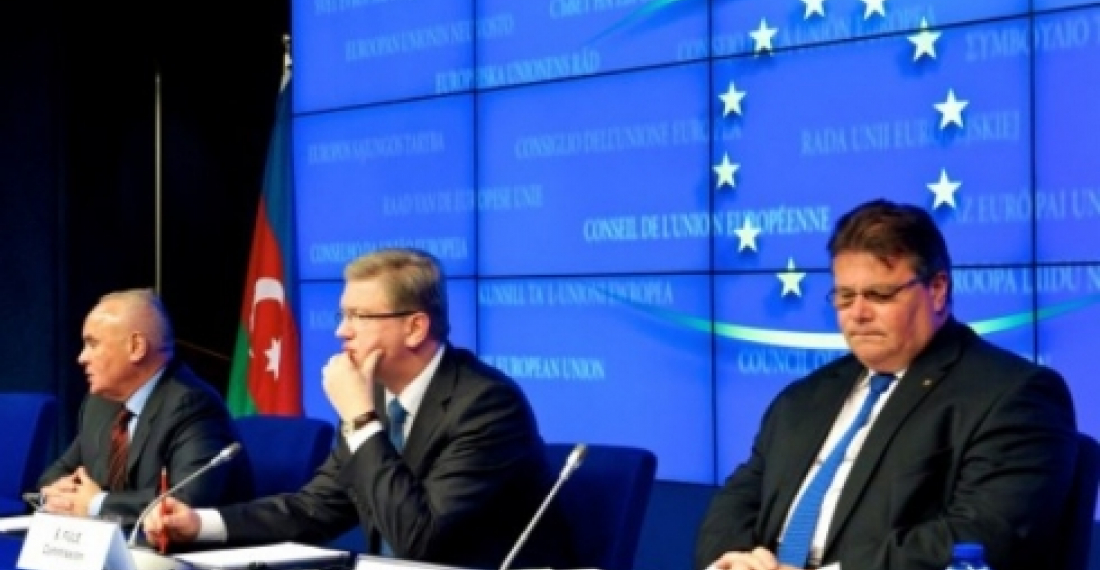
фото: Заседание Совета по сотрудничеству ЕС-Азербайджан в Брюсселе 9 ноября (слева направо) заместитель министра иностранных дел Азербайджана М. Мамед-Гулиев, комиссар ЕС по вопросам расширения Штефан Фюле и министр иностранных дел Литвы (председательствующей страны в ЕС) Линас Линкявичюс, (фото любезно предоставлено пресс-службой Европейского союза).


Related articles

Editor's choice
News
Germany accuses Russia of cyberattacks and disinformation campaign

Germany accuses Russia of cyberattacks and disinformation campaign

The German government holds Russia responsible for a cyberattack on German air traffic control, and for targeted disinformation campaigns before the last federal election. According to the German Foreign Office in Berlin, the incidents could be clearly attributed to the Russian military intelligence service, the GRU. In response, the Russian ambassador to Berlin was summoned to the Foreign Ministry. "We have been observing a massive increase in threatening hybrid activities by Russia for some time now," a spokesperson for the Foreign Ministry stated. These range from disinformation campaigns and espionage to cyberattacks and sabotage attempts. The aim is to divide society, sow distrust, and undermine confidence in democratic institutions. The spokesperson added that with these actions, Russia is "very concretely threatening our security, not only through its war of aggression against Ukraine, but also here in Germany."  The Foreign Ministry spokesperson explained that the cyberattack on air traffic control in August 2024 was clearly attributed to the hacker collective "APT28," known as "Fancy Bear," and to the responsibility of the Russian military intelligence service, the GRU. Furthermore, it could now be "conclusively stated" that Russia had attempted "to influence and destabilize both the last Federal election and the ongoing internal affairs of the Federal Republic of Germany." There was "absolutely irrefutable evidence" for this". The so-called "Storm 1516" campaign, which has been running since 2024, is allegedly backed by "reliable information" that the Moscow-based think tank "Center for Geopolitical Expertise" is behind it. The Center is also said to be supported by Russian military intelligence. Its primary aim is to influence democratic elections in the West. (Click the image to read more).
Editor's choice
News
NATO Chief says war is on Europe's doorstep, and warns against complacency

NATO Chief says war is on Europe's doorstep, and warns against complacency

Russia could attack a NATO country within the next five years, the Secretary General of NATO, Mark Rutte, said in a stark new warning. "NATO's own defences can hold for now," Rutte warned in Berlin, but conflict was "next door" to Europe, and he feared "too many are quietly complacent, and too many don't feel the urgency, too many believe that time is on our side. "Russia is already escalating its covert campaign against our societies," Rutte said in a speech in Germany. "We must be prepared for the scale of war our grandparents or great-grandparents endured." Earlier this month, Russia's President Vladimir Putin said his country was not planning to go to war with Europe, but it was ready "right now" if Europe wanted to - or started a war. But similar reassurances were given by Moscow in 2022, just before 200,000 Russian troops crossed the border and invaded Ukraine. Putin has accused European countries of hindering US efforts to bring peace in Ukraine - a reference to the role Ukraine's European allies have recently played in trying to change a US peace plan to end the war, whose initial draft was seen as favouring Russia. But Putin was not sincere, Nato's secretary-general said in the German capital, Berlin. Supporting Ukraine, he added, was a guarantee for European security. "Just imagine if Putin got his way; Ukraine under the boot of Russian occupation, his forces pressing against a longer border with Nato, and the significantly increased risk of an armed attack against us." Russia's economy has been on a war footing for more than three years now - its factories churn out ever more supplies of drones, missiles and artillery shells. According to a recent report by the Kiel Institute for the World Economy, Russia has been producing each month around 150 tanks, 550 infantry fighting vehicles, 120 Lancet drones and more than 50 artillery pieces. The UK, and most of its Western allies, are simply not anywhere near this point. Analysts say it would take years for Western Europe's factories to come close to matching Russia's mass-production of weapons. "Allied defence spending and production must rise rapidly, our armed forces must have what they need to keep us safe," the Nato chief said.

Popular

Editor's choice
News
Germany accuses Russia of cyberattacks and disinformation campaign

Germany accuses Russia of cyberattacks and disinformation campaign

The German government holds Russia responsible for a cyberattack on German air traffic control, and for targeted disinformation campaigns before the last federal election. According to the German Foreign Office in Berlin, the incidents could be clearly attributed to the Russian military intelligence service, the GRU. In response, the Russian ambassador to Berlin was summoned to the Foreign Ministry. "We have been observing a massive increase in threatening hybrid activities by Russia for some time now," a spokesperson for the Foreign Ministry stated. These range from disinformation campaigns and espionage to cyberattacks and sabotage attempts. The aim is to divide society, sow distrust, and undermine confidence in democratic institutions. The spokesperson added that with these actions, Russia is "very concretely threatening our security, not only through its war of aggression against Ukraine, but also here in Germany."  The Foreign Ministry spokesperson explained that the cyberattack on air traffic control in August 2024 was clearly attributed to the hacker collective "APT28," known as "Fancy Bear," and to the responsibility of the Russian military intelligence service, the GRU. Furthermore, it could now be "conclusively stated" that Russia had attempted "to influence and destabilize both the last Federal election and the ongoing internal affairs of the Federal Republic of Germany." There was "absolutely irrefutable evidence" for this". The so-called "Storm 1516" campaign, which has been running since 2024, is allegedly backed by "reliable information" that the Moscow-based think tank "Center for Geopolitical Expertise" is behind it. The Center is also said to be supported by Russian military intelligence. Its primary aim is to influence democratic elections in the West. (Click the image to read more).

